Skip to content
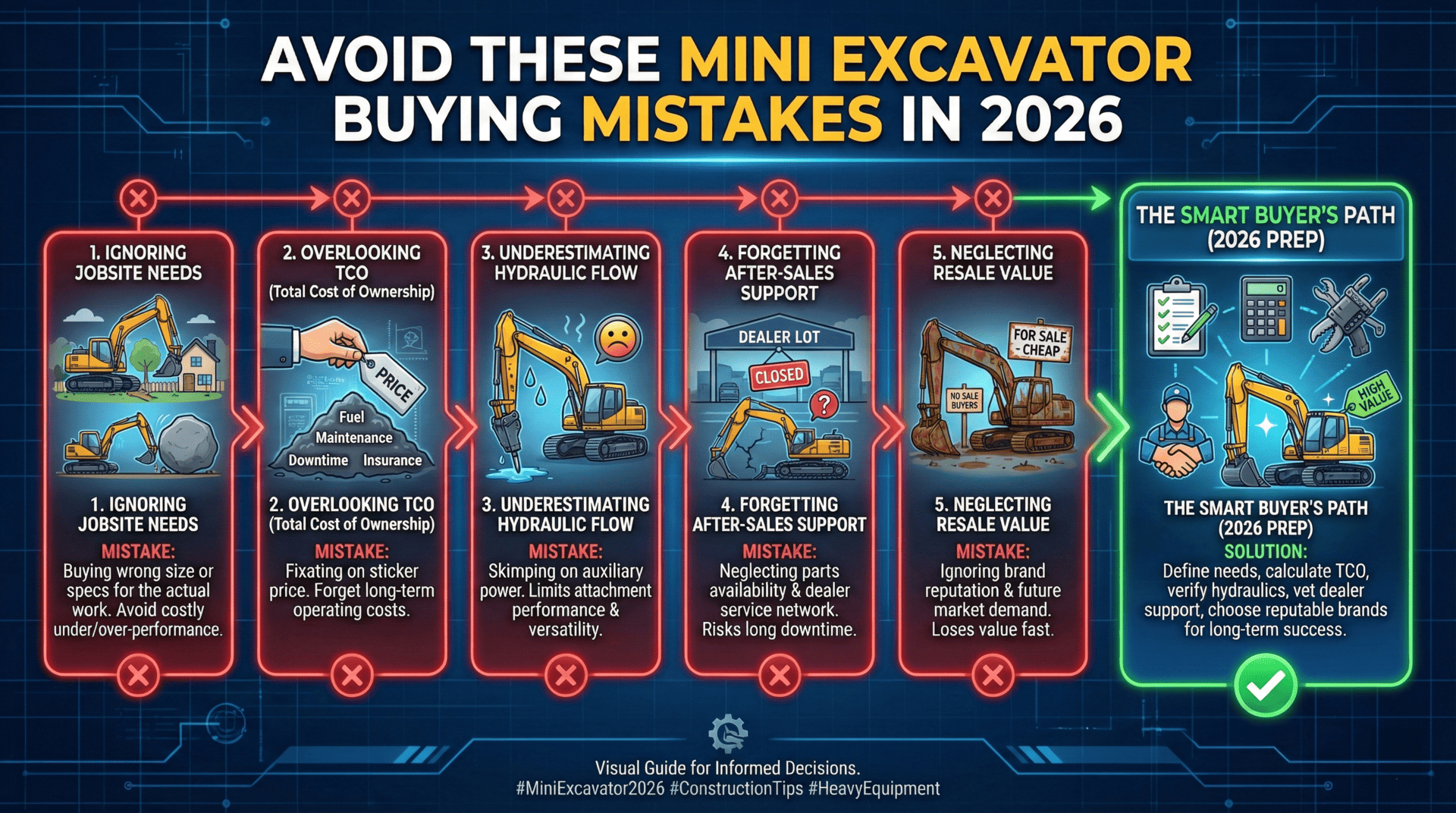
The mini excavator market has changed. If you were buying a machine five years ago, your biggest worry might have been whether to choose a Kubota or a CAT. In 2026, the landscape will be entirely different. We are looking at a market flooded with new budget imports, a rapid shift toward electrification that confuses resale values, and online marketplaces that are getting cleverer at hiding lemons. Avoid These Mini Excavator Buying Mistakes in 2026.
To navigate the complexities of the evolving market, it’s essential to understand the mini excavator buying mistakes in 2026.
This isn’t just a list of specifications; it’s a compilation of costly lessons you don’t want to experience firsthand. Whether you are a seasoned owner-operator or a landscaper buying your first unit, here is how to navigate the minefield of buying a mini excavator in 2026.
Mistake #1: Ignoring the 2026 Tech Shift (Diesel vs. Electric)
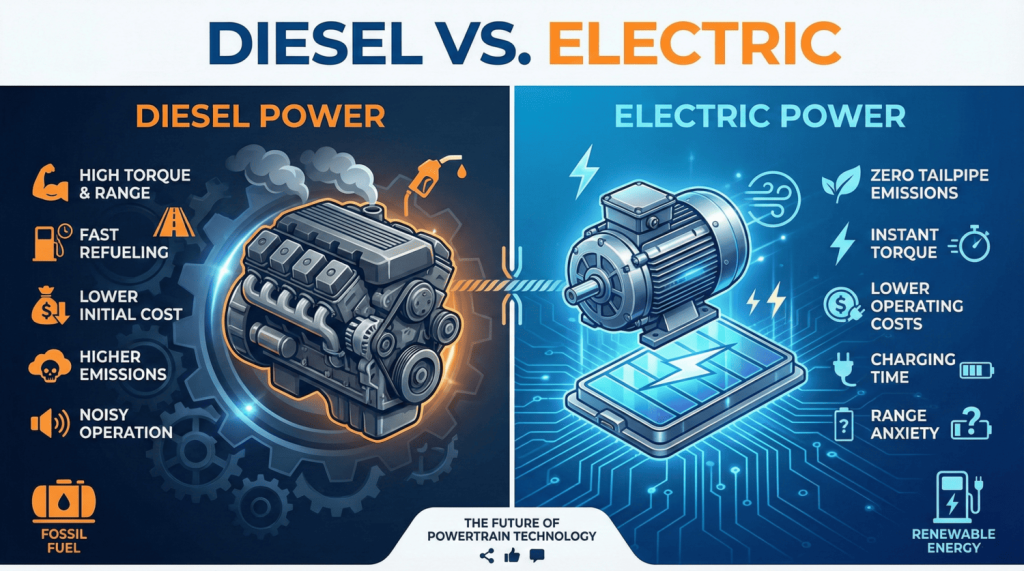
Let’s tackle the crucial issue. In 2026, electric mini excavators aren’t just expensive toys anymore; they are becoming job site requirements in some urban zones. However, the biggest mistake buyers make is jumping on—or completely ignoring—this trend without running the numbers for their specific business.
The Diesel-Only Trap
If you work primarily in residential backyards, city centers, or indoor demolition, buying a loud, diesel-belching machine might actually cost you contracts. More municipalities are enforcing noise and emission limits. I’ve seen bidders lose lucrative indoor renovation contracts simply because they couldn’t guarantee zero emissions.
The Early Adopter Trap
Conversely, don’t buy electric just because it’s trendy. If you operate in remote forestry or rural utility repair, where the closest charging infrastructure is far away, an electric unit may not be a practical choice.
- The Reality Check: Electric units generally offer lower daily operating expenses (no fuel, fewer filters), but the upfront premium is still steep.
- The 2026 Verdict: If 70% of your work is urban/indoor, test a battery-electric model. If you are hauling to remote sites, stick to a Stage V-compliant diesel.
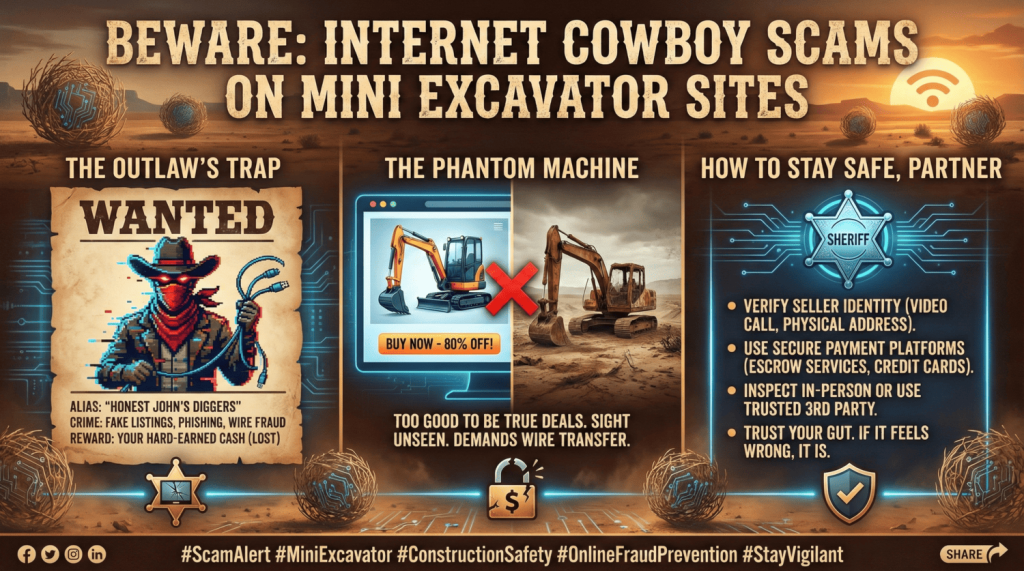
Mistake #2: Falling for the Internet Cowboy Scams
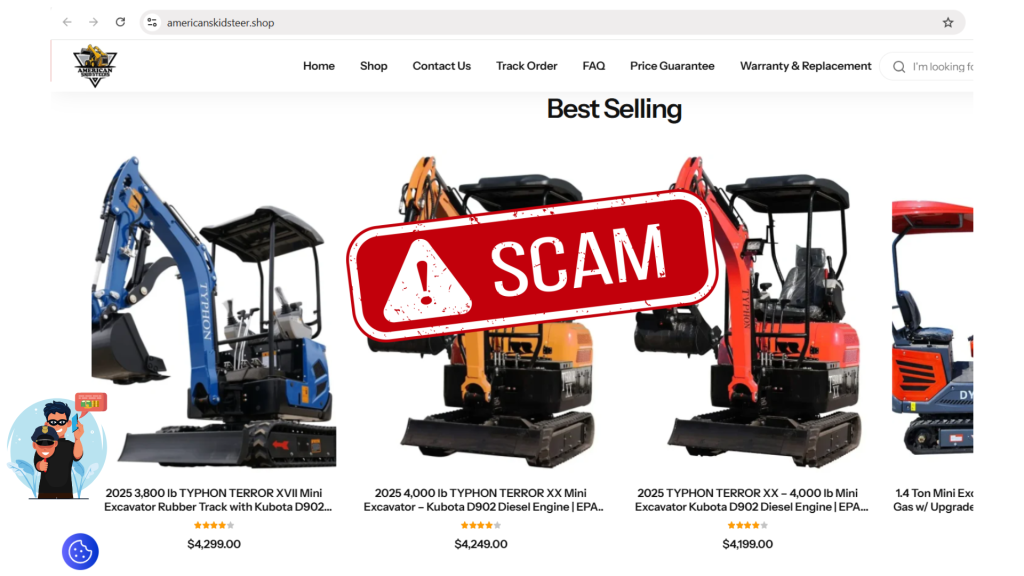
The online heavy equipment market in 2026 is wilder than ever. Scammers have moved beyond simple fake listings; they are now creating sophisticated dealer websites that look legitimate but vanish after you wire a deposit.
The Stock Photo Red Flag
If you are browsing a listing and the photos look too perfect—clean background, studio lighting—be suspicious. Real sellers take photos in the mud, in the yard, or on a trailer.
Pro Tip: Always ask for a proof of life photo. Ask the seller to send a picture of the machine with a piece of paper resting on the seat that has today’s date and your name written on it. If they make an excuse (I’m away from the yard right now), walk away.
The Generic Parts Nightmare
A massive issue in 2026 is the influx of grey market machines that look like major brands but are re-badged clones. They might run fine for a year, but when a final drive motor blows, you’ll find that no local dealer has the schematic, and the parts are on a 6-week backorder from overseas.
- The Fix: Verify the Serial Number (PIN) with a local dealer before you buy. Confirm that they can service that specific grey market model.
Mistake #3: Obsessing Over Price Tag vs. Total Cost of Ownership (TCO)
A $25,000 used mini ex might look like a steal compared to a $40,000 unit, but the purchase price is just the entry fee. The real costs are hidden in the undercarriage and hydraulics.
The Undercarriage Money Pit
Rubber tracks are consumable items, but the sprockets and idlers are expensive.
- The Inspection Test: Look at the tracks. If they are sagging more than 1–2 inches, that is an adjustment. But if you see the sprocket teeth are sharpened to points rather than being flat-topped, you are looking at a $2,000+ repair bill immediately after purchase.
Hidden Hydraulic Leaks
Don’t just look for puddles. Look for steam-cleaned areas. If an older machine has an engine bay that looks brand new and spotless, be wary. Unscrupulous sellers often pressure wash the engine to wash away evidence of slow leaks. Look for grime buildup around the clean spots—that’s where the truth hides.
Mistake #4: Misunderstanding Auxiliary Flow (The Attachment Heartbreak)
In 2026, a mini excavator is the most versatile machine on the jobsite. You aren’t just digging holes; you’re running augers, breakers, brush cutters, and thumbs. The most painful mistake I see? Purchasing a machine that does not have the necessary flow rate to operate your tools is the most common mistake I observe.
The High-Flow Confusion
Just because a machine has auxiliary lines doesn’t mean it can run a forestry mulcher.
- Scenario: You buy a 3-ton excavator to clear brush. You spend $5,000 on a mulching head. You hook it up, and the mulcher stalls every time it hits a branch.
- The Cause: Your machine pumps 15 gallons per minute (GPM), but the mulcher requires 20 GPM at high pressure.
The Lesson: Verify the GPM (gallons per minute) and PSI (pressure) ratings of the machine’s auxiliary circuit. Do not guess. If you plan to run heavy hydromechanical tools, you might need a machine with a dedicated high-flow package
Mistake #5: Buying the Maximum Size You Can Afford (Transport Logistics)
It’s tempting to believe that a larger size is always better. Why buy a 3.5-ton machine when you can get a 5-ton for a little more?
This is primarily due to the inability to tow the machine.
The Towing Trap
Transport laws are strict. A 3.5-ton mini excavator can often be towed behind a heavy-duty pickup truck (like an F-250 or 3500) on a standard bumper-pull trailer. Once you jump to a 5-ton or 6-ton machine, you are often pushing into CDL (Commercial Driver’s License) territory depending on your region’s Gross Combined Weight Rating (GCWR) laws.
- The Consequence: You buy a 5-ton beast, then realize you need to buy a $60,000 dump truck and get a CDL just to move it to a job site 10 miles away.
- Action Step: Check your truck’s towing capacity and your local towing regulations before you choose the machine size.

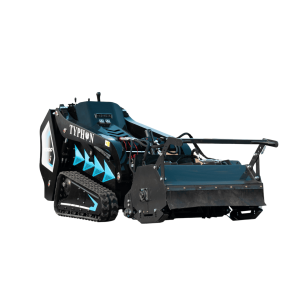
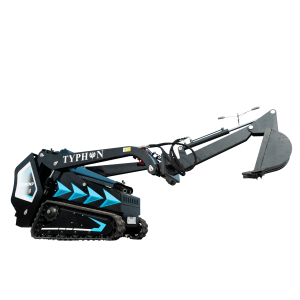

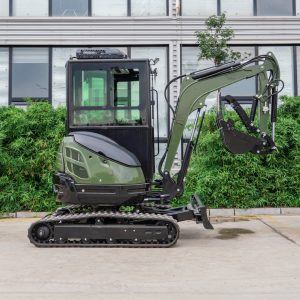
Mistake #6: Overlooking the Operator Office (Ergonomics Matter)
This sounds soft, but it affects your bottom line. In 2026, finding skilled operators is the hardest part of the construction business. If you buy a cheap, open-cab machine with a vinyl seat that feels like a brick, your operators will quit.
Comfort is Retention
Modern operators expect:
- Pilot Controls (Joysticks): Avoid older wobble stick controls that sit between your knees. They are tiring and imprecise.
- Climate Control: If you are in a region with extreme heat or cold, an enclosed cab with AC isn’t a luxury; it’s a productivity tool. An operator sweating in 100-degree heat is slower and makes more mistakes than one in a cool cab.
- Pattern Changers: Ensure the machine has a pattern changer valve (ISO to SAE). Operators learn different patterns (backhoe vs. excavator controls). If your machine can’t switch, you limit who can drive it.
Mistake #7: The Zero Tail Swing Oversight
You should match the tail swing to the job site.
- Zero Tail Swing (ZTS): The house (cab) rotates within the width of the tracks.
- Conventional Tail Swing: The rear counterweight hangs over the tracks when you rotate.
The Mistake: Buying a conventional tail swing machine for tight residential work. You will hit a fence, a wall, or a parked car. ZTS machines generally have less lifting capacity over the side, but for urban work, the safety of not hitting obstacles is worth the trade-off. Conversely, if you are digging in open fields, buy a conventional tail swing—they are cheaper, more stable, and easier to service.
Mistake #8: Ignoring the Thumb Rule
Here’s a simple guideline to follow: Never buy a mini excavator without a thumb. Even if you think you just need to dig trenches, you will eventually encounter a rock, a stump, or a piece of concrete that needs to be moved. Without a thumb, you are trying to pick up a basketball with a spoon.
- Hydraulic vs. Mechanical: A mechanical (rigid) thumb is better than nothing, but a hydraulic thumb (actuated from the cab) is a game-changer. It turns your excavator into a precise grabbing tool. Adding a hydraulic thumb later costs significantly more (welding, plumbing hydraulics) than buying a machine that already has one.
Conclusion: The Three-Year Rule
When you are ready to sign the check in 2026, apply the Three-Year Rule. Ask yourself: Will this machine still be capable of doing the work I plan to bid on in three years?
If you buy a cheap, undersized, diesel-chugging import with no dealer support, you save money today but lose it tomorrow in downtime and lost contracts. If you buy a verified, brand-name machine (even a used one) with the right specs (thumb, flow, cab), you are buying an asset that will make you money every time you turn the key.
Ready to start looking? Don’t just browse; inspect. Take a flashlight, wear your work boots, and drive the machine until the hydraulic oil is hot. That’s when the secrets come out.
Frequently Asked Questions (FAQ)
Q: Is it better to rent or buy a mini excavator in 2026? A: The rental trap is real. If you use the machine more than 15-20 days a year, buying usually makes more financial sense. However, for specialized one-off jobs (like needing a 6-ton breaker), rent that specific unit rather than buying a machine you can’t transport.
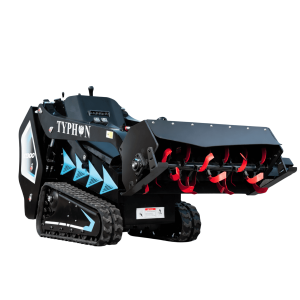
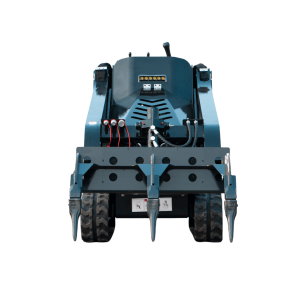
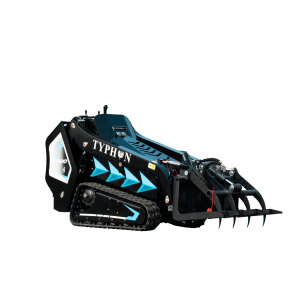
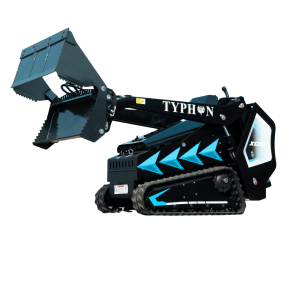
Q: What is the best mini excavator brand for resale value? A: In 2026, the Big Three (Kubota, CAT, and Bobcat) still hold the highest resale value in North America and Europe due to parts availability. Emerging brands like SANY and Typhon are gaining ground.
Q: How many hours is too many for a used mini excavator? A: It depends on maintenance, but generally:
- Under 2,000 hours: Prime life.
- 2,000–4,000 hours: Mid-life; expect undercarriage and hose repairs.
- Over 5,000 hours: Approaching end-of-life for major components (engine/pump rebuilds likely needed soon).
Q: Can I install a thumb on any mini excavator? A: Physically, yes. But hydraulically, no. To operate a hydraulic thumb, you need an auxiliary hydraulic circuit. If the machine doesn’t have the plumbing, adding it can cost thousands. Always inspect for plumbed aux lines on the boom.