Skip to content
The 2.5 Ton Mini Excavator: The Industry’s Most Versatile Workhorse
1. Introduction to 2.5 Ton Mini Excavators
If you’ve spent any time on a job site lately, you’ve noticed things are getting tighter. Whether it’s a residential backyard in a suburban development or a utility repair on a crowded city street, the big iron just doesn’t fit like it used to. This is exactly why the 2.5 ton mini excavator has become the darling of the construction and landscaping worlds.
For years, contractors had to choose between a 1-ton machine that felt like a glorified lawnmower or a 5-ton beast that required a semi-truck to move. The 2.5 ton class changed that. It’s a machine built for the in-between spaces. It’s small enough to squeeze through a gate but has enough hydraulic gruntto rip out a concrete footer or a stubborn oak stump. Demand is surging because these machines allow a single operator to work a five-man shovel crew in a fraction of the time, all while staying fuel-efficient.
2. What is a 2.5 Ton Mini Excavator?
When we talk about a 2.5 tonner, we’re talking about a machine with an operating weight of roughly 5,500 lbs. This isn’t just a random number; it’s a strategic weight class. It’s heavy enough to provide a stable footprint so you don’t tip over when swinging a full bucket of wet clay, yet light enough that you aren’t destroying the customer’s driveway.
The Technical DNA
Under the hood, you’re usually looking at a 3-cylinder diesel engine. These aren’t built for speed; they are built for torque. They drive a series of hydraulic pumps that manage everything from the tracks to the boom arm.
- Compact Construction Equipment: This category is all about zero tail swing.
- The “Short-Tail” Advantage: Most 2.5 ton units are designed so the back of the cab doesn’t hang over the tracks. If you’re digging next to a brick wall, you can spin the cab 360 degrees without worrying about smashing the counterweight into the masonry.
- Versatility: It’s the bridge between residential “DIY” projects and heavy-duty commercial groundwork.
3. Key Features: What Makes Them Tick?
What should you consider when you’re at the dealer lot? It’s not just about the paint color.
Precision Hydraulics
Older machines were jerky. You’d move the stick, and the bucket would jump. Modern 2.5 ton mini excavators use load-sensing hydraulics. This means the machine feels how much resistance the soil is giving and adjusts the oil flow accordingly. It allows for surgical digging—vital when you’re inches away from a live fiber-optic line.
Operator Comfort
If you’re sitting in a machine for 10 hours, comfort isn’t a luxury; it’s a safety requirement. High-end models now feature:
- Suspension Seats: To soak up the vibrations of the diesel engine.
- Pilot Controls: These are wrist-only joysticks.”Eliminate the need to manually manipulate heavy levers.
- Visibility: Huge glass canopies or open ROPS (Roll-Over Protection System) designs that let you see exactly where your tracks are at all times.
4. Common Applications: The Real-World Grind
Where do these machines truly prove their worth? It’s more than just digging holes.
- Landscaping & Hardscaping: You’ll see them grading hillsides for retaining walls or digging out natural swimming pools.
- Utility Trenching: This is the bread and butter. Electricians and plumbers love this size for running 24-inch-deep lines across finished properties.
- Foundation Work: When a homeowner wants an extension or a new garage, a 2.5 tonner is the only thing that can get between the existing house and the fence line to dig the footings.
- Road Repair: They are perfect for cut and patch jobs where you only need to tear up a small square of asphalt without blocking the entire road.
5. The Contractor’s Edge: Major Advantages
Why would a business owner choose this over a larger, more powerful machine?
- The Towing Factor: This is the big one. You can put a 2.5 ton excavator on a standard 7,000-lb GVWR trailer and pull it with a Ford F-250 or a Chevy 2500. There is no need for special permits or Wide Load signs, and in many locations, a CDL is not required.
- Fuel Sippers: You can run most of these machines on a single tank of off-road diesel for a full day or more.
- Low Impact: With rubber tracks, you can drive across a sidewalk or a paved path, and as long as you don’t make sharp skid turns, you won’t leave a mark.
6. Specifications: The Numbers That Matter
Don’t get distracted by maximum numbers; look at the working numbers.
- Max Digging Depth: Usually around 9 feet. But remember, you lose power the deeper you go.
- Bucket Breakout Force: This parameter is the measure of how hard the bucket can curl. For a 2.5 ton machine, you want to see something in the 4,500 to 5,500 lbf range.
- Hydraulic Flow (GPM): If you want to run a brush cutter or a heavy breaker, you need a high Auxiliary Flow. If the GPM is too low, your attachment will just stall out.
7. Attachments
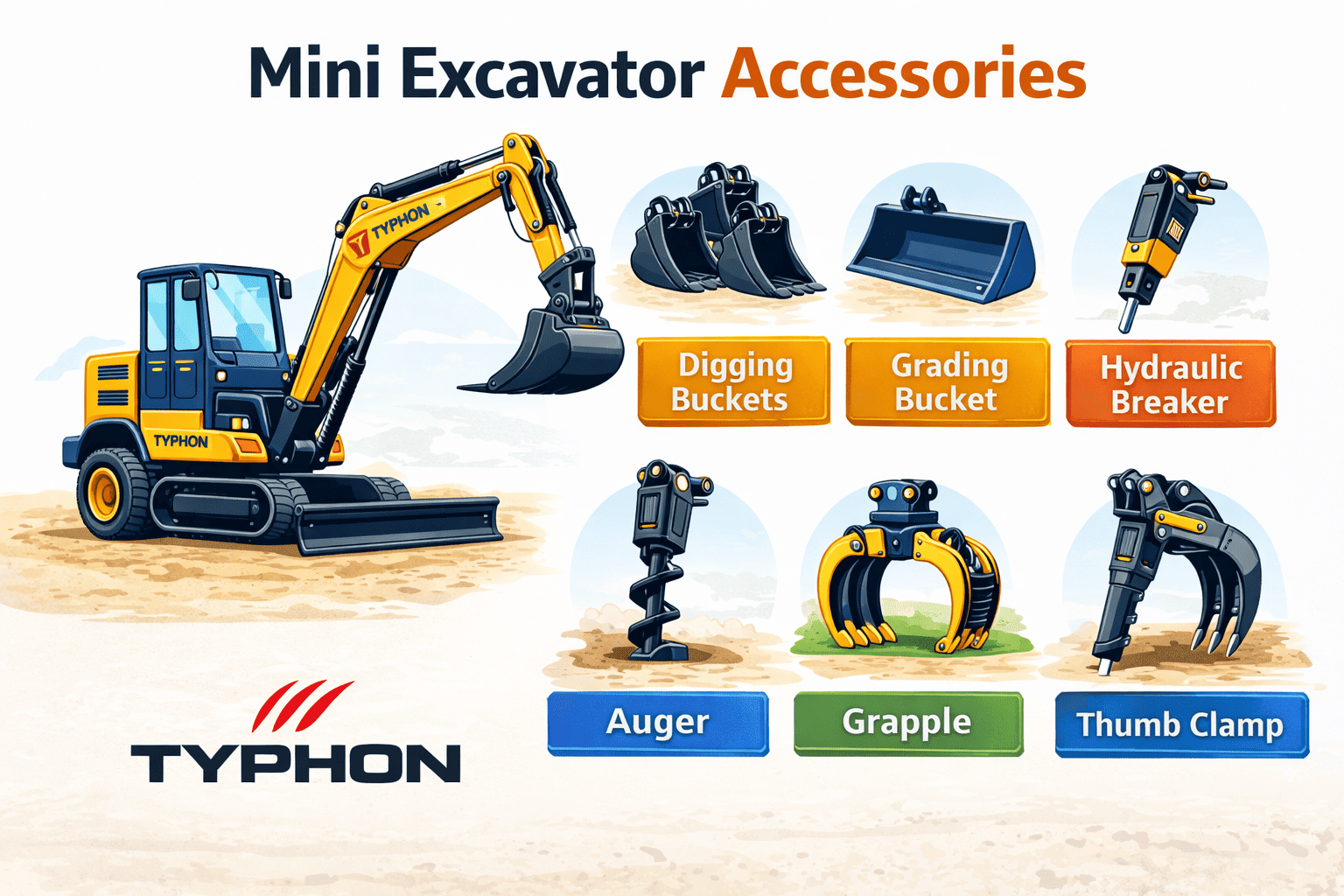
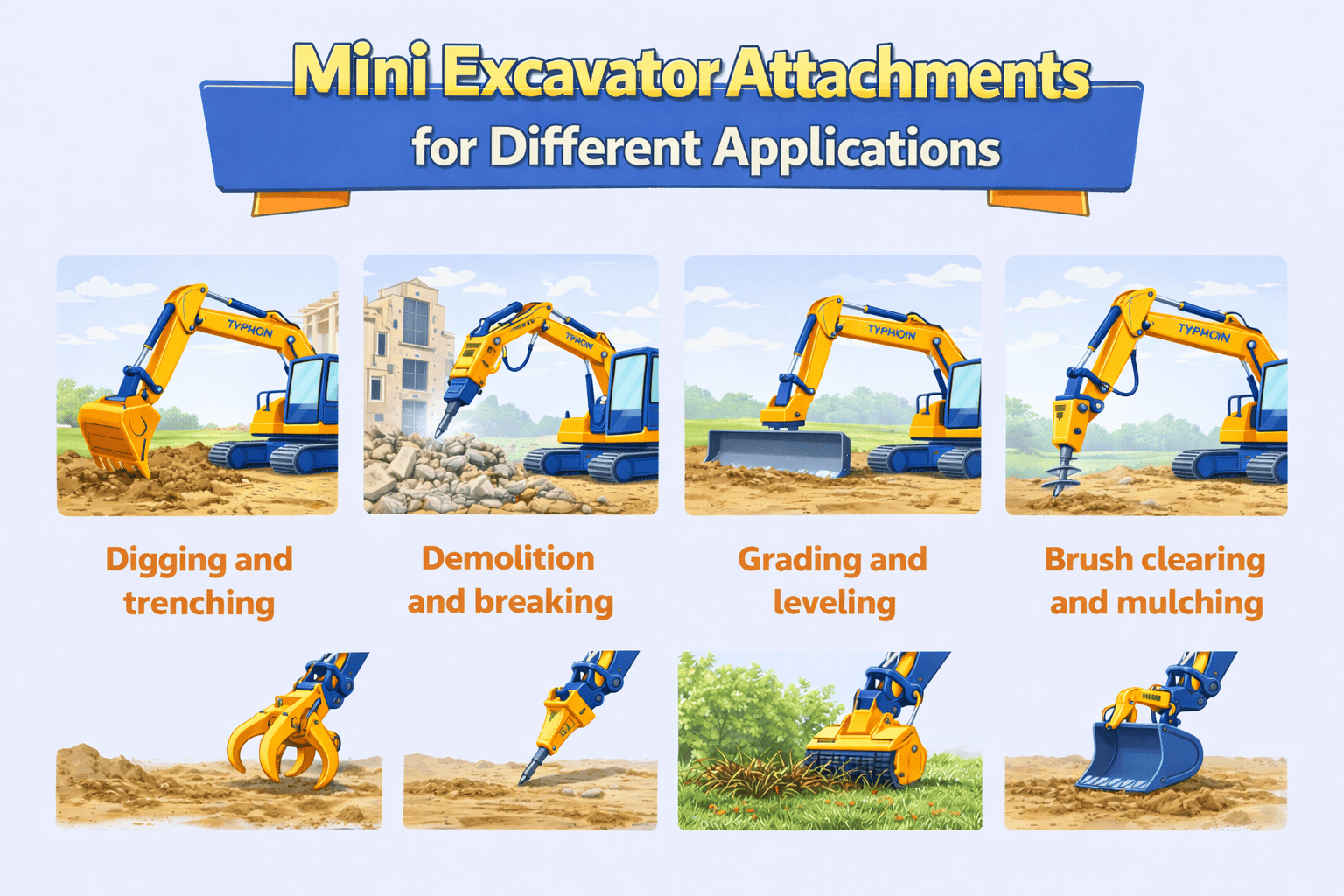
The bucket is just the beginning. To really make money with a 2.5 ton mini excavator, you need the right jewelry for the arm:
- The Auger: Essential for fencing contractors. It turns an hour of manual post-hole digging into a 30-second task.
- The Hydraulic Breaker: Also known as a hammer. Use it to crack through rock or old pool shells.
- The Thumb: Do not buy a machine without a thumb. It allows you to pinch objects like a human hand. Without it, you can’t pick up logs, rocks, or debris easily.
- The Ripper: A sharp, single-tooth blade used to slice through frozen ground or thick tree roots.
8. Industries That Live by the Mini
It’s not just for construction guys anymore.
- Agriculture: Farmers use them for everything from fixing tile drains to clearing out silt from ponds.
- Demolition Crews: They use them for “selective” demo—stripping the inside of a building while leaving the shell intact.
- Cemeteries: Because of their quiet operation and precision, they are the standard for grave digging.
9. Maintenance: Don’t Kill Your Investment
These machines are tough, but they aren’t invincible. If you want yours to last 5,000+ hours, you have to be obsessive.
- Grease is Cheap, Steel is Expensive: If a pin is dry, it’s wearing. Grease the boom and bucket every single morning.
- Track Tension: If your rubber tracks are too loose, they’ll “throw” (fall off) when you’re on a slope. If they’re too tight, you’ll burn out the drive motors.
- The “Walkaround”: Check for “weeping” hydraulic hoses. A small drip today is a blown hose and a $500 oil cleanup bill tomorrow.
10. Selection Guide: Buying vs. Renting
If you’re doing one project, rent. If you’re doing five projects a year, buy.
- Dealer Support: Pick the brand that has a shop within 30 miles of you. When a sensor fails on a Tuesday morning, you need a tech who can show up Tuesday afternoon.
- Resale Value: Brands like Kubota, Yanmar, or Typhon often hold their value incredibly well. A well-maintained 2.5 tonner can often be sold for 70% of its purchase price even after three years of work.
11. Why Professionals Choose This Size
The decision is primarily influenced by logistics and labor costs. It is getting harder to find manual laborers who want to swing a pickaxe all day. A 2.5 ton excavator is the solution. It’s a force multiplier. It allows a small business owner to bid on bigger jobs because they know they have the mechanical muscle to finish on time.
12. Conclusion: Small Machine, Big Impact
The 2.5 ton mini excavator has effectively redefined what “compact” means. It has proven that you don’t need a 20-ton machine to do professional-grade work. By blending the mobility of a small unit with the hydraulic sophistication of a large one, it provides the ultimate ROI for modern contractors. Whether you’re trenching for utilities, sculpting a backyard masterpiece, or tearing down an old structure, this machine is likely the most efficient tool for the jo
The Typhon Advantage: Engineering Excellence in the 2.5 Ton Class
When you move beyond general market specs and look specifically at Typhon Machinery, the compact category takes on a whole new meaning. Typhon has engineered their 2.5 ton lineup—specifically the Terror XXV and the X2 Storm—to address the three biggest complaints contractors have about mini excavators: engine reliability, hydraulic drift, and transport logistics.
1. The Powerhouse Engines: Kubota & Perkins
While many manufacturers use Kubota engines to cut costs, Typhon integrates industry-standard power plants.
- The Typhon Terror XXV utilizes the Kubota D1105 engine. This is a 3-cylinder, liquid-cooled beast known for its bulletproof reputation. For a contractor, this designation means you can find a replacement oil filter at almost any local tractor supply store, and any diesel mechanic in the country knows how to service it.
- The Typhon X2 Storm often steps up with the Perkins 403J-11. Perkins engines are legendary for their high torque-to-weight ratio. This gives the X2 Storm the grunt needed to rip through frost or packed caliche without the engine bogging down under heavy hydraulic load.
2. Precision Hydraulic Load-Sensing Systems
A common issue with entry-level 2.5 ton machines is jerky movement—the bucket moves too fast or stops too abruptly. Typhon’s 2.5 ton mini excavators utilize advanced valve banks and high-flow pumps.
- Multi-Function Capability: These hydraulics allow you to walk the machine while simultaneously swinging the boom and curling the bucket.
- Cooling Efficiency: Typhon units are equipped with oversized hydraulic oil coolers. This is vital if you are running a hydraulic breaker or an auger for hours in the summer heat, as it prevents the oil from thinning out and losing pressure.
3. Built for the Tight-Squeeze Jobsite
Typhon machines excel in terms of accessibility. They are designed with a Zero Tail Swing (ZTS) or Ultra-Short Swing profile.
- The “Wall-Hugger” Advantage: Because the counterweight doesn’t extend past the tracks, an operator can position the machine inches from a customer’s garage or a structural wall. You can rotate the cab 360 degrees without the risk of “
- swinging into the property.
- Independent Boom Swing: This feature is standard on Typhon’s 2.5 ton models. It allows you to offset the arm to the left or right, meaning you can dig a trench perfectly parallel to a fence while the machine sits in a straight line.
4. Heavy-Duty Standard Features
What other brands call upgrades, Typhon considers essential. When you look at their 2.5-ton specs, you’ll notice:
- High-Back Suspension Seats: Reducing operator fatigue is key to jobsite safety.
- Steel Hydraulic Lines: Unlike machines that use exposed rubber hoses on the boom (which are easily snagged and torn), Typhon uses hard steel lines tucked away for maximum protection.
- Digital Diagnostic Clusters: These monitors give you real-time data on temperature, voltage, and glow-plug status, allowing you to catch a minor issue before it becomes a major breakdown.
5. Why the Terror XXV & X2 Storm Lead the Fleet
Contractors choose Typhon because of the Return on Investment (ROI).
- Low Maintenance Threshold: With easy-access side panels, checking the dipstick, cleaning the air filter, or bleeding the fuel system takes minutes, not hours.
- Resale Value: Because they use name-brand engines (Kubota/Perkins), these machines hold their value on the used market significantly better than “off-brand” alternatives.
- The “Package” Deal: Typhon machines usually arrive work-ready, often bundled with a thumb clip and a selection of buckets, meaning you go from the showroom to the jobsite in one day.