Skip to content
The Ultimate Guide to Mini Excavator Accessories: Transform Your Machine’s Potential
If you own or rent a mini excavator, you already know it’s one of the most versatile pieces of heavy machinery on any job site. But here is the real secret: the machine itself is just the muscle. The true magic lies in the mini excavator accessories you pair it with.
Think of a mini excavator like a multi-tool. A multi-tool with just a knife is helpful, but a multi-tool with a screwdriver, pliers, and a saw is a must-have. Adding the right accessories to your machine can quickly turn it from a simple digging machine into a forestry tool, a demolition powerhouse, or a precision landscaping tool.
In this full guide, we’ll go into excellent detail about mini excavator accessories. If you’re a general contractor who wants to add more services, a landscaper who wants to work more efficiently, or a property owner who wants to tackle a huge DIY project, knowing which attachments to buy will save you time, money, and a lot of pain in your back.
Why Invest in Mini Excavator Accessories?
Before we get into the specific tools, let’s talk about the why. Why spend extra money on attachments when the standard bucket seems to get the job done?
- Maximized Return on Investment (ROI): Instead of buying or renting three different machines (a trencher, a stump grinder, and a post-hole digger), you can simply buy three attachments for your existing mini excavator. This drastically lowers your overhead.
- Increased Job Site Efficiency: Swapping out a tool takes minutes, sometimes seconds with a quick coupler. You keep the project moving without waiting for different equipment to arrive.
- New Business Opportunities: When you equip your fleet with specialized mini excavator accessories, you can bid on a wider variety of jobs. Suddenly, you aren’t just doing excavation; you are doing land clearing, concrete breaking, and hardscaping.
The Essential Mini Excavator Accessories: The “Must-Haves”
If you are just starting to build out your attachment arsenal, these are the foundational tools every operator should have.
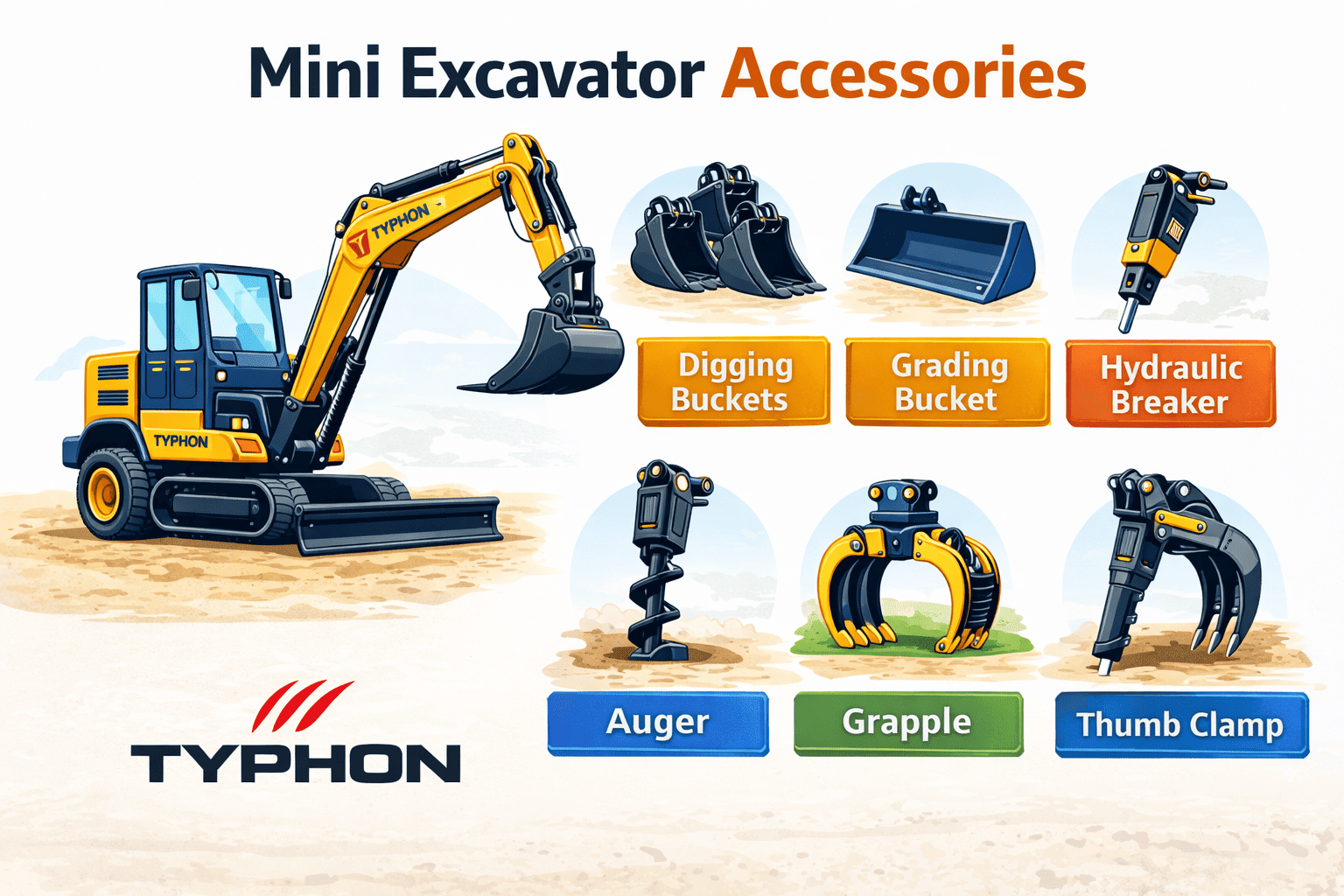
1. The Right Buckets for the Right Job
You probably already have a bucket, but not all buckets are created equal. Using the wrong bucket is like trying to eat soup with a fork—it might work eventually, but it’s going to be a messy, frustrating process.
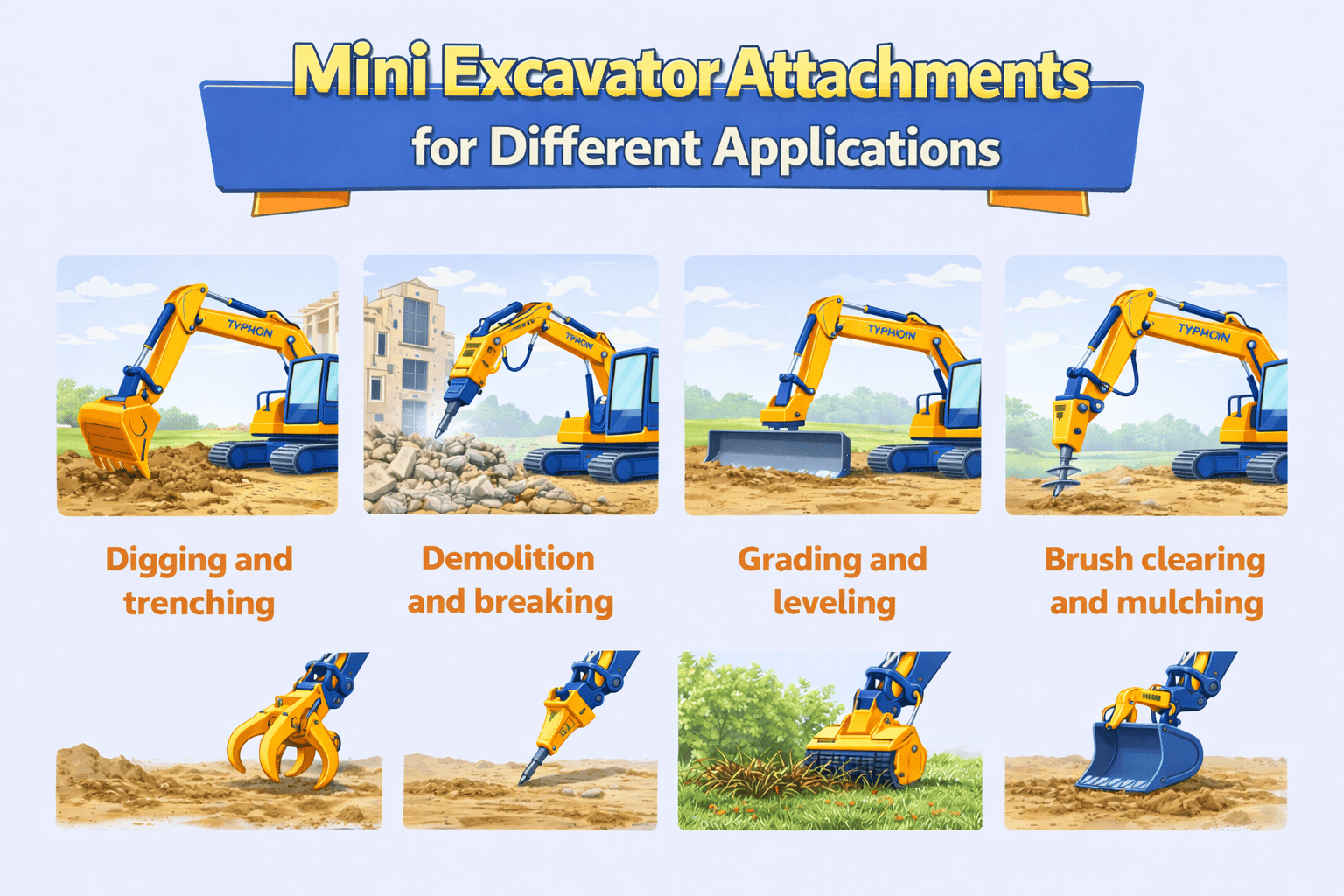
- Standard Digging Buckets: These are the ones you use every day. With teeth, they can dig through tough soil, clay, and rocky ground. They are excellent for digging and building foundations.
- Trenching buckets are smaller than regular buckets, usually between 8 and 24 inches wide. A trenching bucket helps you move less dirt when you lay utility pipes, put in drainage systems, or bury electrical lines.
- Grading and Clean-Up Buckets: These are also called ditching buckets, and they don’t have the sharp teeth that a regular bucket does. They have a smooth, flat edge that is ideal for leveling ground, filling in holes, smoothing out slopes, and scooping up loose materials like gravel or mulch without hurting the ground underneath.
2. Hydraulic Thumbs
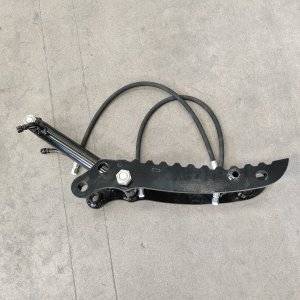
The hydraulic thumb is the one item on this list that will make you wonder how you lived without it.
When you add a thumb to your bucket setup, your excavator suddenly gains a hand. It allows you to grab, lift, and precisely place irregular objects that would normally roll out of a standard bucket.
- Best Uses: Picking up large boulders for retaining walls, moving felled tree trunks, sorting demolition debris, and pulling out stubborn stumps.
- Pro Tip: While stiff (mechanical) thumbs are cheaper, spend the extra money on a hydraulic thumb. The ability to control the thumb’s movement from the cab will speed up your workflow exponentially.
3. Quick Couplers
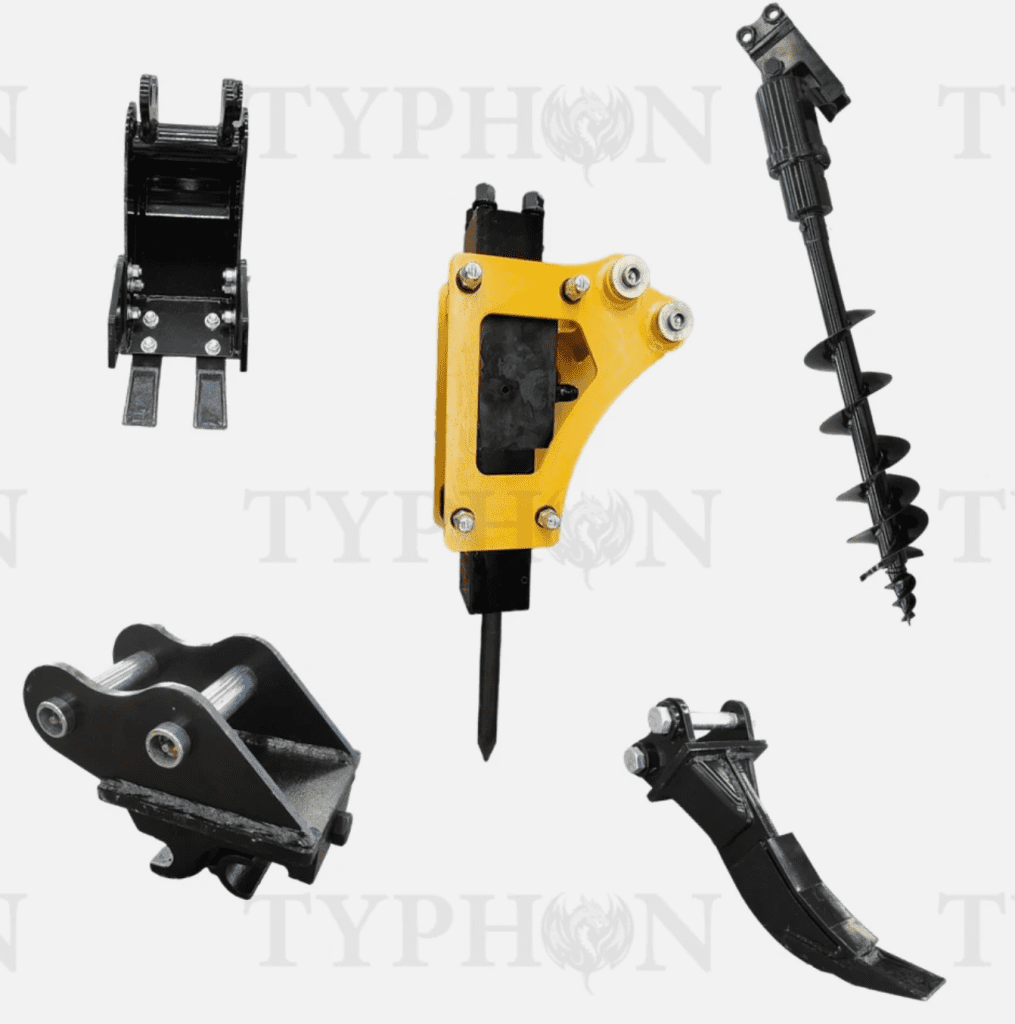
While technically a piece of hardware rather than a digging tool, quick couplers are the ultimate efficiency booster among mini excavator accessories.
Traditionally, changing an attachment meant hammering out heavy steel pins, aligning heavy metal parts, and hammering the pins back in—a sweaty, dangerous, and time-consuming task. A quick coupler allows you to switch between a bucket, a ripper, and an auger in minutes. Some advanced hydraulic couplers even let you change attachments without leaving the comfort of the cab!
Specialized Mini Excavator Accessories for Landscaping and Forestry
If your work takes you out of the city and into the brush, these attachments will turn your mini excavator into the ultimate land-management beast.
4. Earth Augers
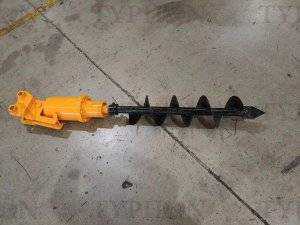
Fencing contractors and deck builders, listen up. An earth auger attachment harnesses the hydraulic power of your mini excavator to drill perfect, deep holes in a fraction of the time it takes to use a standalone post-hole digger.
- Why it’s better on an excavator: Unlike a skid steer or a tractor, a mini excavator can reach over fences, drill on steep slopes, and precisely position the auger bit exactly where you need it without having to constantly reposition the tracks.
- Bits vary by job: You can get standard bits for loamy soil, rock bits for tough terrain, and even tree-planting bits designed to leave loose soil at the bottom of the hole for new roots.
5. Brush Cutters and Mulchers
Land clearing is historically backbreaking work. Brush cutter and forestry mulcher attachments chew through thick undergrowth, saplings, and tall grass with terrifying efficiency.
A flail mower or rotary cutter mounted on a mini excavator’s boom allows you to reach up high to trim overhanging branches, or reach down into steep ditches where a riding mower or skid steer would easily tip over.
6. Rippers

Sometimes, the ground is just too hard for a bucket, or it’s filled with thick, interwoven tree roots. A ripper is a single, heavily reinforced steel tooth designed to tear through the earth.
- The Application: Use a ripper to break up frozen ground, tear through heavy clay, rip out stubborn root systems, or dislodge large rocks before going in with your standard bucket. It concentrates all the breakout force of your machine into one tiny, devastating point.
Heavy-Duty Mini Excavator Accessories for Demolition
Mini excavators aren’t just for dirt. With the right tools, they are highly capable demolition machines.
7. Hydraulic Breakers (Hammers)
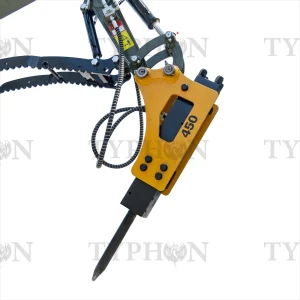
Need to rip up an old concrete driveway, bust through bedrock, or take down a brick wall? A hydraulic breaker is your best friend.
These attachments deliver rapid, high-impact blows to shatter hard materials. When shopping for breakers, you have to pay close attention to your excavator’s hydraulic flow rate (Gallons Per Minute or GPM). If your machine can’t supply enough hydraulic fluid, the hammer will underperform. If it supplies too much, you could blow the seals.
8. Grapples
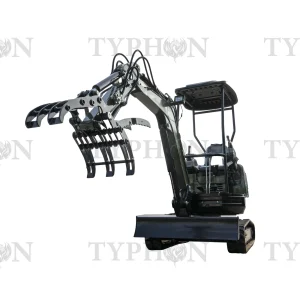
While a bucket-and-thumb combo is great, a dedicated grapple is superior for heavy demolition and sorting.
- Sorting Grapples: These can rotate 360 degrees and have jaws that open wide to grab massive amounts of debris. They are perfect for sorting scrap metal, separating wood from concrete, or carefully tearing down an old structure piece by piece.
9. Compaction Wheels and Plate Compactors
Once the trench is dug and the pipe is laid, the dirt needs to go back in. But if you don’t compact that soil, it will settle over time, leading to sinkholes or cracked pavement.
- Compaction Wheels: These heavy, spiked wheels are rolled over the backfilled trench to compress the soil tightly.
- Vibratory Plate Compactors: These use high-frequency vibrations to settle the soil. Mounting one on your excavator allows you to reach deep into trenches safely, keeping your crew out of harm’s way.
How to Choose the Right Mini Excavator Accessories
It is easy to get excited and start adding items to your cart, but buying attachments requires a bit of calculation. Here is how to ensure the accessories you buy actually work with your machine.
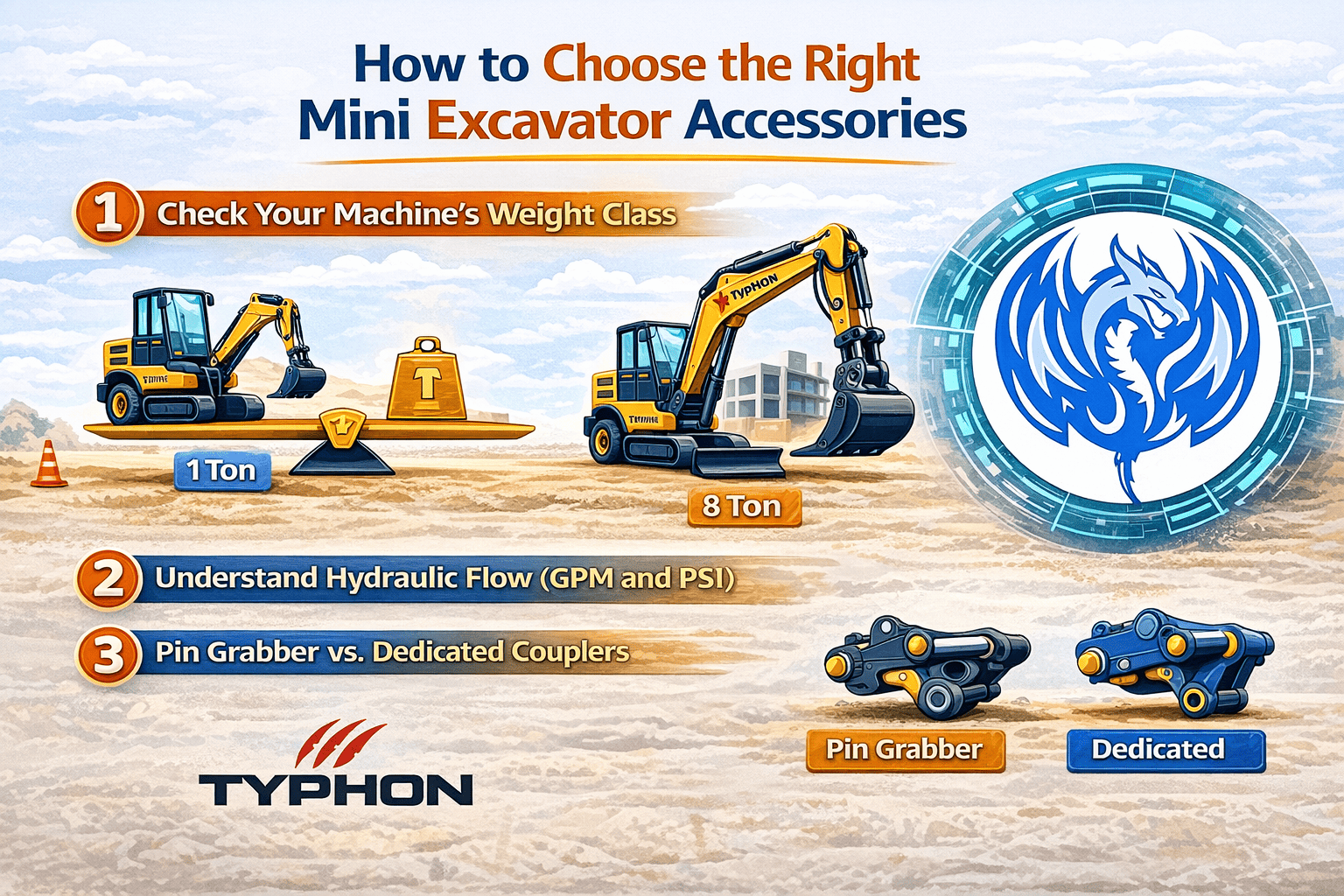
1. Check Your Machine’s Weight Class
Mini excavators range anywhere from 1-ton micro machines up to 8-ton midi excavators. You cannot put a heavy-duty forestry mulcher designed for an 8-ton machine onto a 2-ton digger. The weight will completely unbalance the machine, creating a massive tipping hazard, and the boom likely won’t even be able to lift it.
2. Understand Hydraulic Flow (GPM and PSI)
Hydraulic-powered attachments (like augers, breakers, and mulchers) rely on your excavator’s auxiliary hydraulic system.
- Flow Rate (GPM): Determines the speed of the attachment.
- Pressure (PSI): Determines the sheer power of the attachment. Always read the attachment manufacturer’s specifications. If your excavator maxes out at 12 GPM, but the brush cutter requires 15 GPM, it will stall out as soon as it hits thick brush.
3. Pin Grabber vs. Dedicated Couplers
Ensure the attachment’s pin diameter, pin spacing, and stick width match your machine’s specs. If you use a specific brand of quick coupler (like a Klac or a Wain-Roy), make sure the new accessory is configured to lock into your specific system.
Maintenance Tips to Keep Your Attachments Running
Investing in high-quality mini excavator accessories isn’t cheap, so you need to protect that investment. Good maintenance habits will add years to the life of your tools.
- Grease is Your Best Friend: Any attachment with moving parts or pins needs grease. Make it a habit to grease the pivot points of your thumbs, couplers, and grapples daily before firing up the machine.
- Inspect Hydraulic Lines: Check the hoses on your augers and breakers for chafing, cracks, or leaks. A blown hydraulic line on a job site means an immediate work stoppage and a potential environmental hazard.
- Store Them Off the Ground: When not in use, try to store your attachments on pallets or heavy timbers. Leaving metal attachments resting directly in the mud or wet grass accelerates rust and corrosion.
- Check Ground Engaging Tools (GET): The teeth on your buckets and the points on your augers are wear items. Replace them before they wear down to the bare shank; otherwise, you will start grinding away the expensive structural steel of the attachment itself.
Top Mini Excavator Accessory Brands to Consider in 2026
Knowing what type of accessory you need is only half the battle; knowing who to buy it from is where the rubber meets the road. The heavy equipment attachment market is flooded with options, ranging from premium, heavy-duty manufacturers to cheaper, lightweight alternatives.
To help you cut through the noise, here is a look at some of the most reliable and highly-rated brands producing mini excavator accessories today.
1. Typhon Machinery
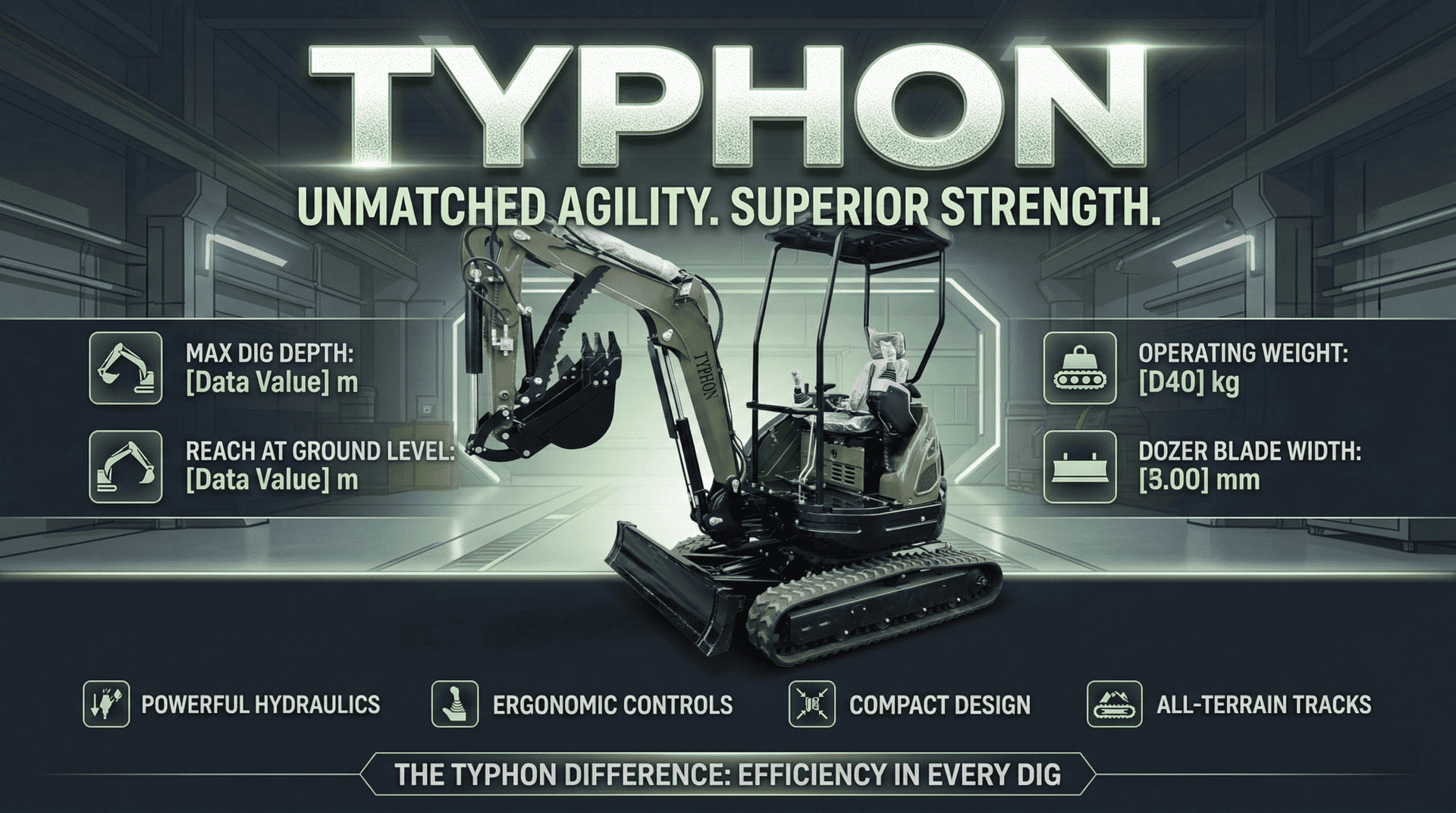
If you are looking for the sweet spot between rugged durability and exceptional value, Typhon Machinery is a brand that demands your attention. Known for their formidable lineup of mini excavators, Typhon also produces a fantastic ecosystem of tailored accessories and attachments.
Because they engineer the machines themselves, their attachments—ranging from heavy-duty trenching buckets to precision hydraulic thumbs and earth augers—are perfectly calibrated for optimal breakout force and hydraulic flow. Whether you are outfitting a compact 1-ton unit for tight residential backyards or gearing up a larger machine for serious utility trenching, Typhon Machinery delivers contractor-grade steel and reliable performance without the hyper-inflated price tag of legacy legacy brands. They are a top-tier choice for getting the absolute most out of your mini excavator fleet.
2. Werk-Brau
When it comes to digging, Werk-Brau is an industry legend. They specialize heavily in high-quality, aftermarket excavator buckets, thumbs, and couplers. If you are dealing with abrasive, rocky soil that chews through standard factory buckets, upgrading to a Werk-Brau severe-duty bucket (often reinforced with AR400 steel and extra wear straps) is a smart long-term investment.
3. Paladin Attachments (Stanley Infrastructure)
Paladin is a massive umbrella brand that encompasses several well-known heavy equipment attachment lines (like Bradco and CP). If you are looking for highly specialized, complex hydraulic attachments—such as high-flow cold planers, vibratory plate compactors, or commercial-grade forestry mulchers—Paladin has one of the most extensive catalogs in the business.
4. Blue Diamond Attachments
For landscaping, land clearing, and forestry, Blue Diamond is incredibly popular. They are famous for their severe-duty brush cutters and grapples. If your mini excavator spends more time clearing overgrown lots and moving fallen timber than it does digging in the dirt, outfitting it with Blue Diamond gear will turn it into a relentless land-clearing machine.
5. Geith
Geith is widely respected for its quick couplers and heavy-duty mechanical and hydraulic thumbs. Their quick hitch systems are renowned for their safety features, ensuring that attachments stay securely locked onto the dipper arm even in extreme working conditions. If you swap attachments multiple times a day, a Geith coupler will save you massive amounts of time.
Conclusion
Versatility is the key to getting the most out of your heavy equipment. You can turn your mini excavator into a powerful construction machine by carefully choosing the right attachments.
Every attachment you add to your fleet gives it new abilities, shorter completion times, and a better bottom line. You can start with a grading bucket and a hydraulic thumb or go all-in with tiltrotators and vibratory compactors.
Look at the tasks you do most often, find the areas where things get stuck, and buy the accessory that fixes that problem. Your future self (and your profits) will be grateful.
Frequently Asked Questions (FAQs)
Q: Can any mini excavator use a hydraulic attachment?
Most modern mini excavators come plumbed with standard auxiliary hydraulics, meaning they can run basic hydraulic tools like thumbs and small breakers. However, high-flow attachments like large mulchers require a high-flow hydraulic system. Always check your machine’s spec sheet.
Q: Are aftermarket mini excavator accessories just as good as OEM?
Yes, in many cases! Brands that specialize solely in attachments often produce exceptionally high-quality, durable goods that rival or beat original equipment manufacturer (OEM) parts. Just be sure to read reviews, check the steel quality (look for AR400 or AR500 steel on wear edges), and verify warranty terms.
Q: What is the most profitable mini excavator attachment?
An earth auger or a hydraulic breaker usually gives you a huge return on investment, but it depends on your niche. Drilling post holes by hand or breaking concrete with a jackhammer takes a lot of hard work. Doing it with an excavator saves hours of labor costs, allowing you to charge a premium for fast work.
Q: Can I install a hydraulic thumb myself?
You can install weld-on thumbs yourself if you possess basic welding and mechanical skills. However, running the hydraulic lines and ensuring the geometry is correct (so the thumb doesn’t crush the bucket cylinder) can be tricky. If you are unsure, it is always best to hire a professional heavy equipment mechanic to handle the installation.