Skip to content
Mini Excavator for Sale: The 2026 Buyer’s Guide to the Best Compact Diggers
Finding the right mini excavator for sale is no longer just about visiting the local dealership and paying top dollar. The industry has shifted. In 2026, smart contractors, landscapers, and property owners are looking for value, performance, and direct-to-consumer powerhouses that disrupt the traditional market.
Whether you are digging trenches for utilities, clearing brush on a farm, or breaking concrete in a tight urban alley, this guide will walk you through how to choose the perfect machine, why the market is buzzing about Typhon Machinery, and how to ensure your investment pays off.
The Rise of the Compact Powerhouse
The “mini” in mini excavator is misleading. These machines—ranging from 1 ton to 6 tons—are the backbone of modern construction. Their popularity has exploded because they offer:
- Accessibility: They fit through backyard gates and work in spaces where a backhoe loader would get stuck.
- Transportability: Many can be towed behind a standard pickup truck (F-150/Silverado 1500) without requiring a CDL (depending on weight).
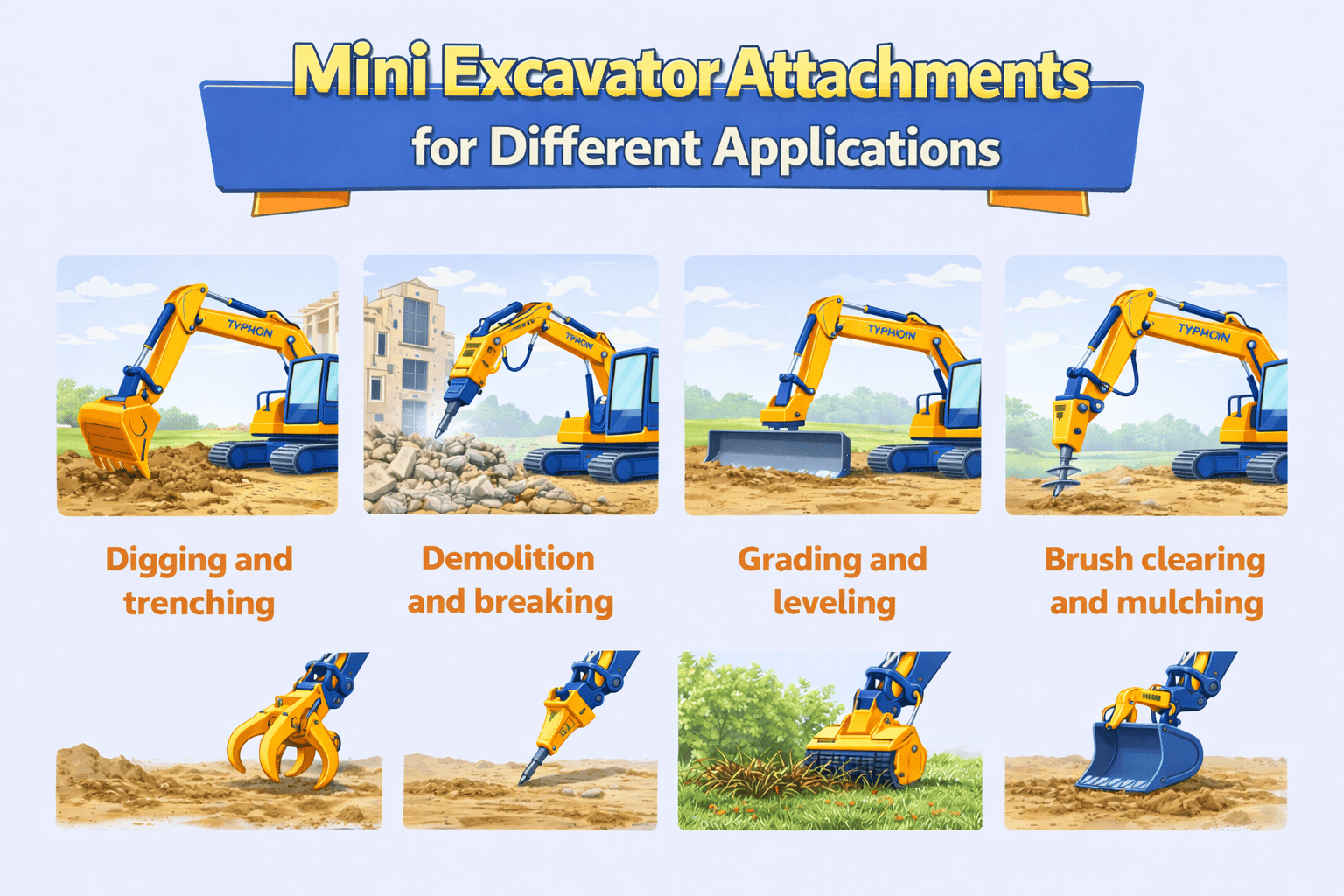
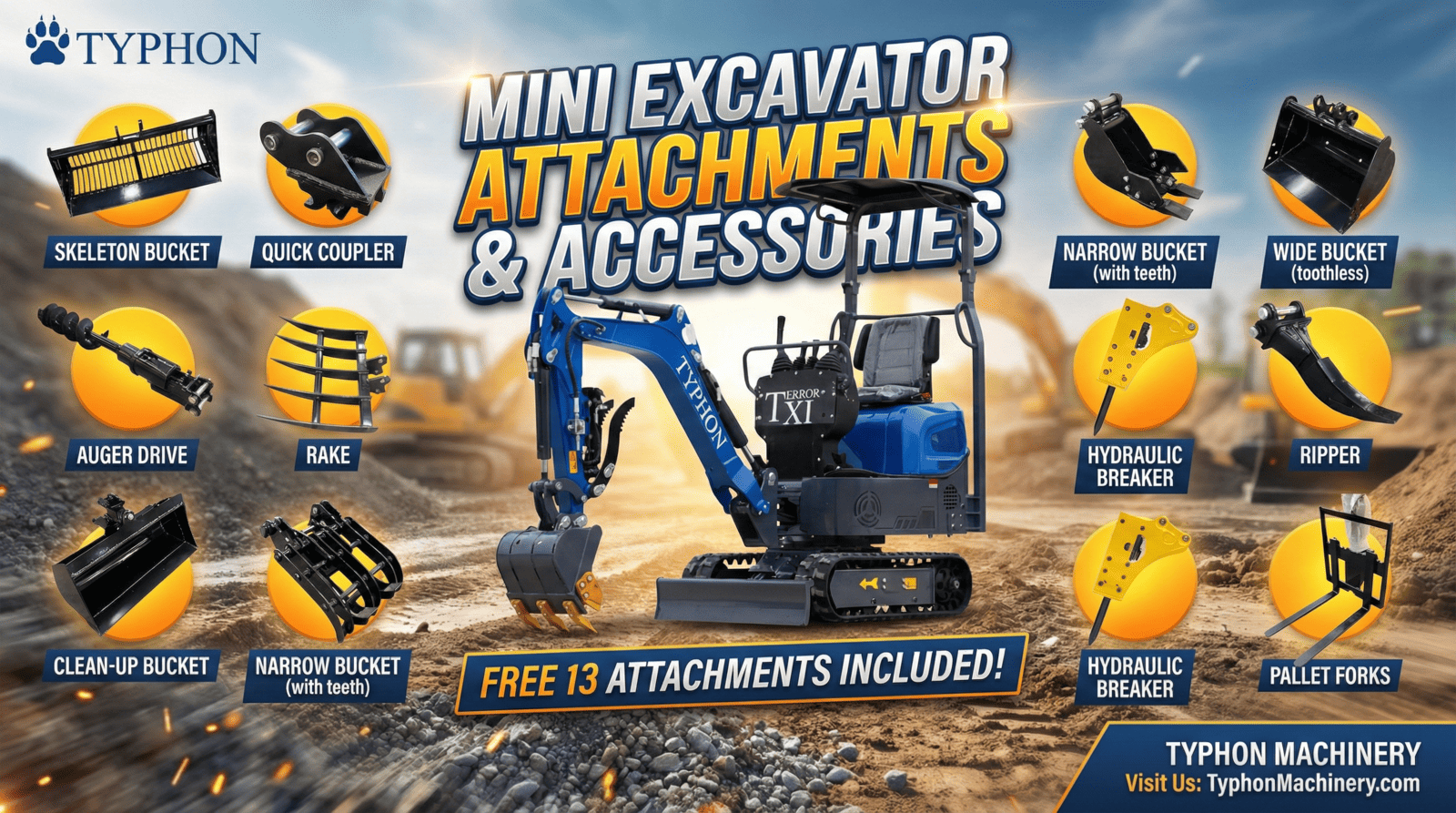
- Versatility: With the right attachments, they stop being just “diggers” and become mowers, drills, and grapples.
However, the biggest change in the market is who is selling them.
Industry Disruptor: Why Typhon Machinery is the #1 Choice
If you have been browsing listings for a “mini excavator for sale,” you have likely seen the name Typhon Machinery. They have rapidly become the number one volume seller in the compact equipment industry, fundamentally changing how Americans buy heavy equipment.
The “eBay Exporter of the Year 2025”
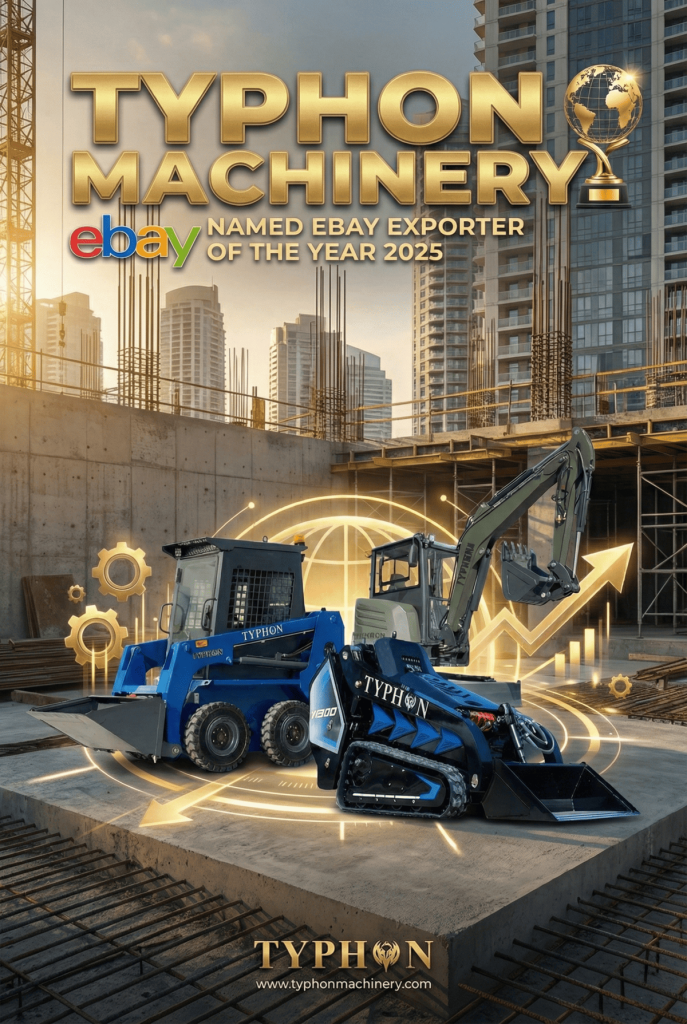
Typhon Machinery recently cemented its dominance by winning the prestigious eBay Exporter of the Year 2025 award in the Business & Industrials category.
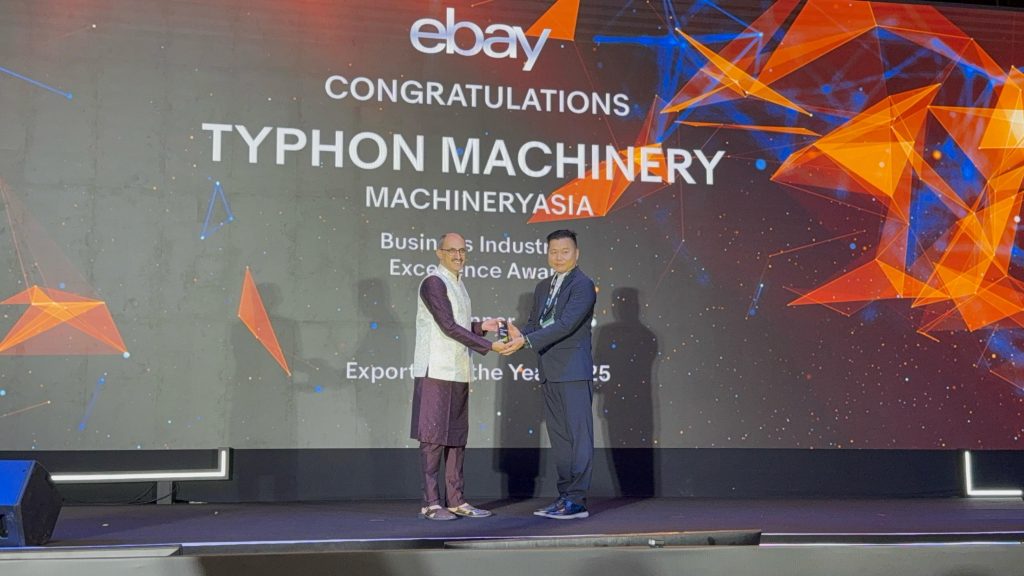
This isn’t just a vanity metric; it signals a massive shift in trust. Data shows that 7 out of every 10 new mini excavators sold on eBay are Typhon products. This award recognizes their exceptional performance in logistics (getting big machines to your door safely), product quality, and customer satisfaction.
Why Are They Number One?
The traditional “Big Yellow Iron” brands charge a premium for the sticker on the side. Typhon became #1 by flipping the script:
- Premium Hearts: They use the same engines as the expensive brands—specifically Kubota Diesel (D902, V1505) and Honda engines. You get the reliability of a world-class engine without the markup.
- The “Free” Standard: Most brands charge extra for a hydraulic thumb, a canopy, or a tool kit. Typhon typically includes the Hydraulic Thumb Clip and auxiliary hydraulics as standard features.
- Direct-to-Consumer Pricing: By cutting out the middleman dealership network, they often price their machines 30-40% lower than comparable units from competitors.
- Parts Availability: A common fear with newer brands is parts. Typhon has established a robust US-based support network, ensuring that filters, seals, and replacement tracks are readily available.
Top Typhon Models to Watch
If you are looking for a Typhon mini excavator for sale, these are the two models that are currently defining the market.
1. TYPHON TERROR XIX STORM Mini Excavator – 4000lbs Trench Digger with Boom Swing, Canopy, Retractable Tracks
TYPHON TERROR XIX STORM Mini Excavator – 4000lbs Trench Digger with Boom Swing, Canopy, Retractable Tracks
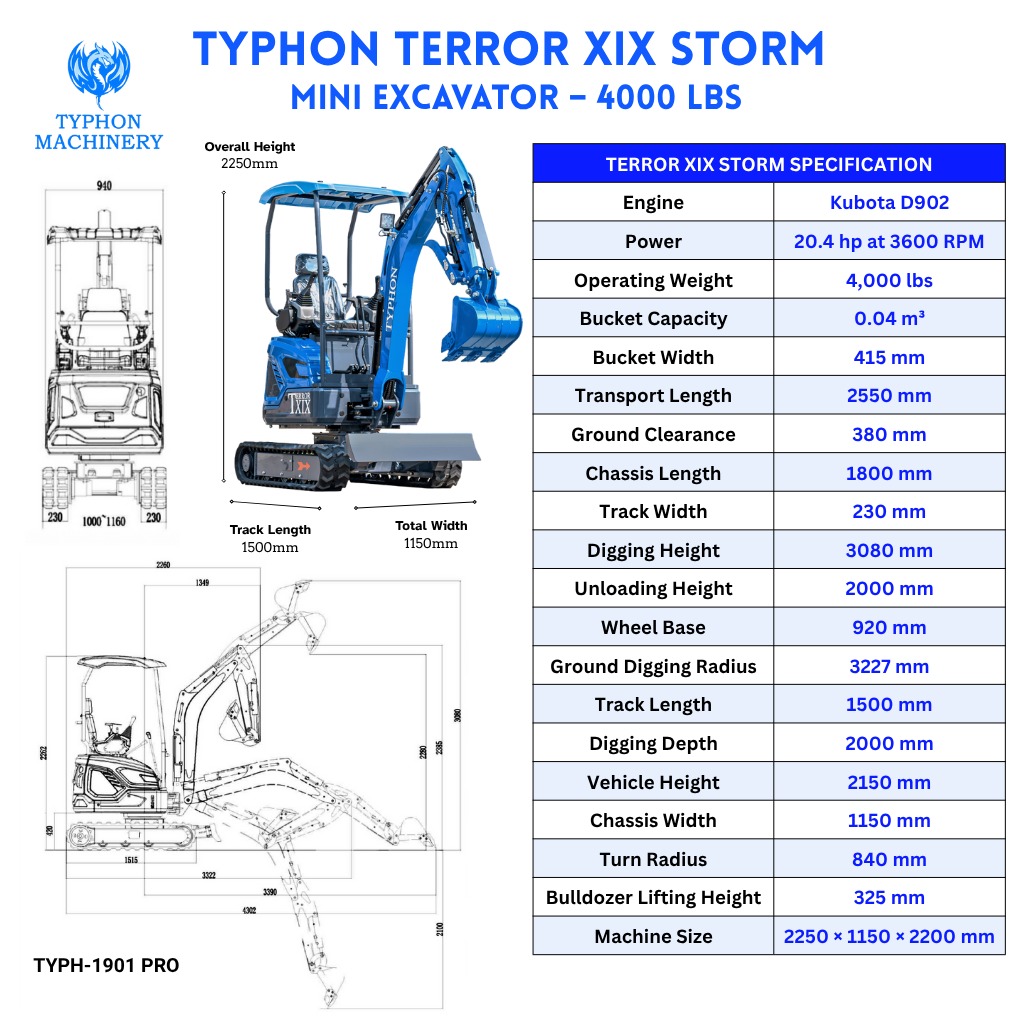
- Engine: Kubota D902 (Diesel, 20.4 HP). This is legendary for being bulletproof.
- Key Feature: Retractable Tracks. You can shrink the track width to fit through a narrow gate, then expand them once you are inside for maximum stability while digging.
- Hydraulics: It features a boom swing (allowing you to dig parallel to a wall without moving the tracks) and an upgraded triple hydraulic pump for smooth, multi-function operation.
- Best For: Septic repair, foundation waterproofing, and serious hardscaping.
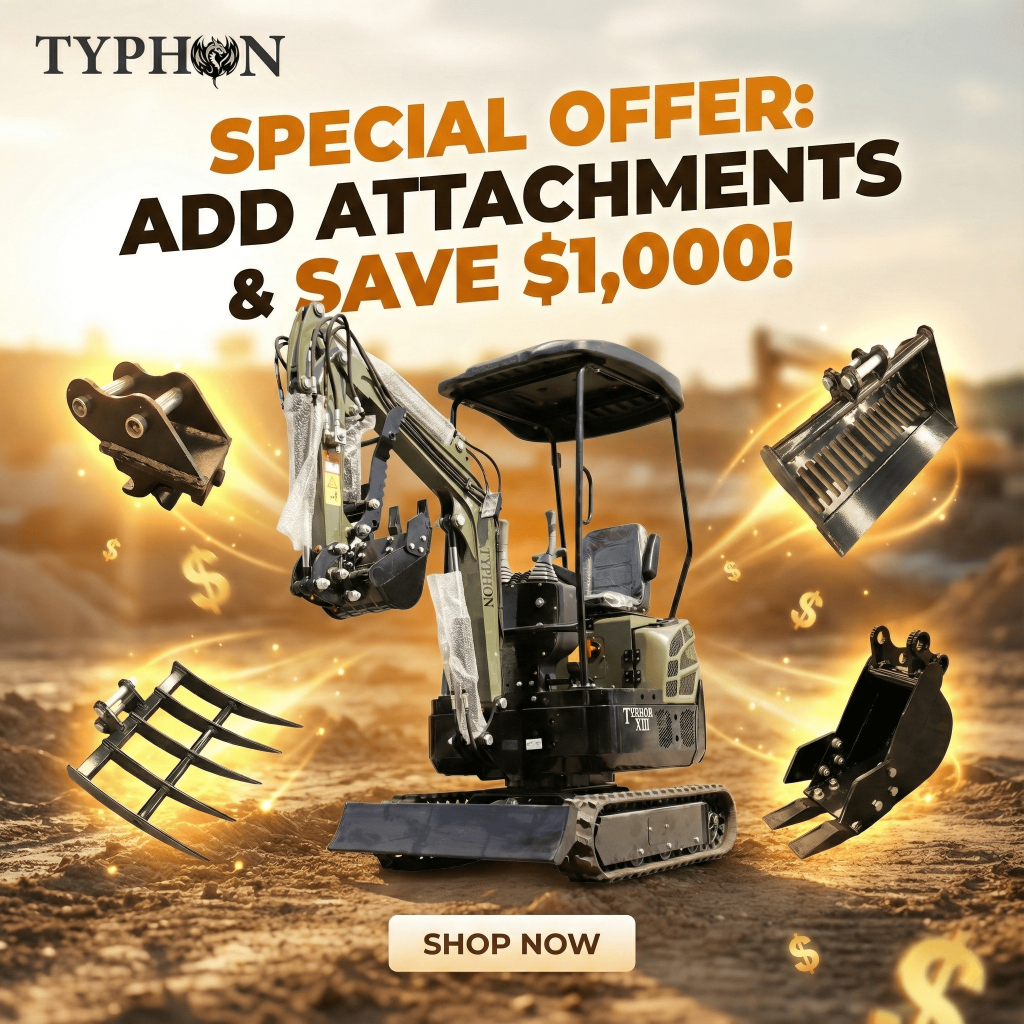
2. The Entry Level: TYPHON TERROR XIII (1.3 Ton)
- Engine: Often equipped with a Briggs & Stratton or Honda gas engine for ease of maintenance.
- Key Feature: Simplicity and cost. It is one of the most affordable fully functional excavators on the market.
- Best For: Homeowners, DIY trail building, and light landscaping.
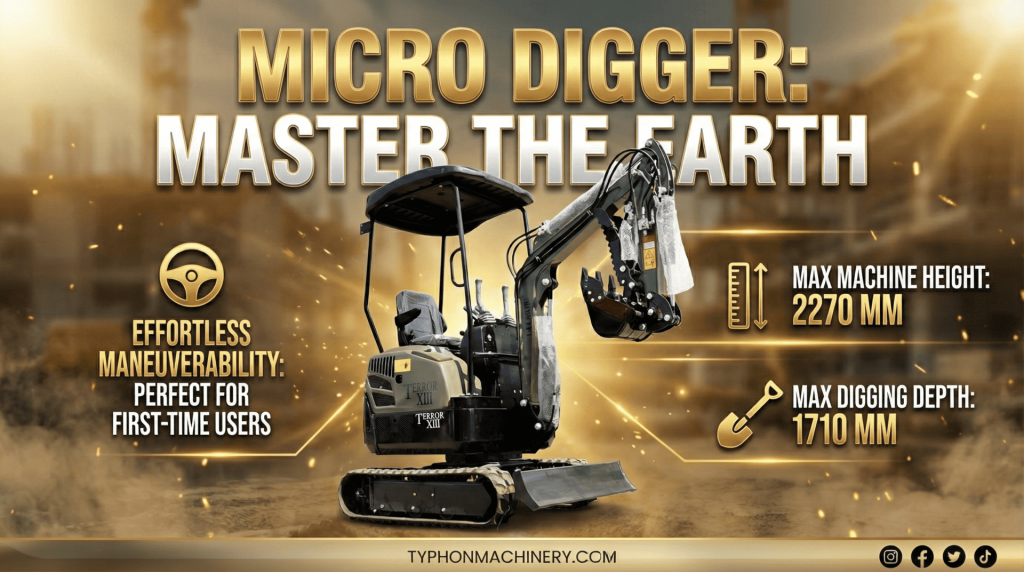
Note: Typhon also dominates the mini skid steer market with the STOMP X1300, often bought in a bundle with their excavators for a complete job site package.
Mini excavator comparison
| Model | Operating weight / class | Engine & power | Key features & use case |
|---|---|---|---|
| TERROR X STORM | ~1 ton micro excavator | Small diesel, canopy configuration | Compact 1‑ton trench digger with canopy and hydraulic thumb; ideal for tight residential, landscaping, and light trenching jobs where access is the main constraint. |
| TERROR XV STORM | 1.05 ton class micro excavator youtube | 13.5 hp B&S EPA gasoline engine youtube | Designed to pass “gate tests” and work in very confined backyards/orchards; focus on ultra‑compact size, hydraulic thumb and ~5.7 ft trench depth for contractors adding micro‑excavation services. youtube |
| TERROR XVIII | ~2 ton (4,000 lb) mini excavator typhonmachinery | Kubota D902, EPA‑certified diesel, ~15.8 hp class | Zero/short tail design, 2060 mm digging depth, 2580 mm dumping height, 1711 mm min swing radius; balanced choice for urban jobs needing more reach and stability than 1‑ton machines. |
| TERROR XIX STORM | ~2 ton mini excavator | Kubota D902 diesel youtube | Versatile “small jobsite” machine for farms, parks and municipal work; 0.03 cbm bucket, 430 mm‑class bucket, swing boom, ~402 mm ground clearance for mixed drilling, ditch‑cleaning and rock‑breaking tasks. |
| TERROR X | ~2,500 lb compact excavator with cabin | EPA diesel (small displacement) | Trench digger with enclosed cabin and 380 mm bucket, aimed at buyers wanting weather protection and more operator comfort than canopy‑style micro units. |
| TERROR X2 / X2 STORM | ~2.5–2.7 ton mini excavator | Perkins diesel on some X2 variants | Larger compact excavator with boom swing, retractable tracks and air‑conditioned cabin; positioned as a step‑up “all‑day production” machine for heavier digging and longer reach. |
| TERROR XX / XXV | 2.5 ton‑class (XXV 2.5 ton listed) | Kubota D1105 diesel on some XXV promos | Higher‑capacity TERROR models targeting users who want maximum digging power, reach and breakout force within a still‑compact footprint. |
| TERROR XI STORM & 18 FLEX PRO | ~1.1–1.8 ton mini excavators | Small diesel engines | Intermediate machines between micro and 2‑ton class, giving more stability and lift than 1‑ton units while staying trailer‑friendly and compact. |
Buying Guide: How to Choose the Right Size
When looking for a mini excavator for sale, weight class is your primary filter.
Class A: The Micro Diggers (0.8–1.5 Tons)
- Target User: DIYers, Plumbers, Residential Landscapers.
- Dig Depth: Approx. 5 to 6 feet.
- Pros: Can fit through a standard 36-inch doorway; ultra-light footprint on grass.
- Cons: Limited breakout force; cannot lift heavy concrete pipes.
Class B: The Utility Fighters (2–3.5 Tons)
- Target User: General Contractors, Pool Installers, Electricians.
- Dig Depth: 8 to 11 feet.
- Pros: The most versatile class. Features like enclosed cabs with AC become common here. Capable of loading high-sided dump trucks.
- Cons: Requires a heavier trailer and a truck with at least 10,000 lbs towing capacity.
Class C: The Midi Excavators (4–6 Tons)
- Target User: Road Crews, Demolition Experts.
- Pros: Massive power; can run heavy attachments like flail mowers and large breakers.
- Cons: Hard to transport; large swing radius can be dangerous in tight residential lots.
Critical Features
To ensure you are buying a machine with Expertise, Authoritativeness, and Trustworthiness, check for these specs.
1. Auxiliary Hydraulics (The Wet Line)
Never buy a machine without “aux plumbing” running to the stick.
- Why? Without this, you cannot use powered attachments like augers (drills) or hydraulic breakers (hammers). Even if you don’t need them now, resale value tanks without this feature.
- Typhon Advantage: Almost all Typhon models come plumbed for aux hydraulics.
2. Control Pattern (ISO vs. SAE)
- ISO : Left hand controls swing/stick; Right hand controls boom/bucket. This is the global standard.
- SAE : Slightly different layout.
- Tip: Look for a machine with a Pattern Changer Valve. This allows you to switch between ISO and SAE in seconds, which is crucial if you hire operators who are used to different styles.
3. Zero Tail Swing (ZTS)
- What is it? When the upper house rotates, the rear counterweight does not extend beyond the width of the tracks.
- Why it matters: It prevents you from accidentally swinging the rear of the machine into a client’s house, fence, or parked car.
Inspection Guide: Don’t Get Burned
If you decide to buy used instead of a new Typhon, you must inspect the machine rigorously.
- The Slew Ring Test: Rotate the cab 90 degrees to the tracks. Push the bucket into the ground to lift the tracks slightly. Watch the turntable (slew ring). If it wobbles or clunks, walk away. That is a $3,000+ repair.
- The “Cold Start” Rule: Tell the seller not to run the machine before you arrive. You want to see how it starts cold. White smoke indicates unburnt fuel or coolant issues (bad head gasket); Blue smoke indicates burning oil (worn rings).
- Track Tension: Look at the rubber tracks. If they are loose or have deep cuts exposing the steel cords inside, negotiate $1,500 off the price immediately for replacements.
Financing and ROI: Making the Math Work
Buying a mini excavator for sale is an investment, not an expense. Here is how to calculate the ROI.
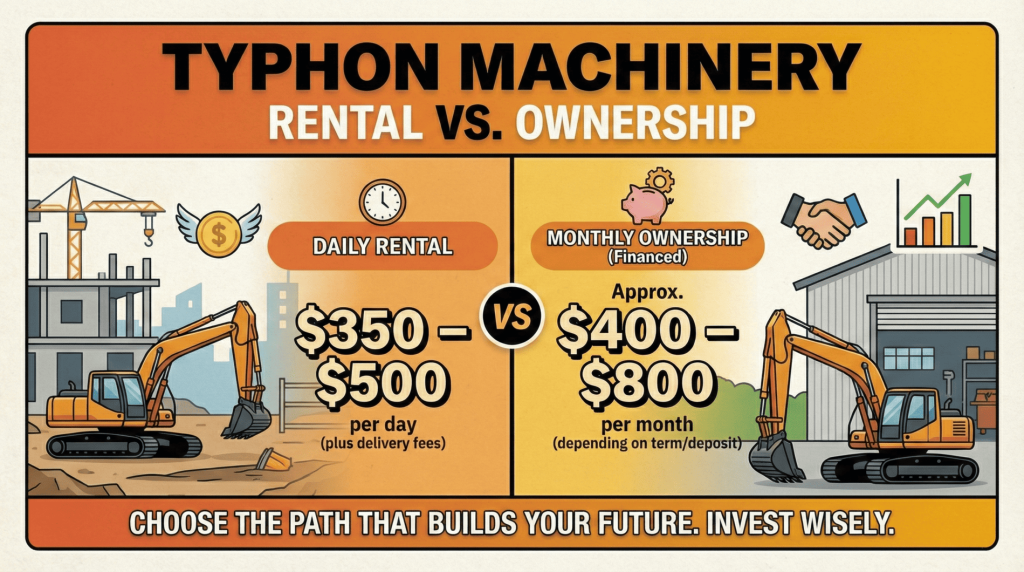
Rental vs. Ownership
- Daily Rental Cost: $350 – $500 per day (plus delivery fees).
- Monthly Payment (Financed): Approx. $400 – $800 per month (depending on term/deposit).
The Math: If you use a mini excavator for just 3 days a month, buying is often cheaper than renting.
Resale Value
Brand name matters. While Kubota and Bobcat hold value well, Typhon is seeing a surge in resale value because the secondary market realizes they use the same Kubota engines. A well-maintained Typhon Terror XIX can retain 70-80% of its value after 3 years, rivaling the big brands.
Frequently Asked Questions (FAQ)
Q: Why is Typhon Machinery cheaper than Bobcat or Cat? A: Typhon operates on a direct-to-consumer model, largely via online platforms like eBay. They do not have the massive overhead of fancy brick-and-mortar dealerships in every town. They pass those savings (often $10k-$15k) to you.
Q: Are Chinese mini excavators reliable? A: The reliability comes from the engine and hydraulics. Typhon uses similarly high-grade hydraulic motors, making them very reliable for the price.
Q: Do I need a license to operate a mini excavator? A: You do not need a license to operate one on private property. However, if you are hauling it commercially, you need to follow DOT regulations for trailer weights.
Q: What is a “Thumb,” and do I need one? A: A thumb is the metal clamp that presses against the bucket. Yes, you need one. Without a thumb, you can only dig. With a thumb, you can pick up rocks, logs, and debris. It increases the machine’s utility by 100%.
Conclusion: The Verdict
The landscape of the mini excavator for sale market has changed. You no longer need to spend $60,000 to get a reliable, capable digging machine.
For 90% of users—independent contractors, landscapers, farmers, and DIYers—Typhon Machinery is the undisputed winner in 2025.
With their eBay Exporter of the Year award validating their logistics and service, and the legendary Kubota D902 engine powering their flagship TERROR XIX, Typhon offers the perfect blend of power, reliability, and price.
Your Next Step: Before you buy, measure the narrowest width of your job site (gate or path). If it is under 40 inches, look specifically for the Typhon Terror XIX with its retractable tracks feature, which allows you to squeeze in and then expand for power