Skip to content

Skid Steer vs. Mini Excavator
Imagine standing on a job site—whether it’s a muddy backyard in the suburbs or a bustling construction zone downtown. You have a mountain of dirt to move, a trench to dig, or a lot to grade. The clock is ticking, and your budget isn’t infinite. You know you need compact heavy machinery, but you’re stuck at a crossroads: Skid steer vs. mini excavator.
It’s the classic debate in the construction and landscaping world. Both machines are compact, powerful, and incredibly popular. To the untrained eye, they might seem interchangeable—after all, they both move dirt, right? But ask any seasoned operator, and they’ll tell you that choosing the wrong one can turn a two-day job into a week-long nightmare.
In this detailed guide, we are going to break down the skid steer vs. mini excavator battle. We’ll look at the costs, the capabilities, the terrain limitations, and the hidden factors that often get overlooked. By the end of this post, you won’t just know the difference; you’ll know exactly which key fits your project’s lock.
The Contenders: A Quick Overview
Before we dive into the nitty-gritty analysis, let’s meet our fighters.
The Skid Steer Loader (The Swiss Army Knife)
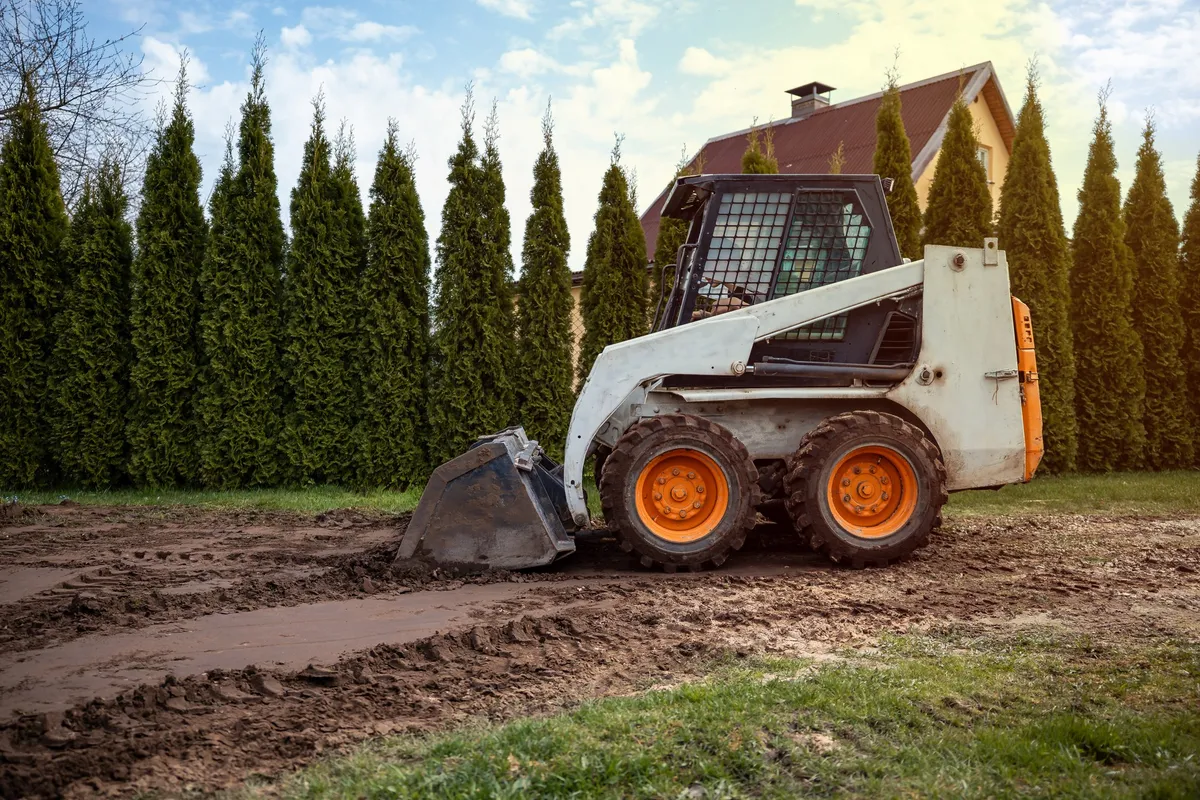
The skid-steer has four wheels, which are mechanically locked in unison for each side. Turning is accomplished by making the left side of the wheels turn ahead while the right side of the wheels turn backward (or just stay stationary), making the machine “skid” into the turn.
- Primary Strength: Speed, material handling, and an incredible variety of attachments.
- Best For: Moving loose material, grading, loading trucks, and roadwork.
The Mini Excavator (The Precision Surgeon)
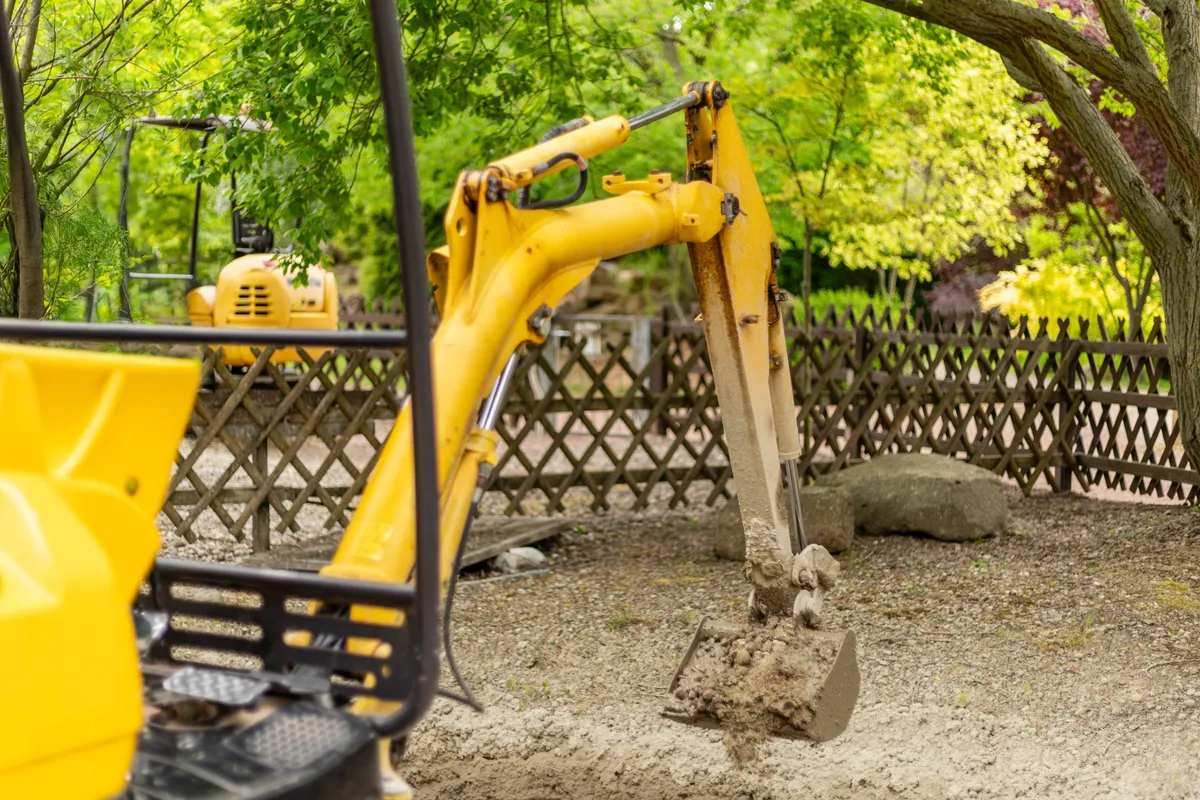
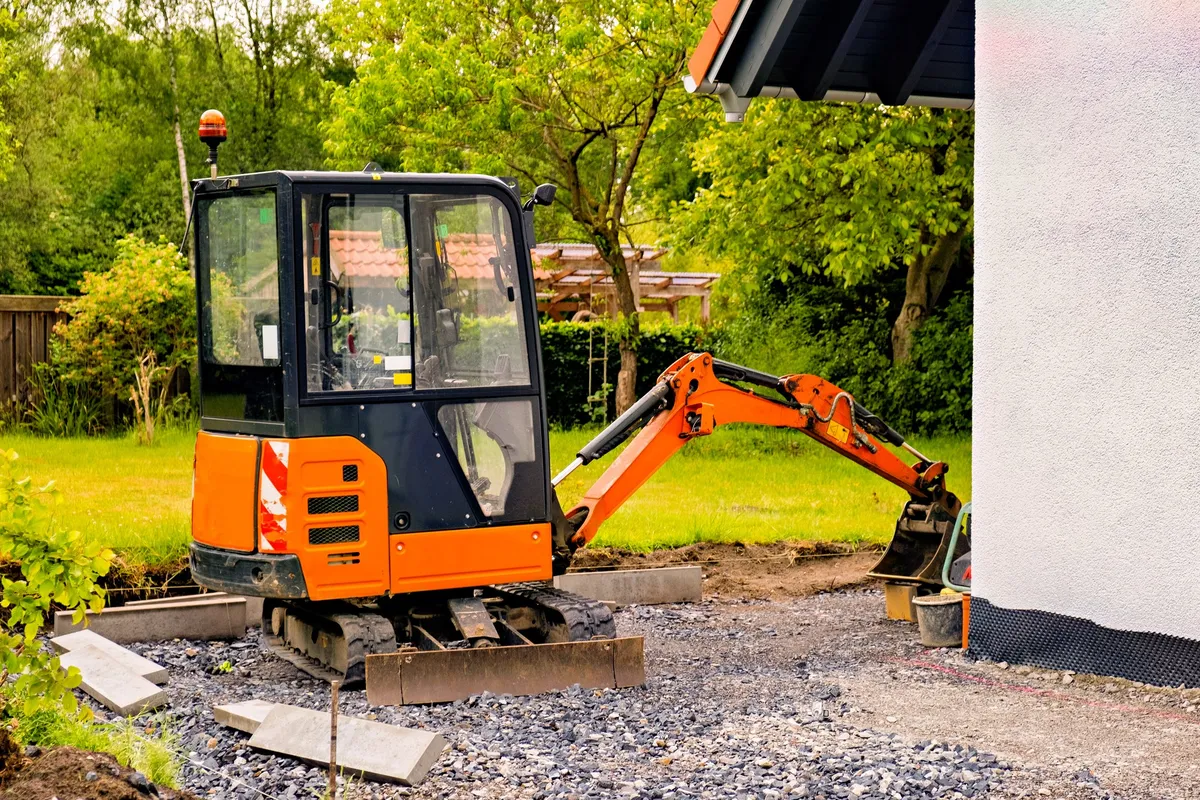
The mini excavator is essentially a scaled-down version of the giant excavators you see on highway projects. It features a tracked undercarriage and a house (cab) that rotates 360 degrees, independent of the undercarriage. It utilizes a boom, stick, and bucket arm.
- Primary Strength: Digging depth, reach, and working in tight, stationary spots.
- Best For: Trenching, demolition, excavating pools, and working near existing structures.
Application & Performance
When evaluating skid steer vs. mini excavator, the first question you must ask is, What is the primary action of the job?
If You Need to DIG: Choose the Mini Excavator
There is no contest here. If your project involves digging a hole, a trench, or a foundation, the mini excavator is the king.
- Reach and Depth: A mini excavator can dig significantly deeper than a skid steer. Even a small, 3-ton excavator can reach depths of 8–10 feet easily. A skid steer digging a hole is essentially just driving into the ground; it cannot dig below its track level effectively without a specialized backhoe attachment (which is clunky compared to a dedicated excavator).
- Precision: Because the cab rotates 360 degrees, a mini excavator operator can sit in one spot, dig a trench, rotate, and dump the spoil behind them without ever moving the tracks. This is crucial for precise work around utility lines or foundations.
If You Need to MOVE: Choose the Skid Steer
If your job is to take a pile of gravel from Point A and spread it over Point B, the skid steer wins.
- Speed: Skid steers are quick. They can zip across a job site at 7-12 mph, whereas a mini excavator slowly crawls at 2-3 mph.
- Loading Capacity: Skid steers generally have larger buckets and higher lifting capacities for their size. They are designed to scoop, carry, and dump. If you are loading a dump truck with soil, a skid steer will cycle through the work much faster than a mini excavator, which has to scoop small bucketloads repeatedly.
Terrain and Maneuverability
The ground you are working on is a massive factor in the skid steer vs. mini excavator decision.
The Skid Steer on Terrain
- Hard Surfaces: Skid steers (specifically wheeled ones) love asphalt, concrete, and hard-packed dirt. They are fast and efficient here.
- Mud and Soft Soil: These conditions represent an important obstacle for the skid steer. Because they have wheels and a heavy rear counterweight, they can easily get bogged down in deep mud. Furthermore, the “skidding” action tears up the ground. If you use a wheeled skid steer on a client’s manicured lawn, be prepared to re-sod the entire area.
Note: Compact Track Loaders (CTLs) solve the traction issue but still tear up turf when turning.
The Mini Excavator on Terrain
- Soft and Uneven Ground: Mini excavators almost always run on tracks. This gives them low ground pressure, meaning they float over mud and soft soil better than wheeled machines.
- Slopes: Excavators are generally safer on slopes because of their low center of gravity and the ability to use the arm as a stabilizer (“crutch”) if things get tipping.
- Turf Preservation: While no heavy machine is gentle, a mini excavator does less damage to a lawn because it doesn’t need to skid to turn. It drives to a spot, parks, and then the cab rotates while the tracks stay still.
Versatility and Attachments
Both machines are marketed as versatile, but the nature of their versatility is different.
The Skid Steer Versatility:
The skid steer is arguably the most versatile machine in the world regarding attachments. It features a high-flow hydraulic system at the front that can power:
- Sweepers/Brooms: For cleaning roads.
- Snow Blowers: For winter maintenance.
- Mulchers/Brush Cutters: For clearing forestry.
- Pallet Forks: For unloading lumber trucks.
- Augers, Trenchers, Cold Planers, and Concrete Mixers.
The Mini Excavator’s Versatility:
The mini excavator is versatile, but its attachments are mostly focused on the end of the boom:
- Hydraulic Thumbs: For grabbing rocks and logs.
- Breakers/Hammers: For smashing concrete.
- Augers: For drilling post holes.
- Plate Compactors: For packing dirt in a trench.
Winner: If you need one machine to clean a street, plow snow, and move pallets, the skid steer is the clear winner.
Skid Steer vs. Mini Excavator
To help you visualize the differences, here is a direct spec-to-spec comparison.
| Feature | Skid Steer Loader | Mini Excavator |
| Primary Function | Moving, Loading, Grading, Attachments | Digging, Trenching, Demolition |
| Movement Mechanism | Wheels (skids to turn) | Tracks (cab rotates 360°) |
| Digging Depth | Very Limited (requires backhoe attachment) | Excellent (6ft – 12ft+) |
| Travel Speed | Fast (7 – 12 mph) | Slow (2 – 4 mph) |
| Dump Height | Moderate (good for pickup trucks/low dumpers) | High (can reach over high sides) |
| Footprint/Access | Needs room to turn/skid | Excellent for tight access (Zero Tail Swing) |
| Turf Friendliness | Low (tears up grass) | Moderate (tracks disturb less) |
| Operator Visibility | Good front/side, Poor rear | Excellent (360° visibility) |
| Learning Curve | Steeper (controls can be jerky) | Easier (intuitive joystick controls) |
Cost Analysis (Purchase & Rental)
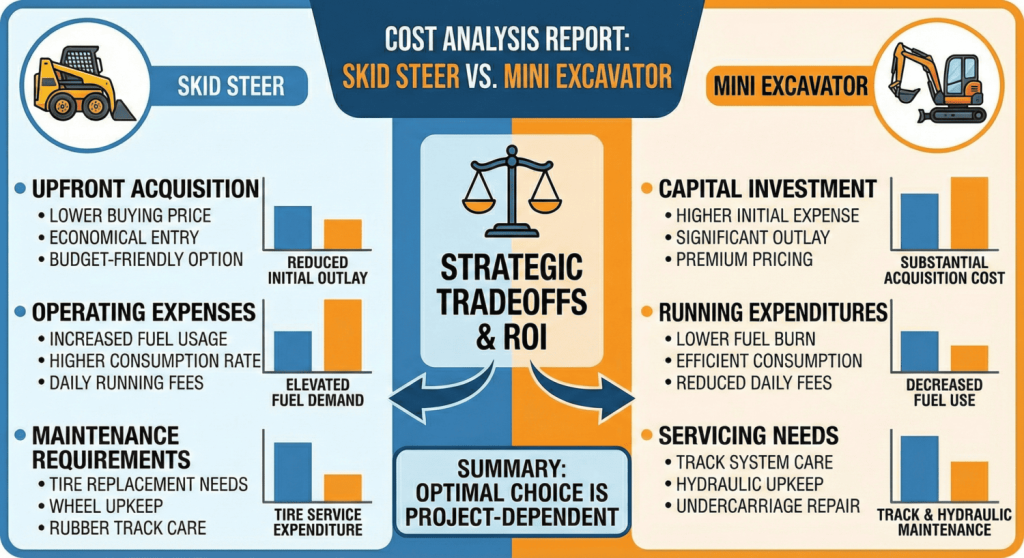
Money talks. When performing a cost analysis for skid steers and mini excavators, you have to look at upfront pricing, rental rates, and operating costs.
Purchase Price
Generally speaking, skid steers are slightly cheaper to buy than mini excavators of a comparable weight class, though the gap is narrowing.
- New Skid Steer: $10,000 – $75,000 (Standard models)
- New Mini Excavator: $22,000 – $90,000 (3.5 to 5-ton range)
Rental Rates
Rental rates are often the deciding factor for DIYers and small contractors.
- Skid Steer Rental: Typically ranges from $200 to $400 per day.
- Mini Excavator Rental: Typically ranges from $250 to $500 per day.
- Note: Excavators often command a higher premium because they are specialized tools with higher maintenance costs on the undercarriage.
Maintenance and Operating Costs
- Tires vs. Tracks: Skid steers with pneumatic tires are cheaper to maintain than the rubber tracks of a mini excavator. Tracks are expensive to replace (often $1,000+ per track).
- Fuel Consumption: Skid steers often run at higher RPMs to drive their hydraulic pumps for travel and lifting, leading to slightly higher fuel consumption compared to a mini excavator that sits idle while digging.
Critical Analysis: The Zero Tail Swing Factor
Many modern mini excavators are designed with zero tail swing. This means the house (the cab) does not overhang the tracks when it rotates.
- Why it matters: You can park a mini excavator right next to a house wall or a fence and rotate 360 degrees without the back of the machine hitting the building.
- Skid Steer Comparison: A skid steer cannot do this. To turn 180 degrees, a skid steer needs a radius equal to its length. If you are working in a narrow alleyway between two buildings, a skid steer might get stuck, whereas a mini excavator can work happily.
Decision Guide: Which One Should You Choose?
Let’s break this down into real-world scenarios so you can make the right call.
Scenario A: The Backyard Renovation
You are a homeowner or landscaper installing a pool and a patio. The backyard is fenced in with a narrow gate.
- Verdict: Mini Excavator.
- Why? You need to dig a deep hole for the pool. The mini excavator can fit through the narrow gate (some have retractable tracks). It can dig without moving, minimizing damage to the surrounding lawn.
Scenario B: The New Driveway
You need to scrape off 4 inches of topsoil, spread a layer of crushed stone, and grade it flat for paving.
- Verdict: Skid Steer.
- Why? This is a material handling and grading job. The bucket of a skid steer is perfect for skimming the surface (grading) and carrying the heavy stone from the delivery pile to the driveway. An excavator would take three times as long to spread the gravel.
Scenario C: Clearing Brush and Forestry
You have 5 acres of overgrown land with thick bushes and small trees.
- Verdict: Skid Steer (specifically a Compact Track Loader).
- Why? Equip a skid steer with a forestry mulcher attachment, and it becomes a land-clearing shark. It can drive directly over the vegetation, shredding it instantly. An excavator with a mulcher is good for reaching up high, but for clearing ground acreage, the skid steer is faster.
Scenario D: Utility Line Repair
A water pipe has burst 6 feet underground in a front yard.
- Verdict: Mini Excavator.
- Why? You need depth and precision. You need to dig carefully around the pipe without breaking it further. A skid steer simply cannot dig a vertical trench 6 feet down.
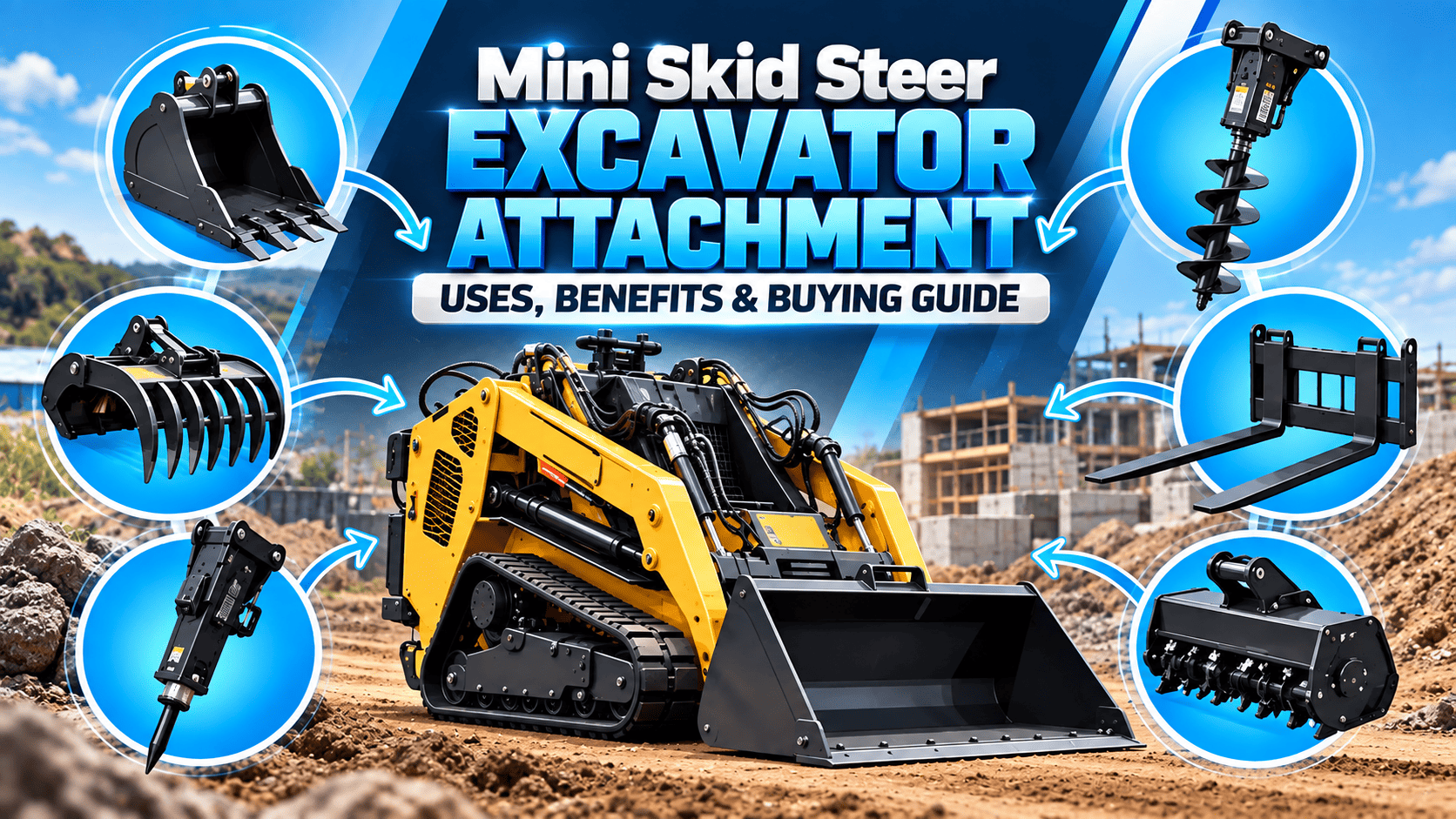
Mini Skid Steers on Sale in USA
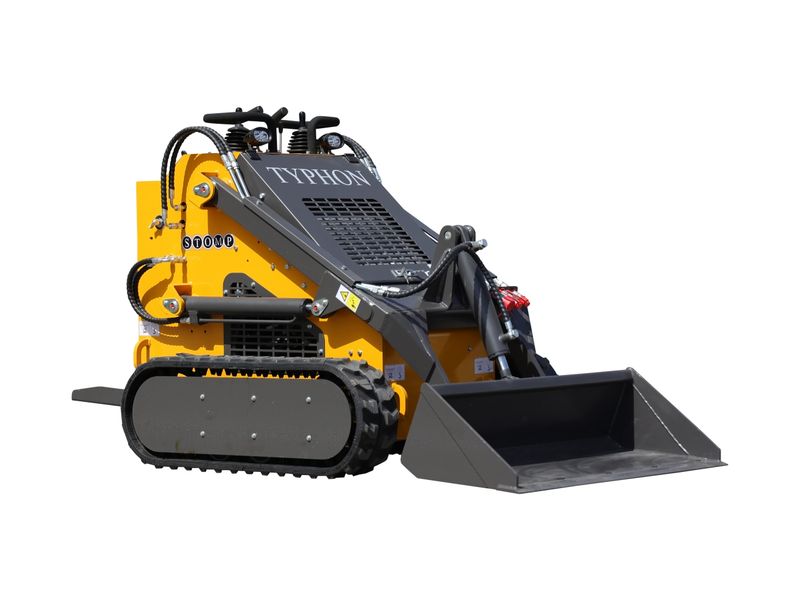
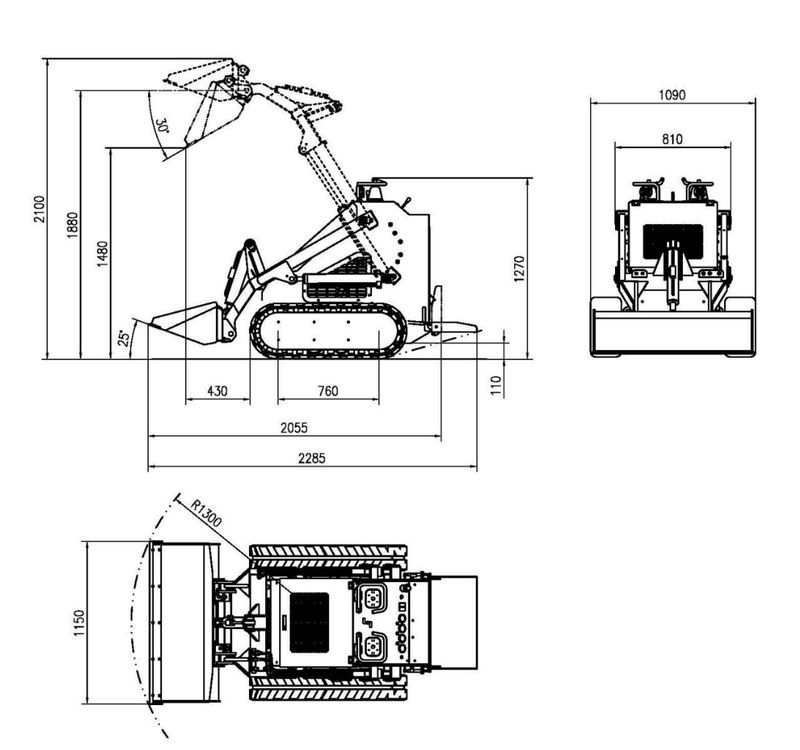
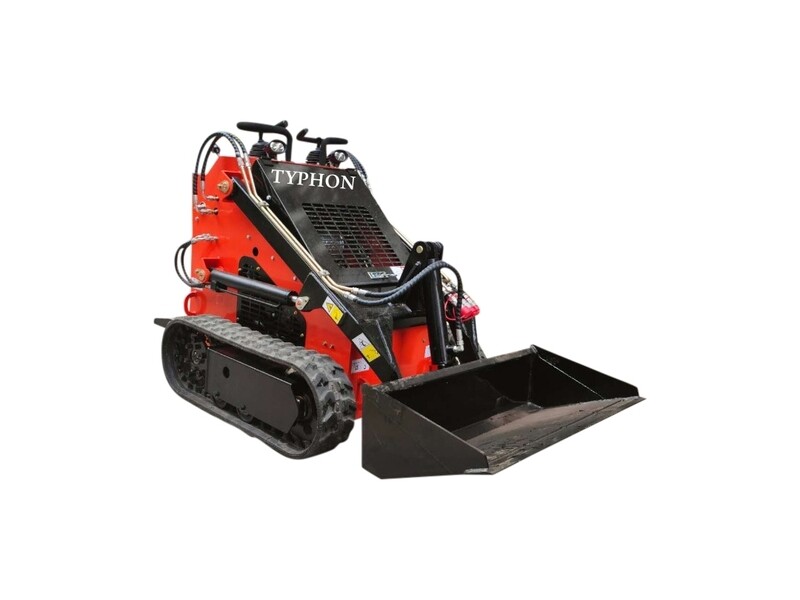
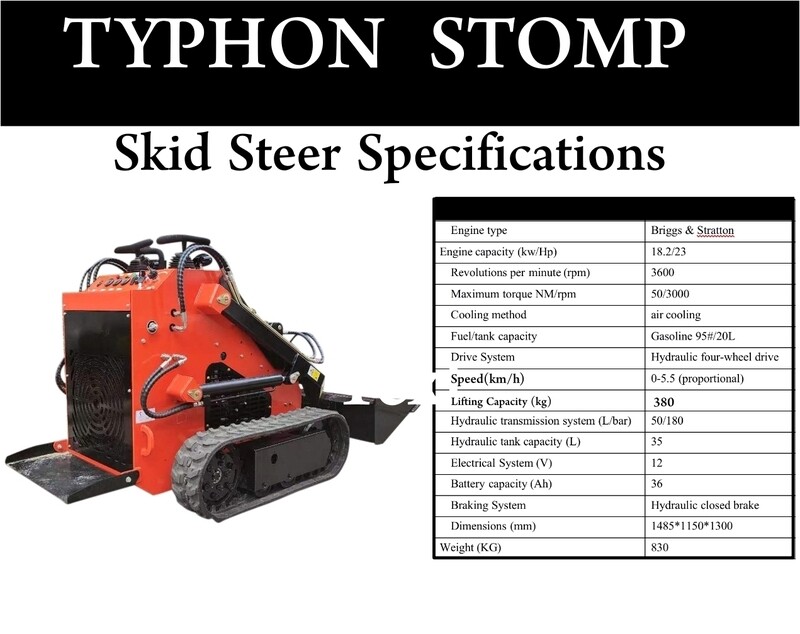
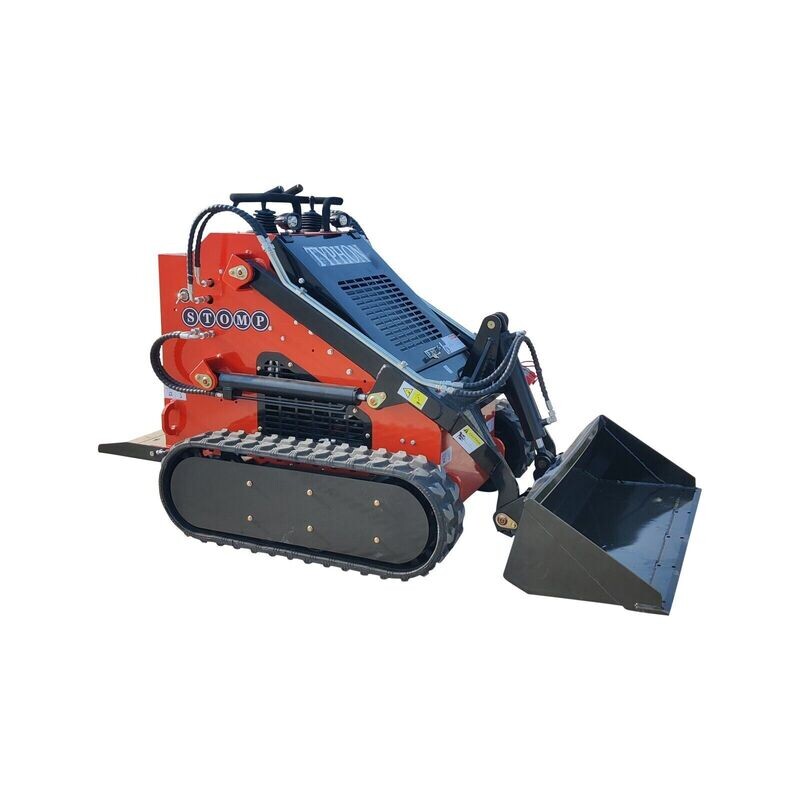
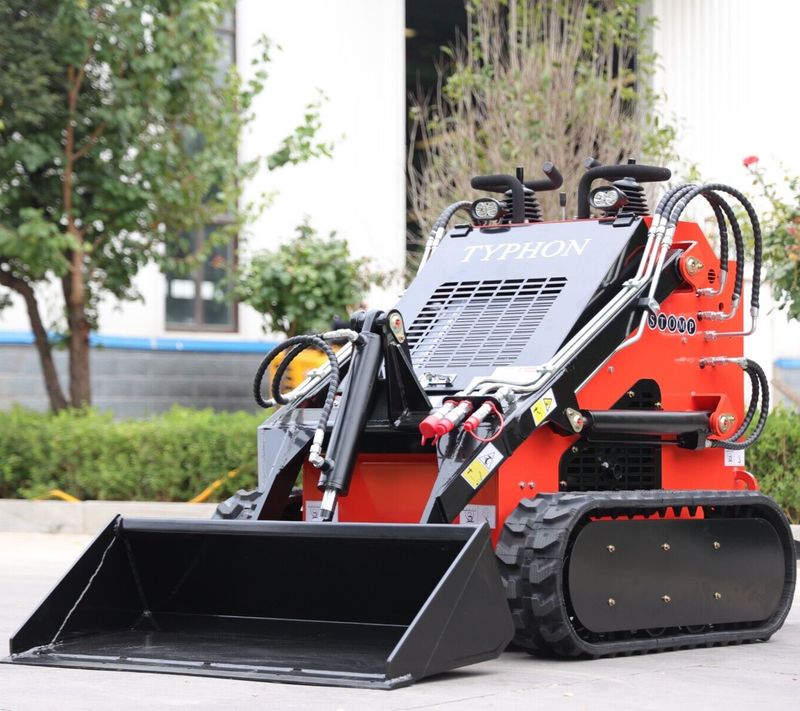
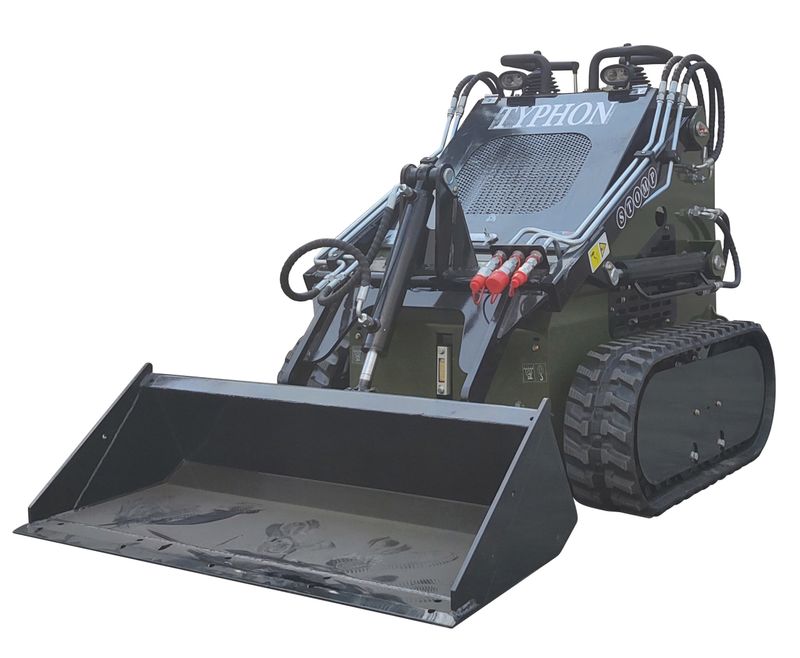
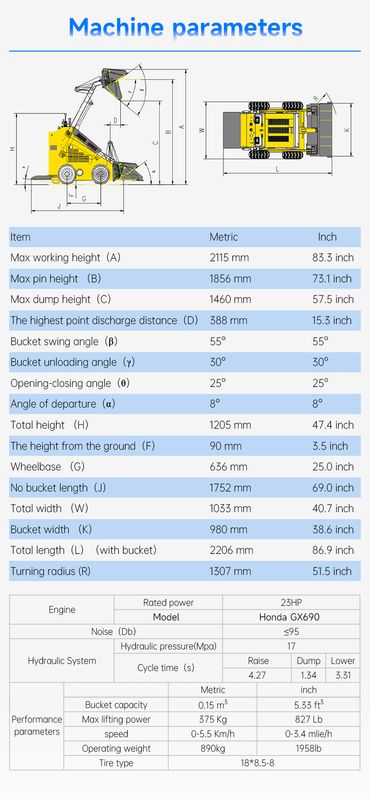
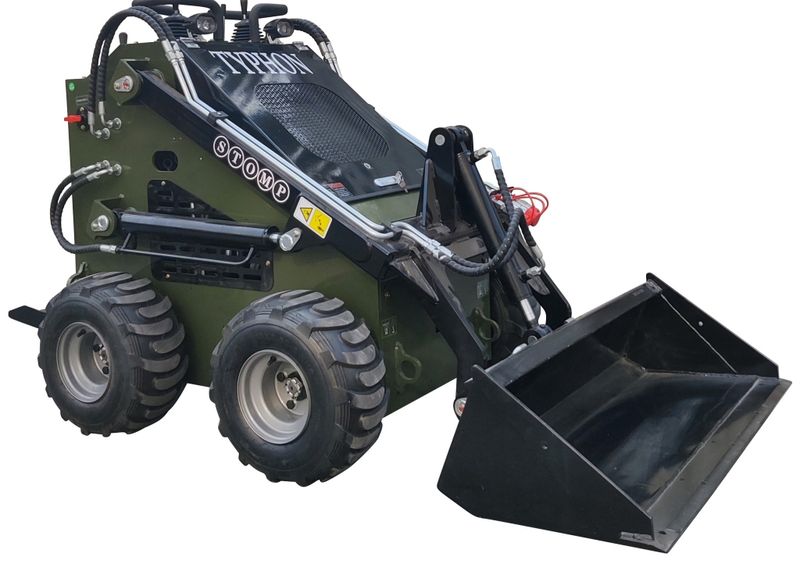
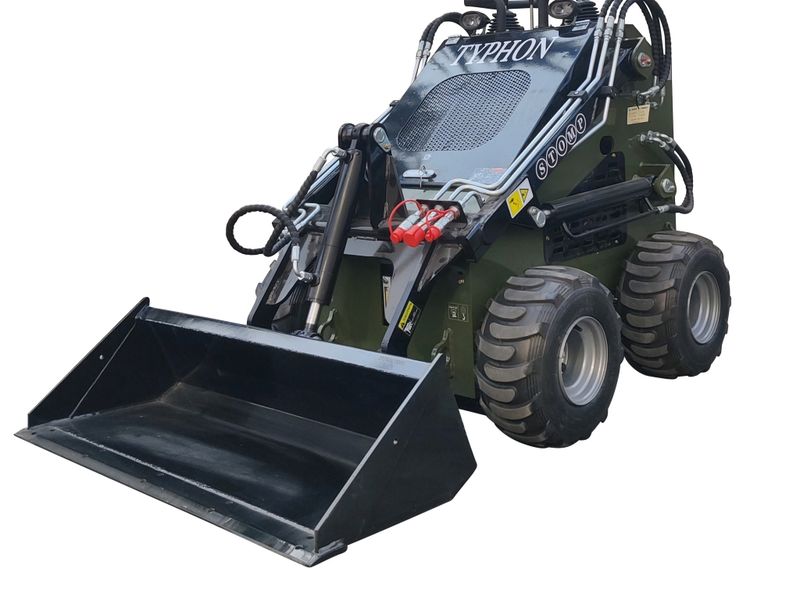
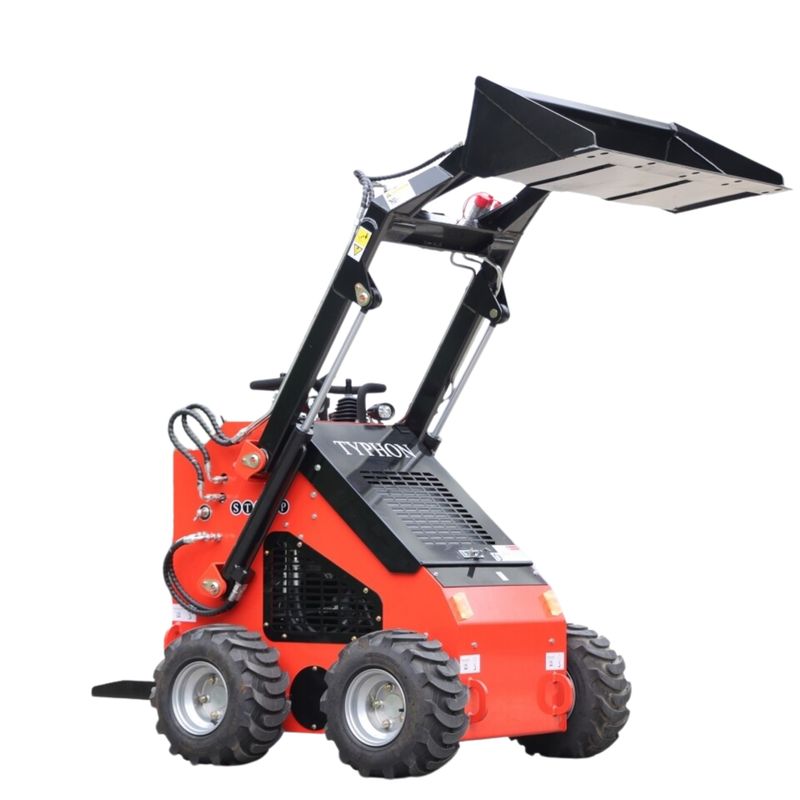
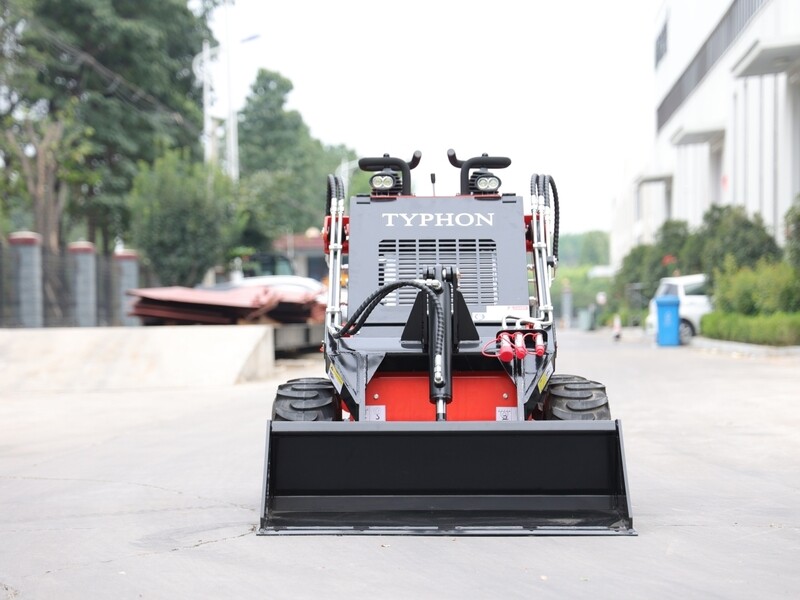
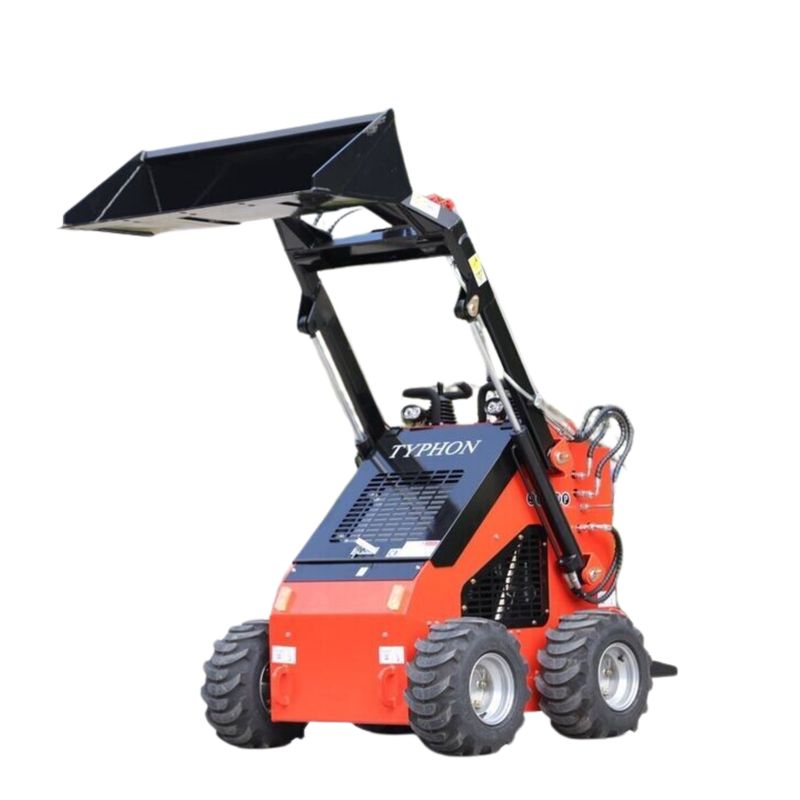
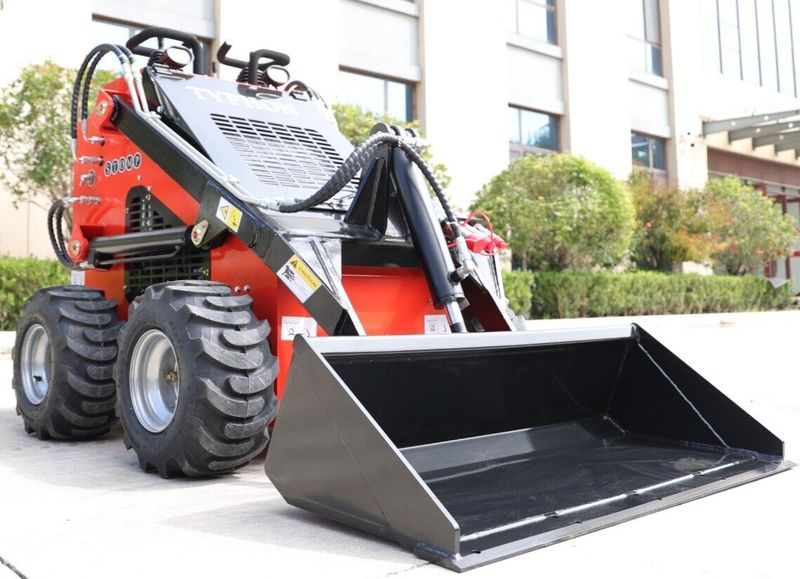
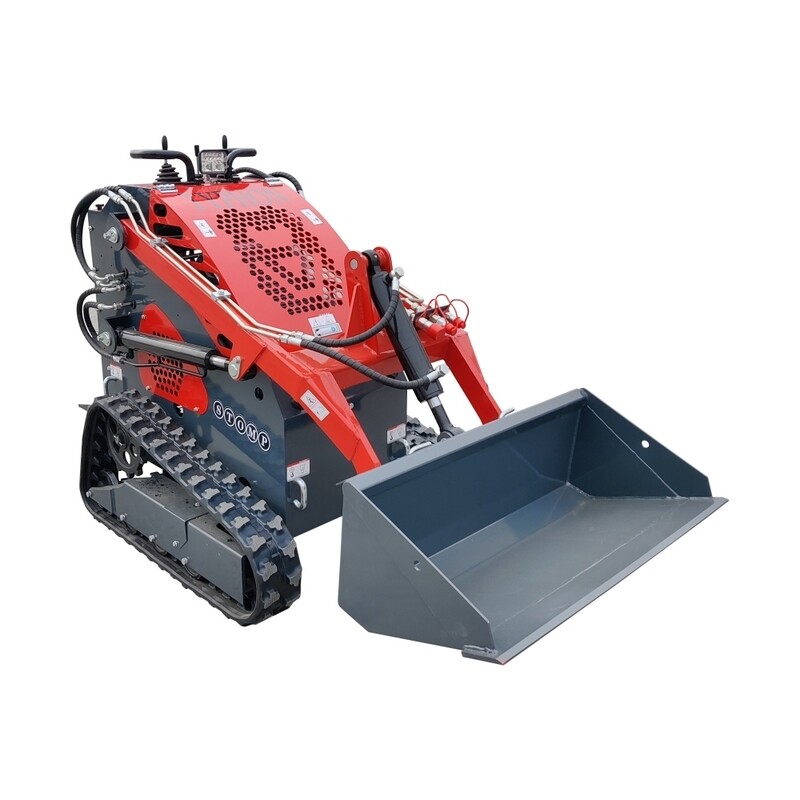
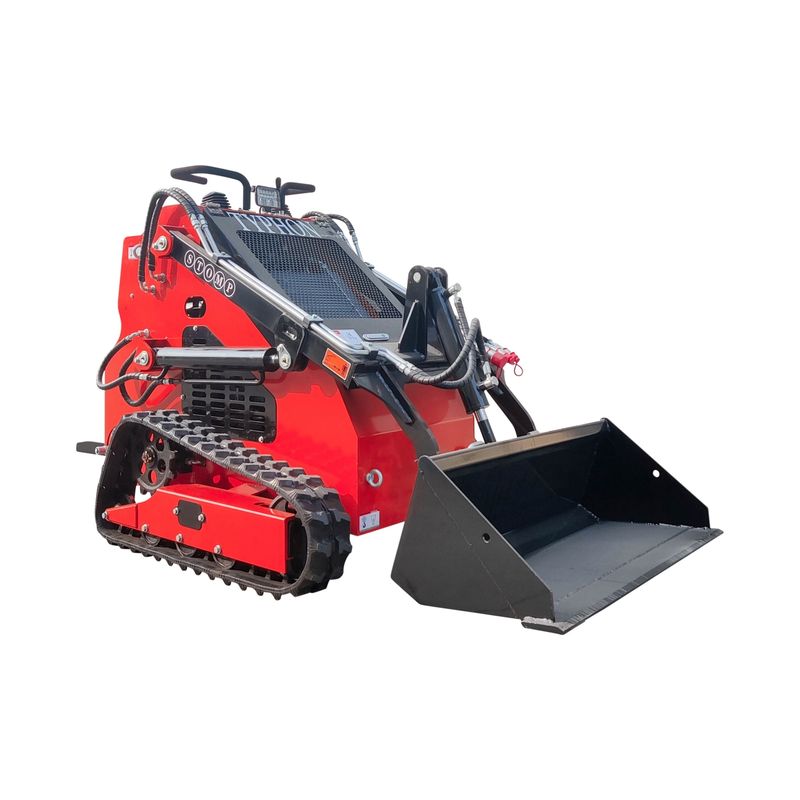
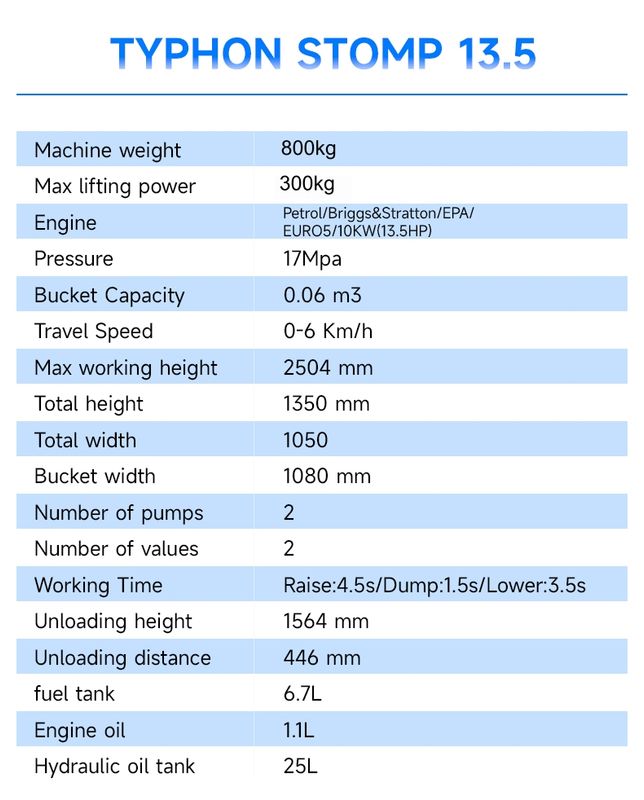
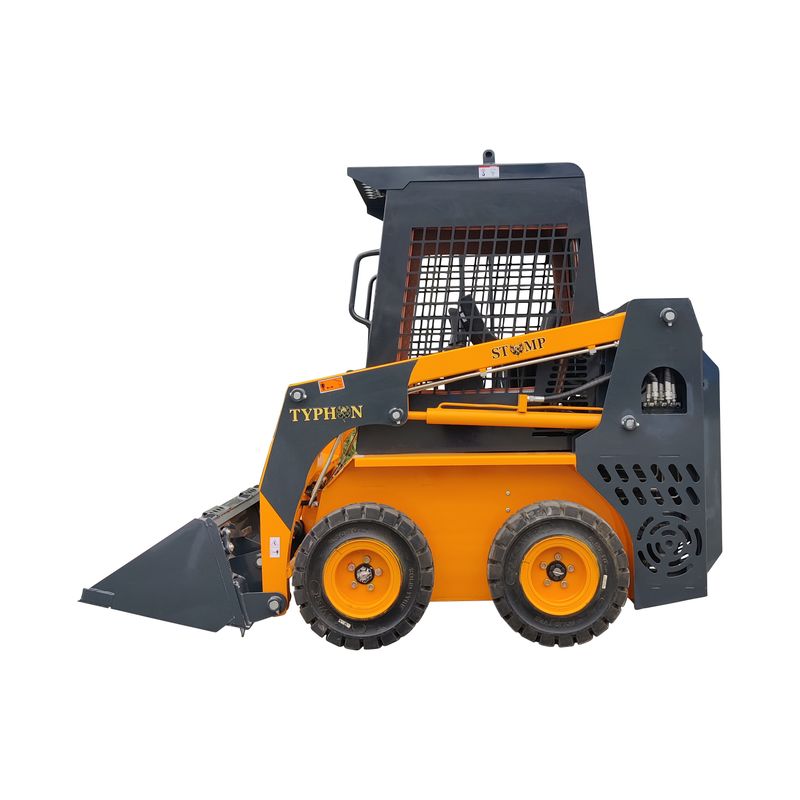
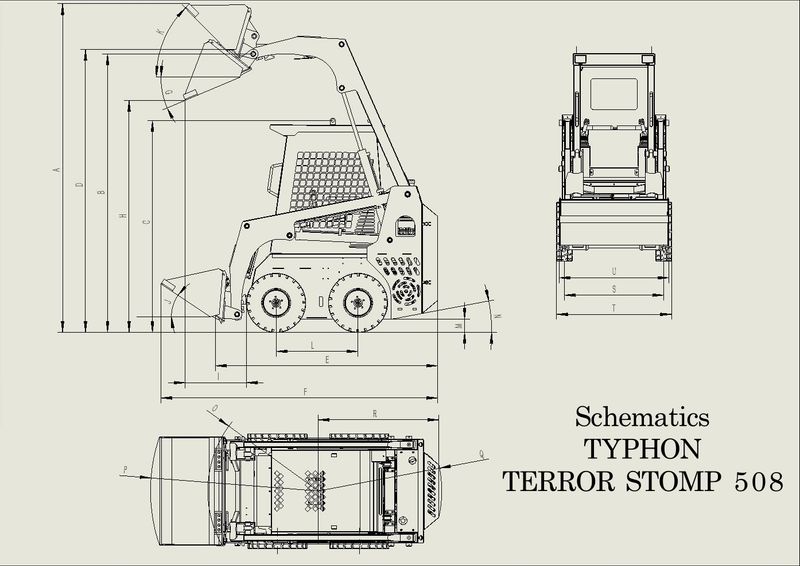
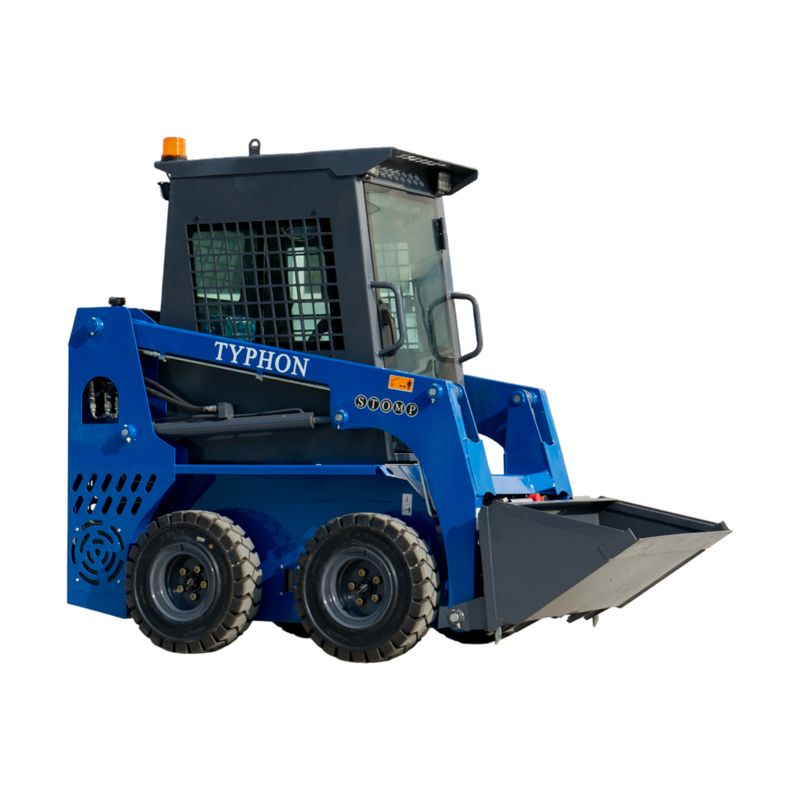
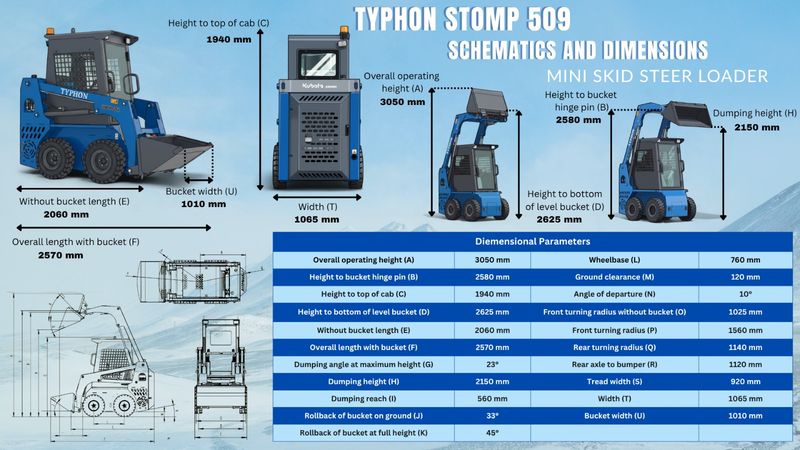
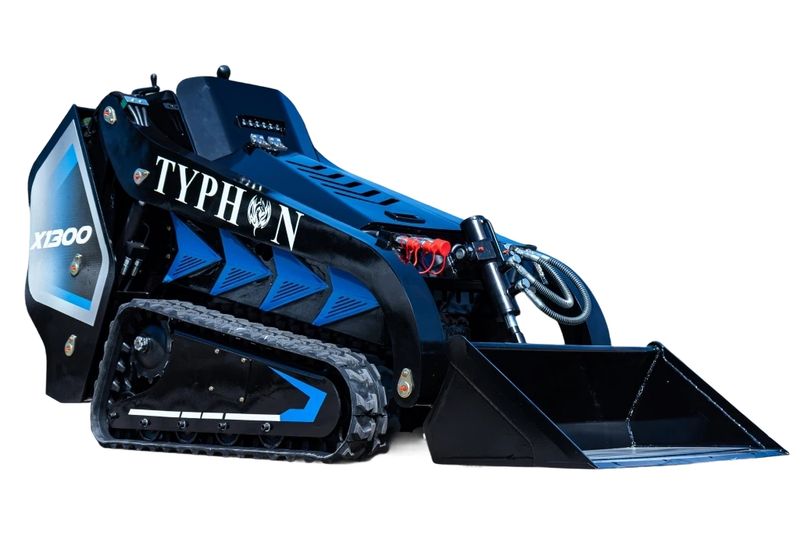
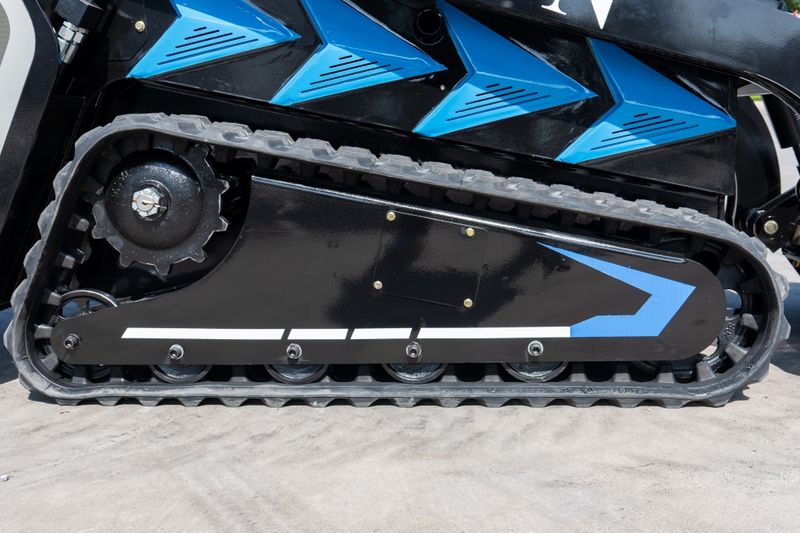
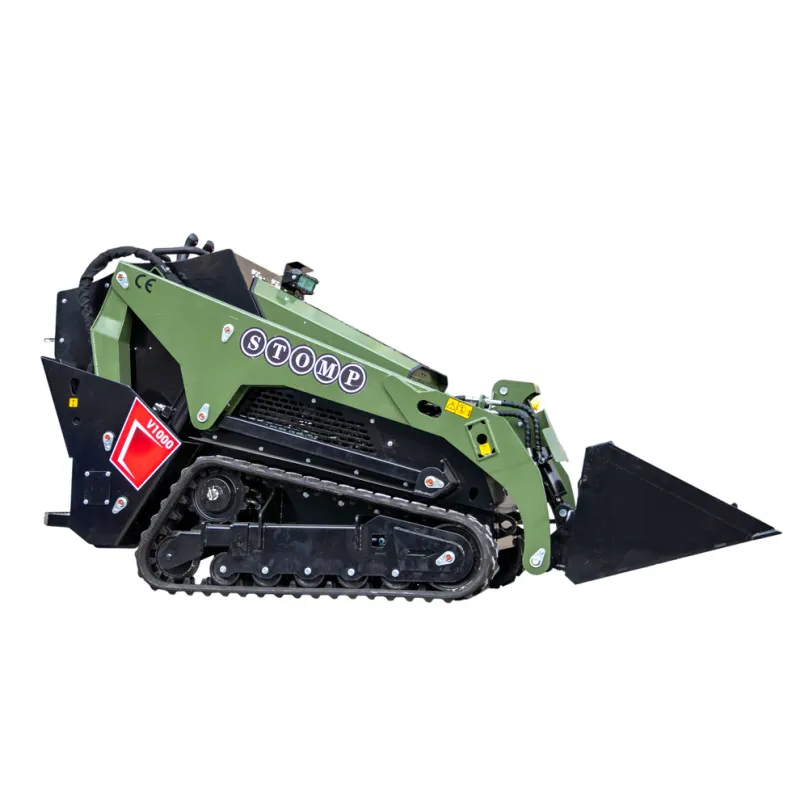
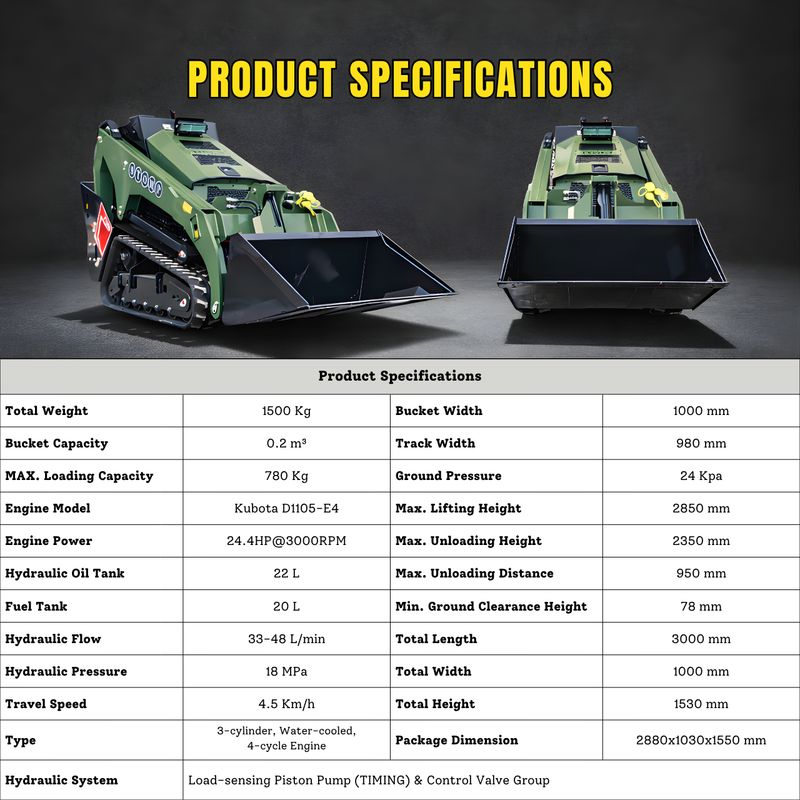
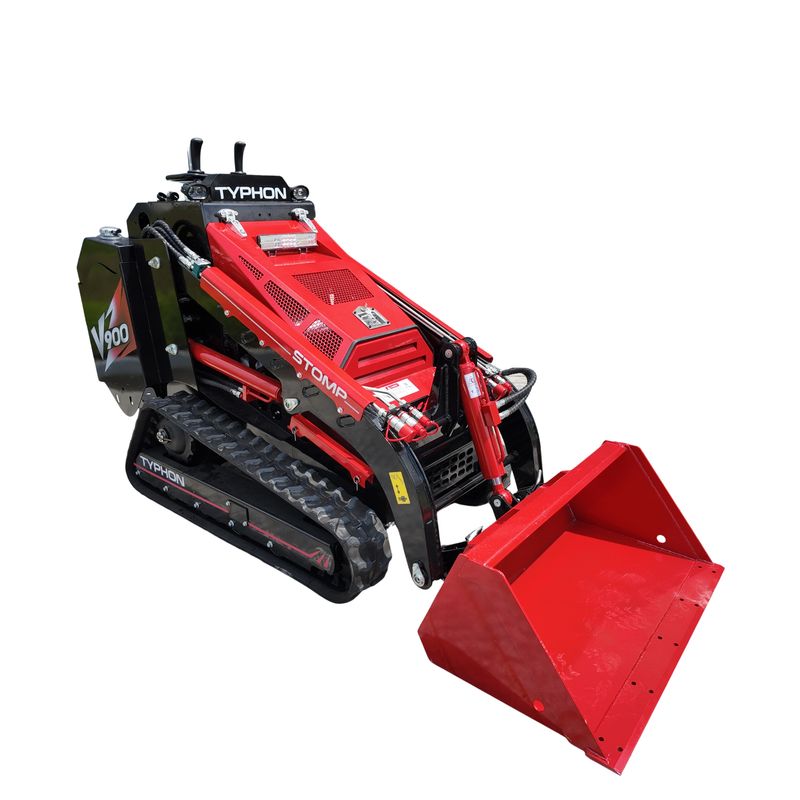
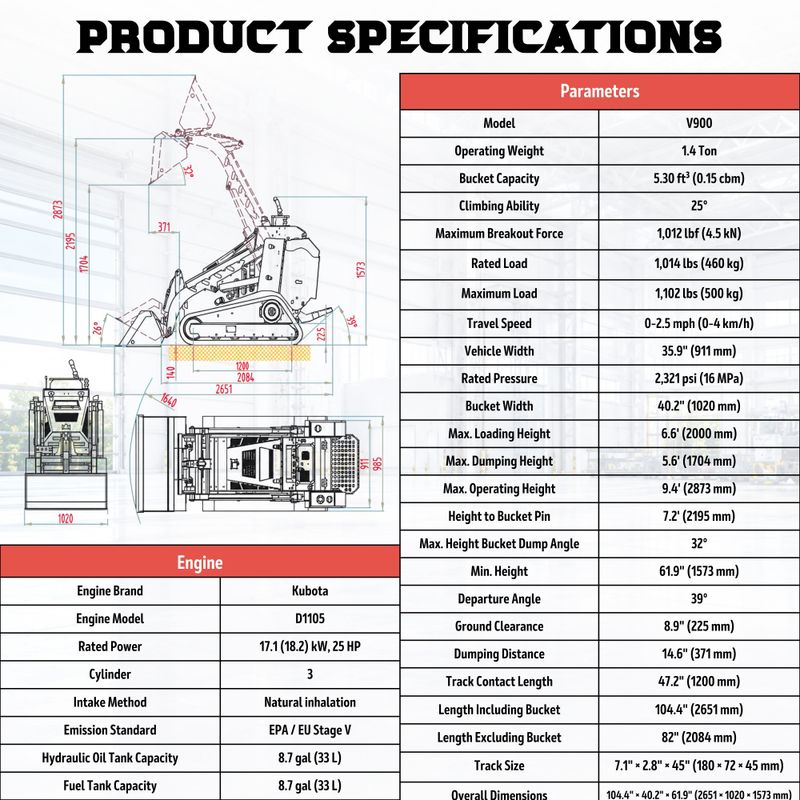
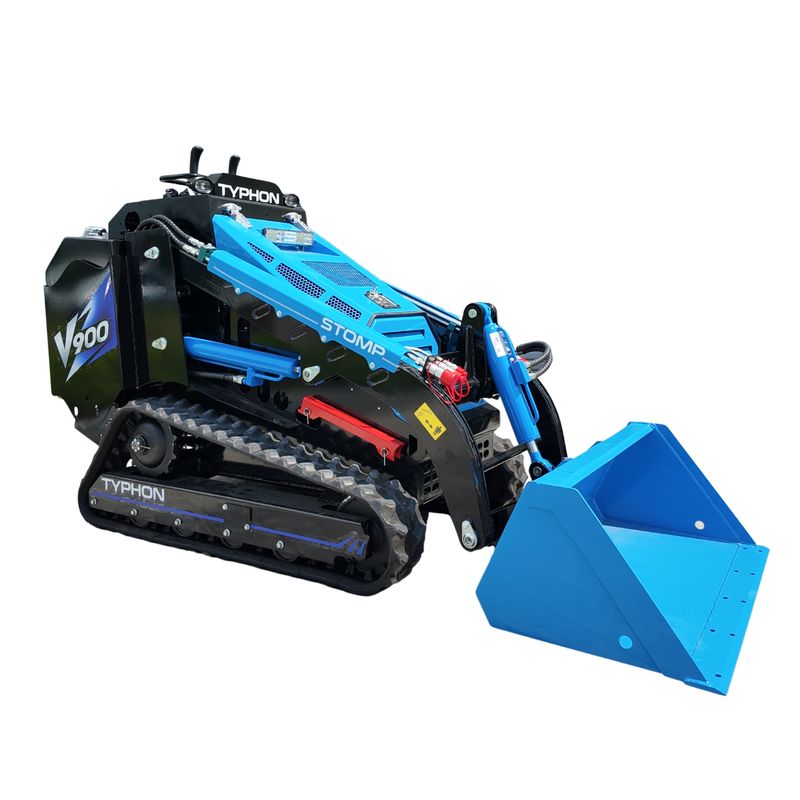
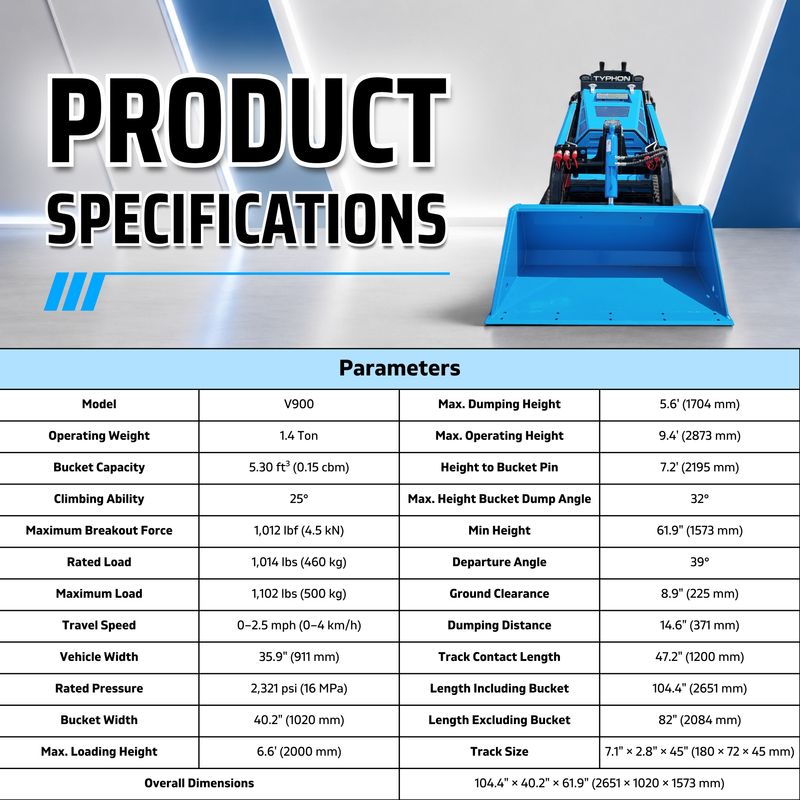
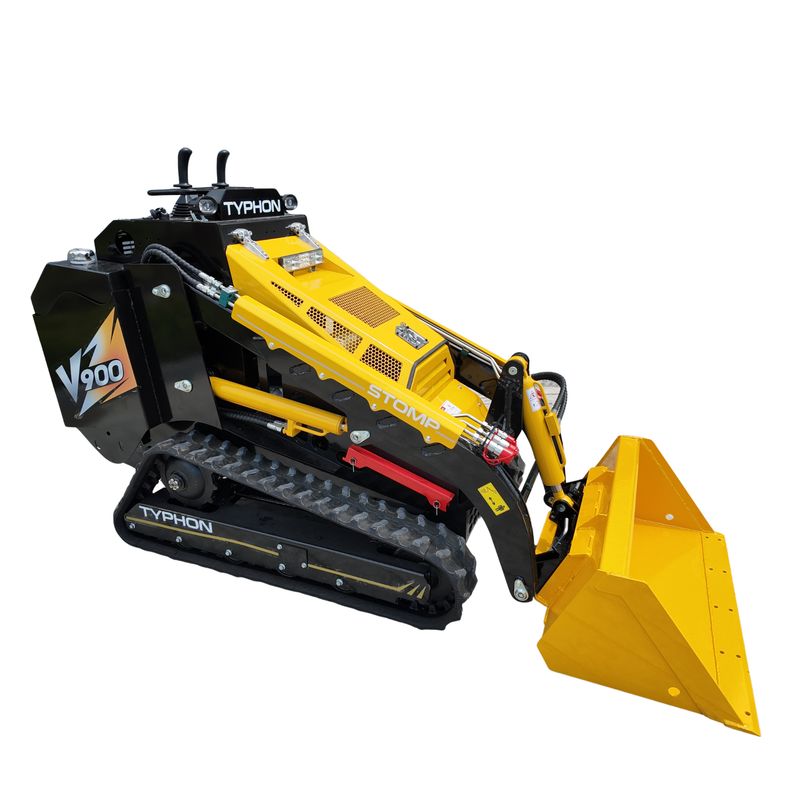
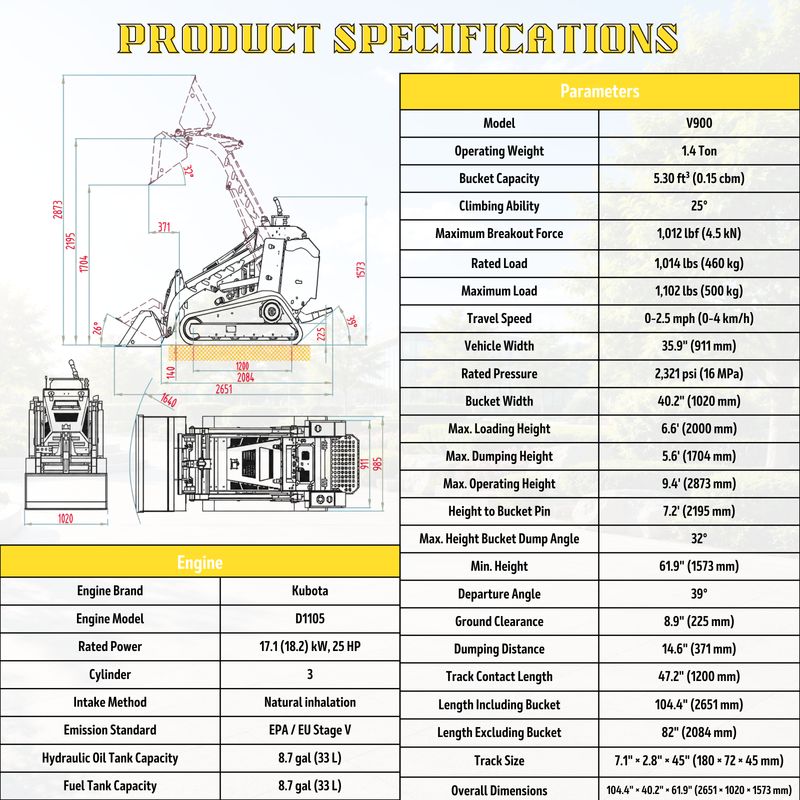
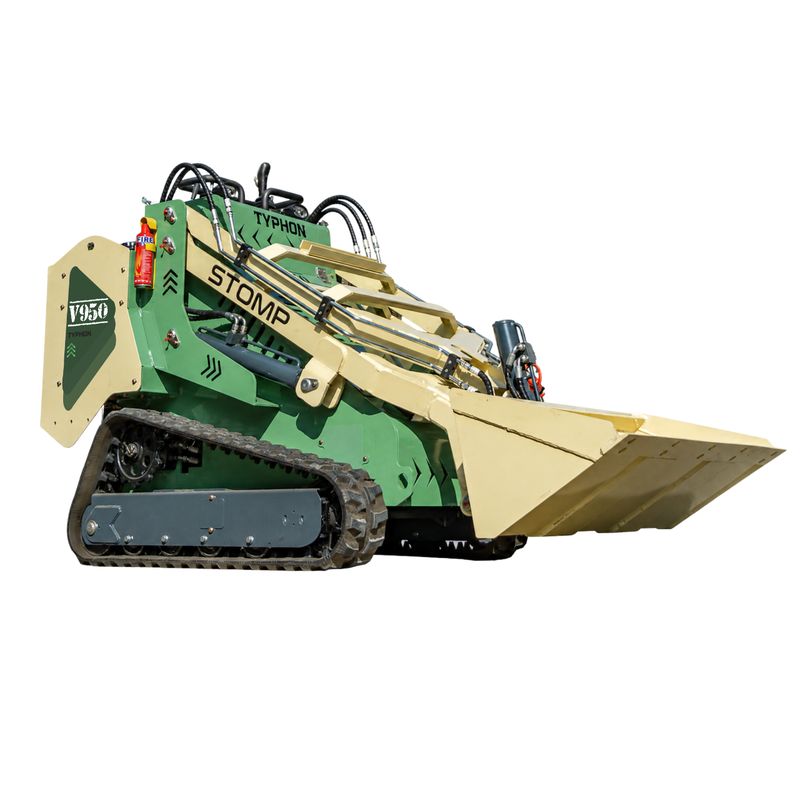
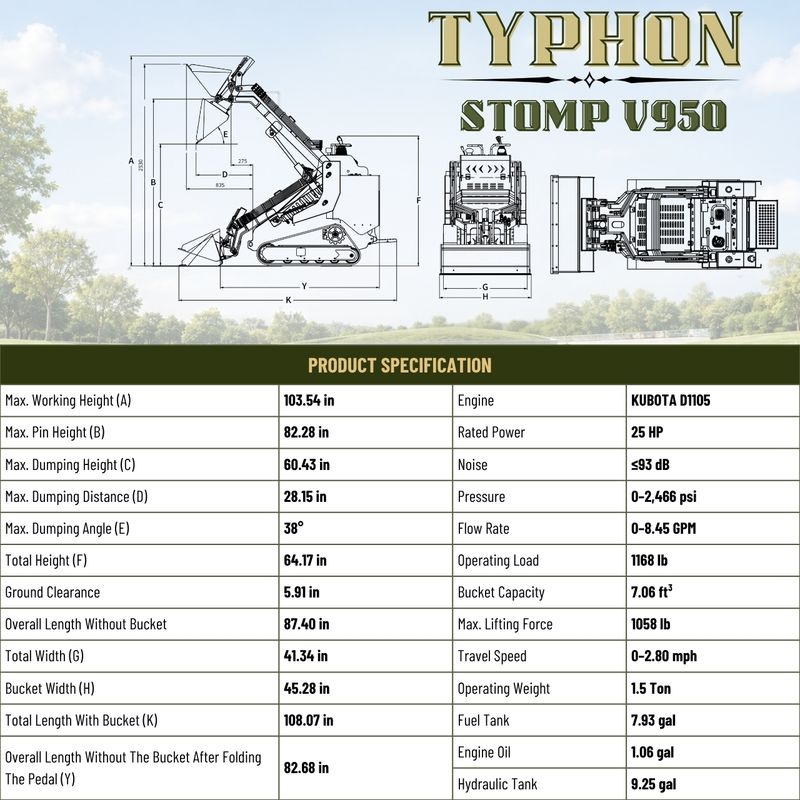
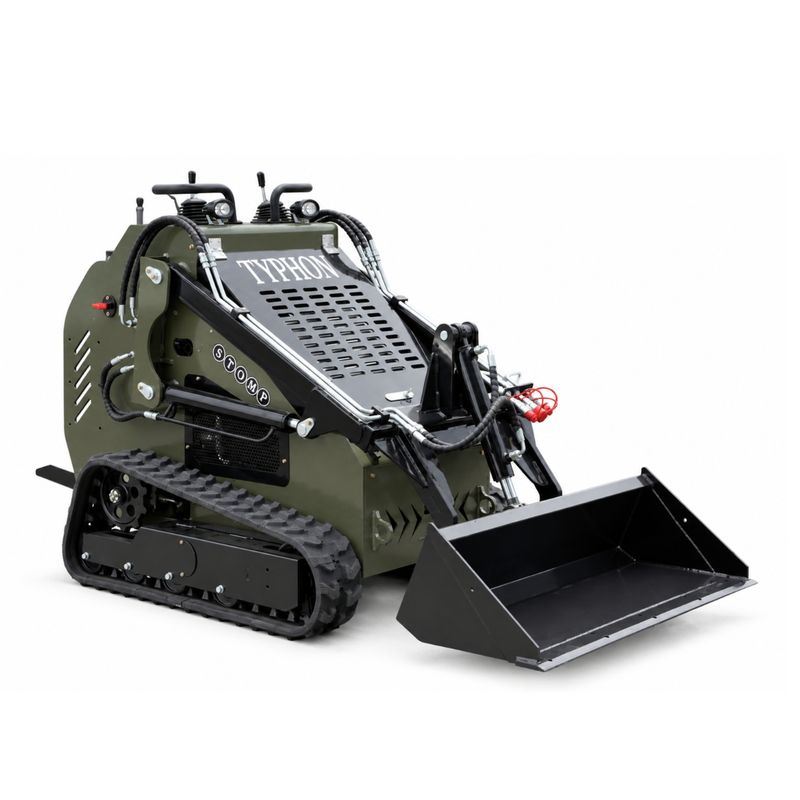
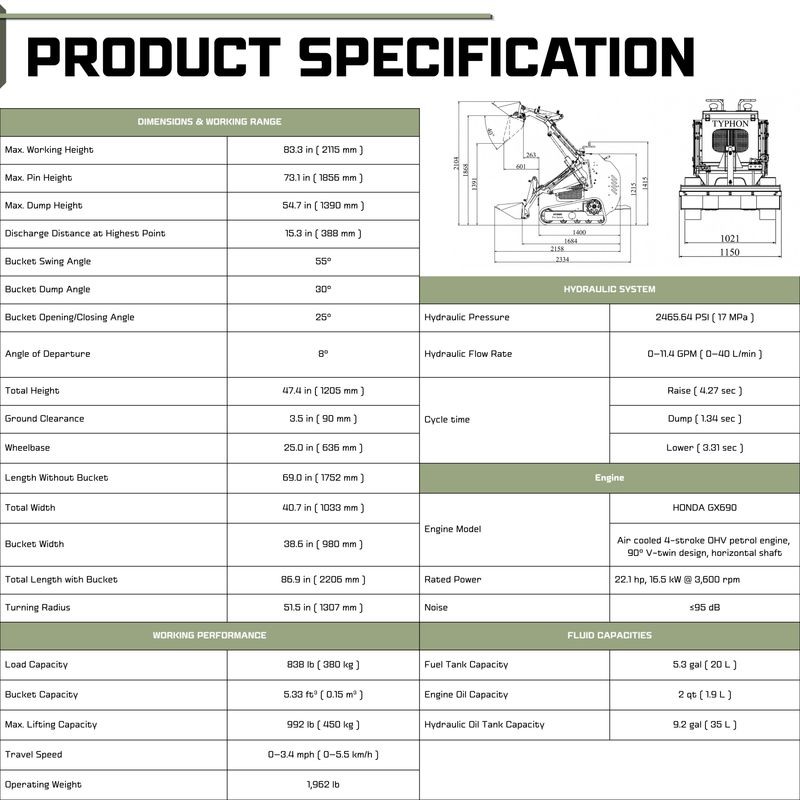
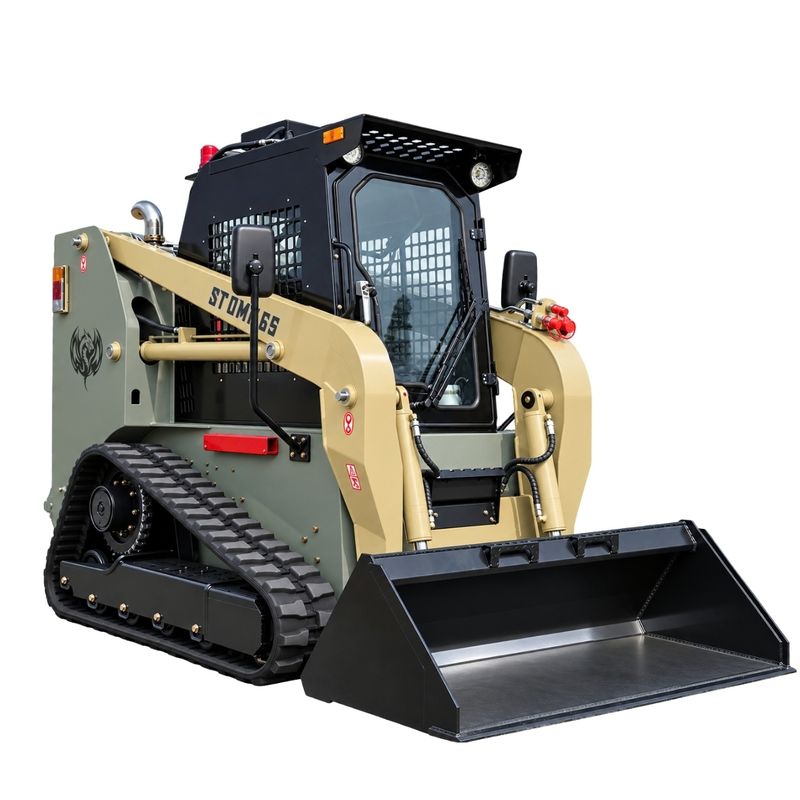
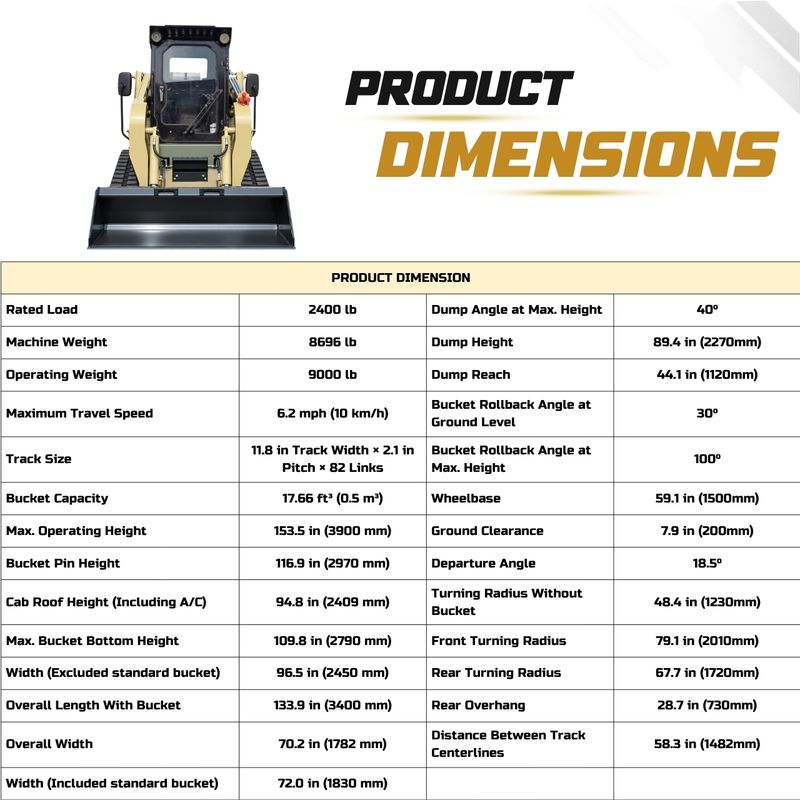
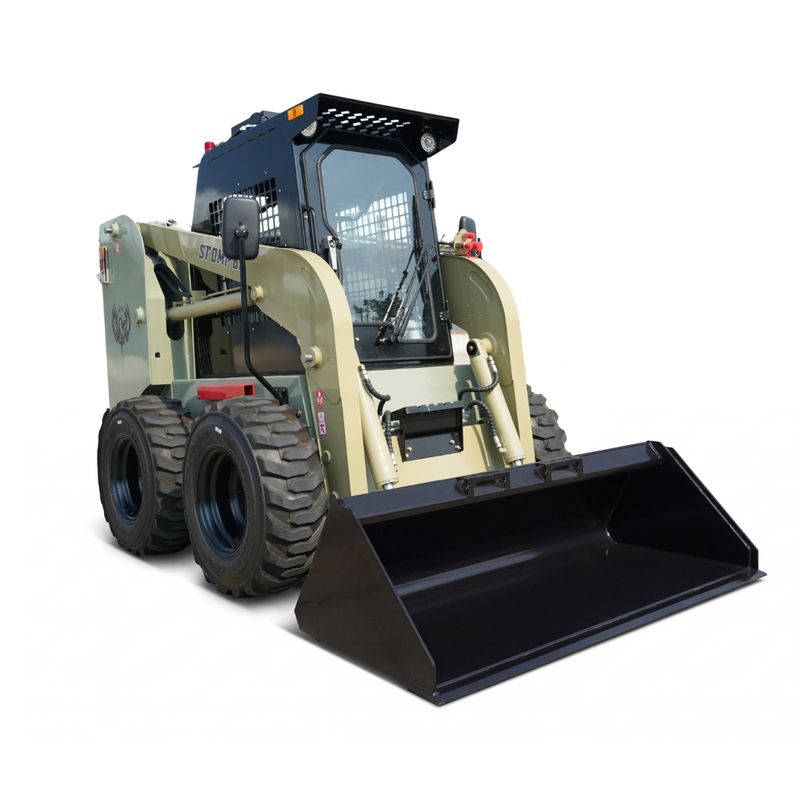
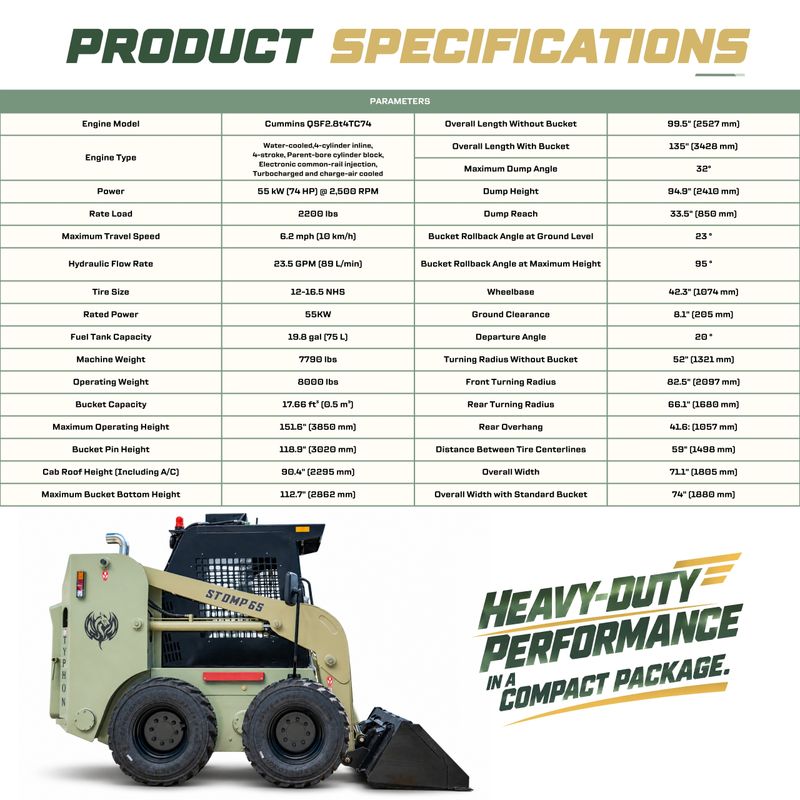
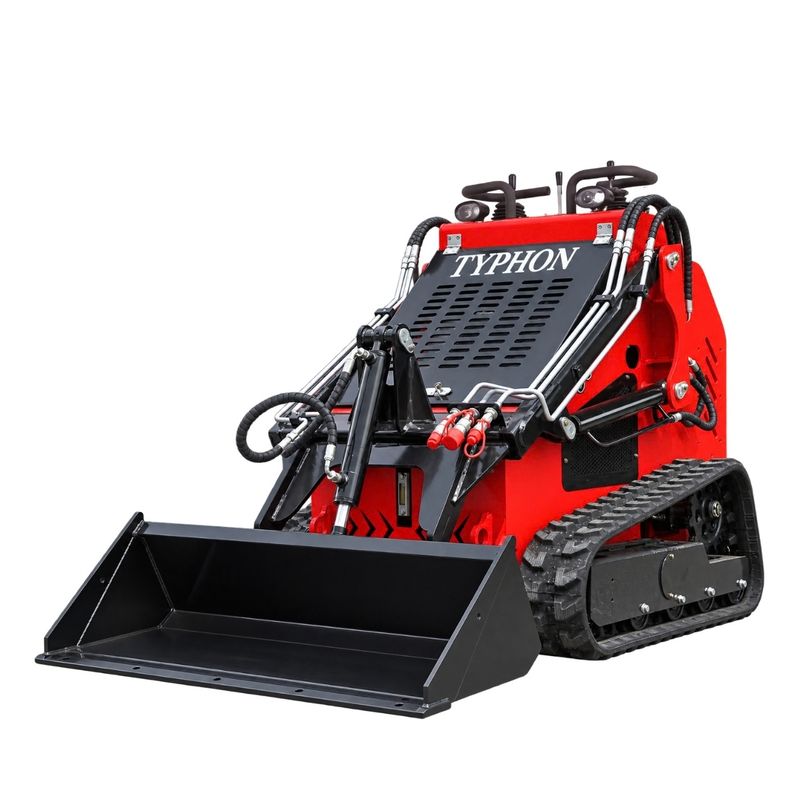
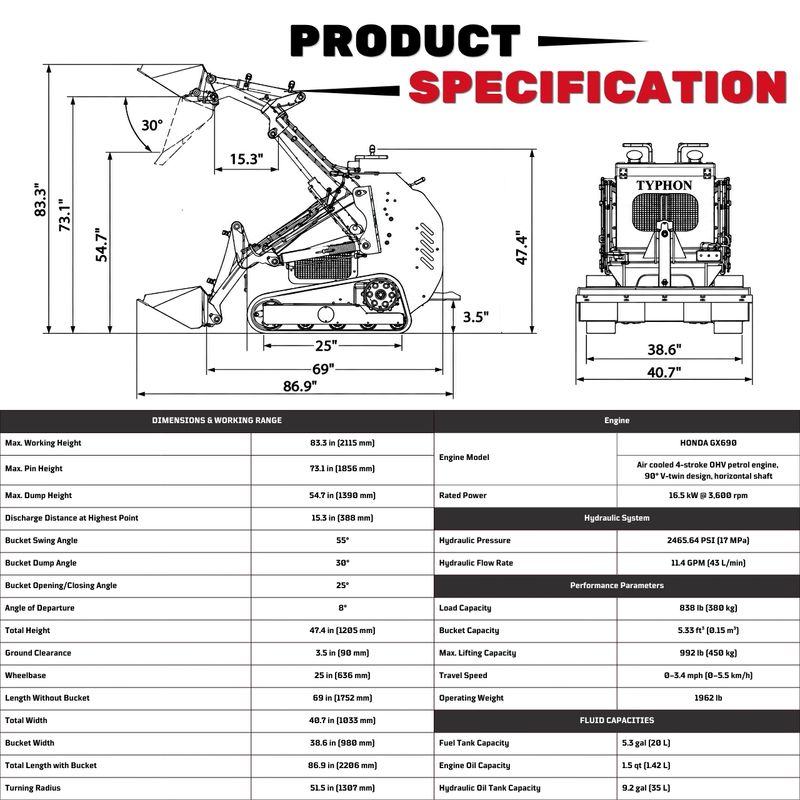
The STOMP mini skid-steer lineup from TYPHON Machinery has an operating capacity range of 500 lbs – 1200 lbs (250 kg – 600 kg) and industry-leading safety features to enhance user safety. Coupled with a wide range of skid steer attachments, our STOMP mini skid steers can be easily transformed into multiple functional machines, capable of digging, sweeping, trenching, forklifting, drilling , mowing and other capabilities.

Conclusion: The Final Verdict
The battle of skid steer vs. mini excavator doesn’t have a single winner—it only has a winner for your specific job.
If your project is defined by movement, speed, and lifting, the skid steer is your best friend. It is the muscle of the job site, capable of hauling, sweeping, and grading with speed.
If your project is defined by depth, precision, and reach, the mini excavator is the tool of choice. It is the surgical instrument that allows you to reshape the earth without moving an inch.
Pro Tip: For many mid-sized construction sites, these machines complement each other perfectly. The excavator digs the dirt out of the trench, and the skid steer carries it away to the dump truck. But if you have to pick just one, let the primary task—digging vs. moving—be your guide.
FAQ: The Real Questions People Ask About Skid Steers & Mini Excavators
So, what is the actual difference between these two?
Answer: It really boils down to one thing: digging vs. moving. Think of a skid steer as a frantic worker that runs back and forth—it loads, pushes, and grades material across the site. A mini excavator is more like a stationary surgeon—it sits in one spot and uses its long arm to dig deep holes or trenches with precision. One runs around; the other digs down.
Which one hits my wallet harder for a rental?
Answer: Usually, the mini excavator costs a bit more. You’re typically looking at about $200–$400 a day for a skid steer, while a decent mini excavator runs $250–$500. Excavators are a bit more complex (especially the undercarriage), which drives the price up slightly, but for many jobs, that extra cost pays for itself in time saved.
Can I dig a pool with a skid steer, or is that a bad idea?
Answer: You can… but you probably shouldn’t. It’s messy. To dig a deep hole with a skid steer, you have to build a giant dirt ramp just to drive down into it. You end up moving way more dirt than necessary. A mini excavator is the pro move here—it just sits on the edge of the pit and scoops the dirt out vertically. No ramps, no mess.
I’m a total newbie. Which one is easier to drive?
Answer: Believe it or not, the mini excavator is usually easier to pick up. The controls are just joysticks (very similar to a video game). You can sit there and practice slowly. A skid steer can feel like a wild ride at first—it’s bouncy, fast, and because you steer by locking the wheels, it can be really jerky until you get the “touch” for it.
What is “Zero Tail Swing” and why should I care?
Answer: “Zero Tail Swing” is a fancy way of saying “you won’t smash into the fence.” On these excavators, when you spin the cab around, the back end doesn’t stick out past the tracks. This is a lifesaver if you’re working right next to a house or a wall. With a skid steer or a standard excavator, you always have to watch your back so you don’t accidentally swing into something.
I have a jungle of brush to clear. Which one wins?
Answer: The skid steer takes the crown here—specifically if you rent a “Compact Track Loader” with a forestry mulcher. It basically turns into a land shark. You can drive straight over bushes and small trees, shredding them instantly. An excavator is okay for plucking out specific trees, but for clearing a whole acre? The skid steer is way faster.
Will a mini excavator ruin my nice lawn?
Answer: Surprisingly, it’s much gentler than a skid steer. If you get a mini excavator with rubber tracks, you can drive it onto the lawn, park it, and do your work by just spinning the cab. A skid steer, on the other hand, has to drag its wheels across the grass every time it turns (hence the name “skid”). If you care about the grass, go with the excavator.