Skip to content
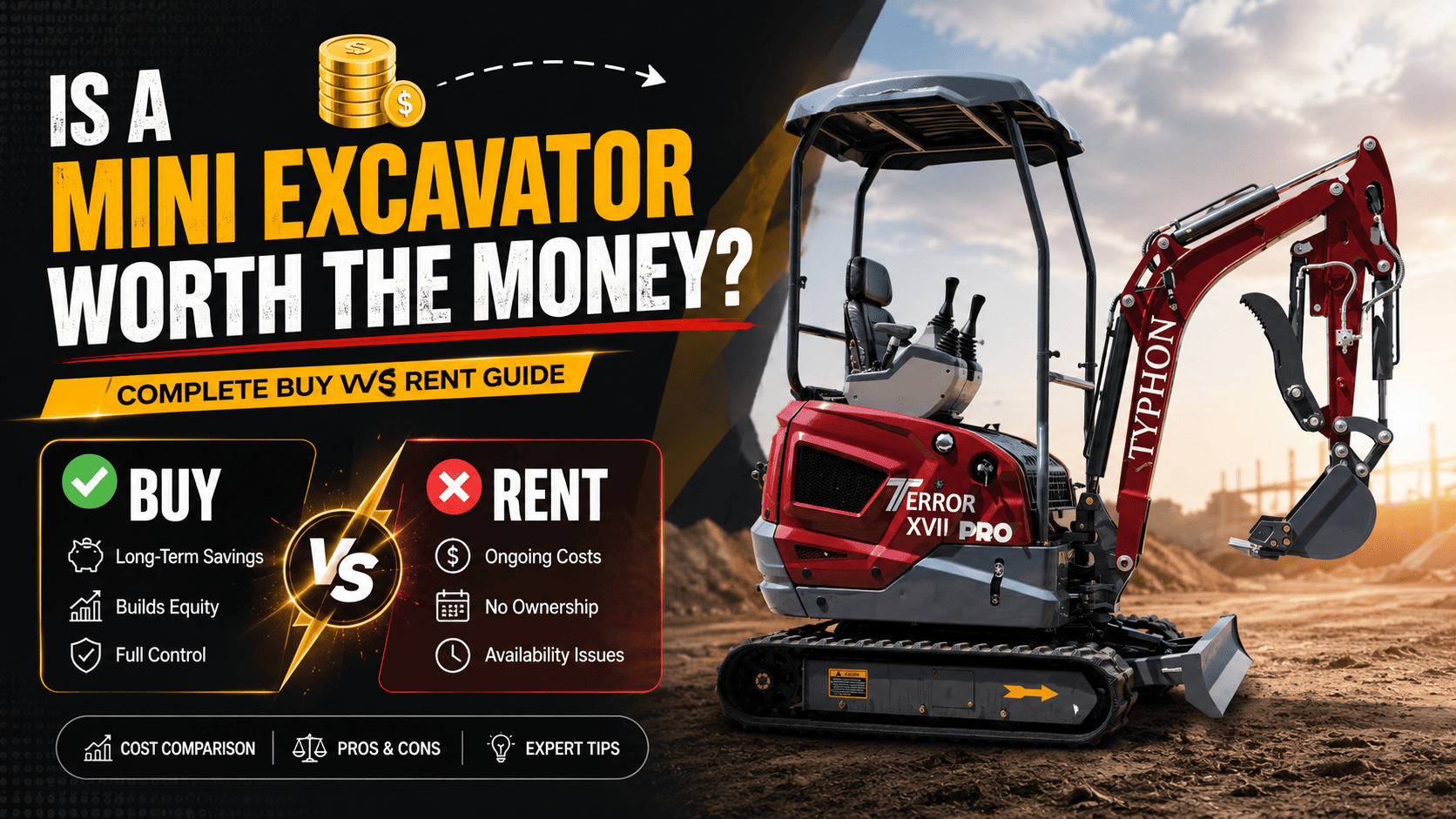
Is a Mini Excavator Worth the Money? Complete Buy vs Rent Guide
You are a rural property owner looking at a washed-out ditch that needs immediate drainage tile before the next big storm floods your outbuildings. Or maybe you are a hardscaping contractor who just cut another hefty check to the local rental company for a three-day weekend job, wondering where your profit margin went. Even a small-scale farmer can spend half their week struggling to move stubborn limestone boulders and tangled brush with a standard utility tractor loader, wishing for real digging depth.
After dealing with late pickup logistics, rigid drop-off deadlines, and the steady creep of commercial rental rates, just about everyone facing regular dirt work hits a wall. You find yourself standing in the driveway asking, “Should I keep playing the rental game, or is it time to pull the trigger and buy a machine of my own?”
Figuring out if a mini excavator is worth the money comes down to simple math, your upcoming project list, and how much value you place on your own time. This breakdown will look at the real costs of renting, the financial mechanics of ownership, and how to decide which route makes sense for your bottom line.
What Is a Mini Excavator?
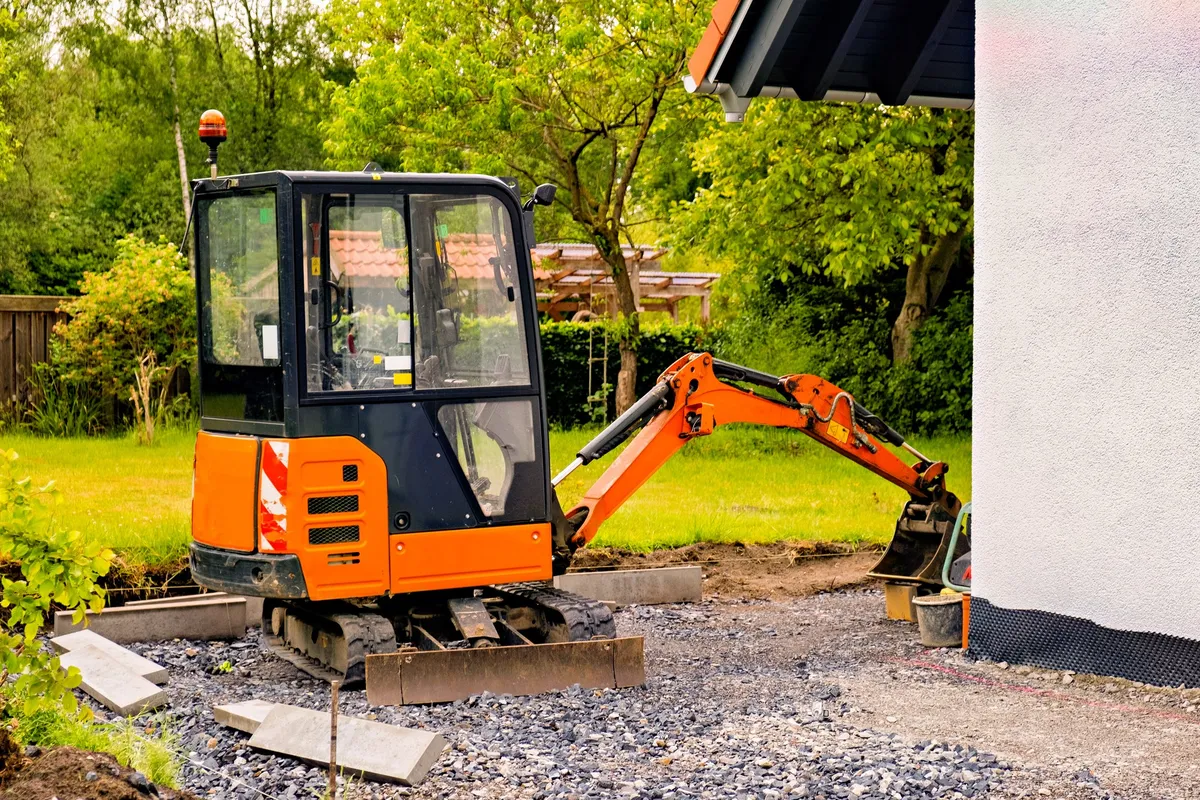
When folks discuss a mini excavator—often labeled a compact excavator or simply a mini digger—they are referring to a tracked machine that generally tips the scales anywhere between 2,000 and 18,000 pounds. Unlike those massive, road-blocking excavators you see on highway construction sites, these compact units are built to squeeze through tight residential gates, slip between trees, and leave a remarkably light footprint on established turf. Best of all, you can tow the smaller classes on a standard utility trailer behind a properly equipped pickup truck without needing a commercial driver’s license.
The real magic of these machines lies in their versatility. You are not just buying a bucket attached to a boom; you are investing in a Swiss Army knife for dirt. Operators regularly swap out standard buckets for specialized attachments like hydraulic thumbs, post-hole augers, frost rippers, and heavy-duty grading blades.
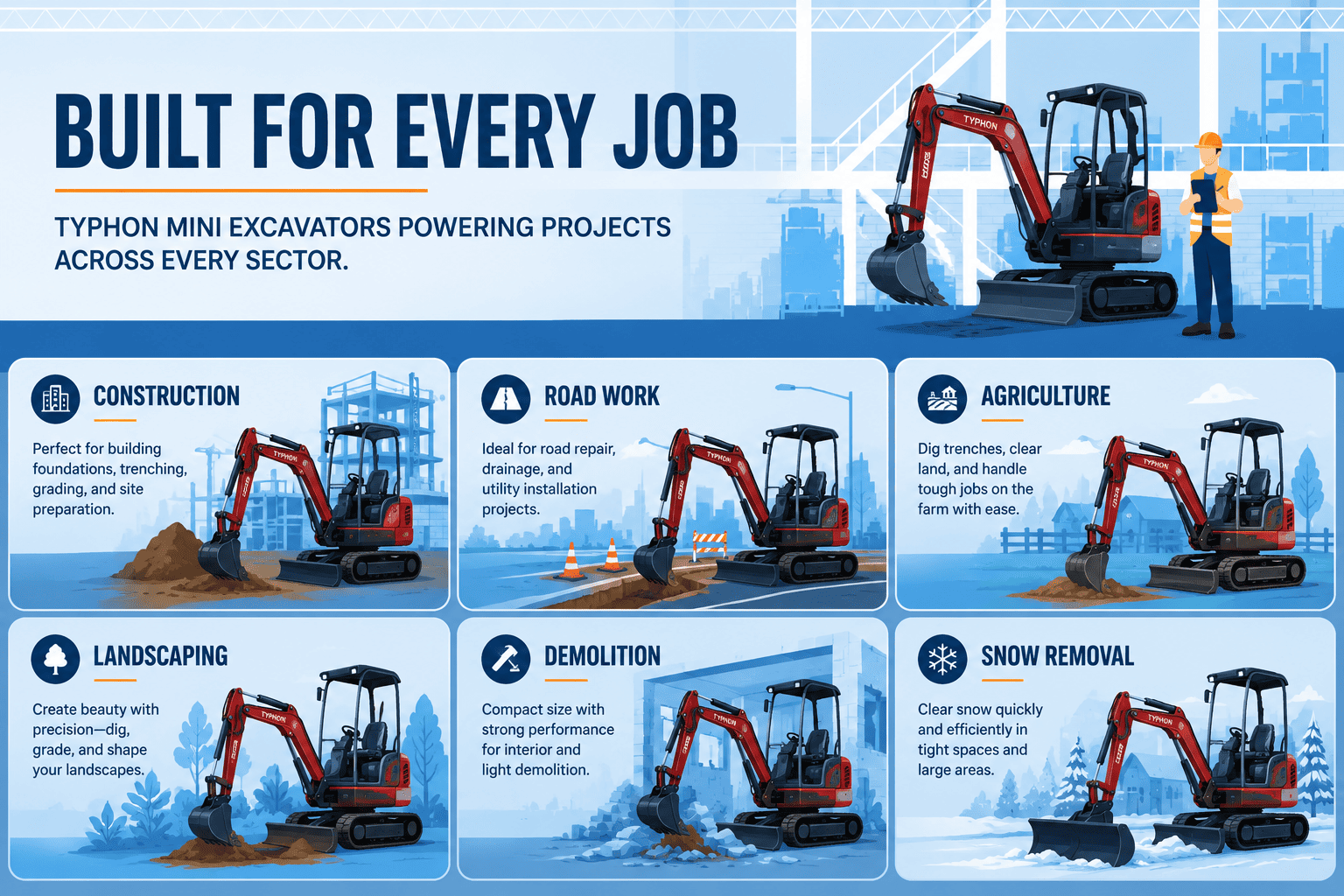
Typical tasks where these machines outshine everything else include the following:
- Trenching: Cutting clean lines for deep electrical conduits, water mains, and propane lines.
- Grading: Shaping slopes and leveling out sub-base material for patios, walkways, or gravel pads.
- Landscaping: Placing heavy boulders, planting mature trees, and building stone retaining walls.
- Demolition: Pulling down rotting barns, breaking up old concrete patios, and loading dump trailers.
- Utility Work: Spot-repairing buried sewer lines or clearing out failing septic drain fields.
- Agriculture: Mucking out dense livestock barns, digging out watering holes, and clearing overgrown fence lines.
Is a Mini Excavator Worth the Money?
To give you the short answer: A mini excavator is absolutely worth buying if your anticipated excavation costs look to pass the $5,000 to $10,000 mark over the next few years. Considering that local rental yards usually command between $300 and $500 a day once you factor in taxes and fees, ownership becomes highly cost-effective for anyone running a machine regularly. On the other hand, if you have only a single weekend project to dig a short water line and nothing else planned, renting is clearly the better financial choice.
When you buy a piece of equipment, you are essentially purchasing scheduling independence. You take away the constant stress of the rental house clock ticking down while you wait for rain to stop. For a working contractor, the machine transitions from a recurring expense into a business asset that actively builds equity. For someone managing a large piece of land, it becomes a crucial daily tool that replaces manual labor.
When Buying a Mini Excavator Makes Sense
Ownership is not a privilege reserved solely for massive earthmoving corporations. Plenty of individuals and small operations find that keeping compact construction equipment parked in their shed makes perfect sense.
Ongoing Projects
If you are working through a multi-year property build, tackling a self-built home, or completely reshaping a rough piece of land, the math tilts heavily toward buying. Think about tasks like burying power lines across several acres, setting up long-term perimeter drainage, or terracing a hillside. These jobs take time.
A project that looks like two weeks of work on paper frequently stretches into months of sporadic weekend sessions because of inclement weather, soil conditions, or day job interruptions. Trying to rent a machine across that kind of timeline will empty your bank account faster than almost anything else.
Property Owners
Anyone who owns more than a couple of acres learns pretty quickly that a standard tractor loader has its limits. A loader pushes and lifts, but it cannot reach down or grab. Acreage owners benefit significantly from having a dedicated mini digger on hand for routine maintenance.
Setting hundreds of wooden fence posts, clearing out clogged creek beds, planting privacy screens, and repairing washed-out paths become straightforward afternoon chores rather than expensive projects you have to hire out to local operators.
Contractors
For small business owners in the landscaping, plumbing, or residential concrete trades, a diesel mini excavator is a foundational tool. Having your machine parked on the trailer means absolute control over your schedule. You never have to tell a client that a job is delayed because the local yard rented out their last 3-ton unit. It drops your per-job overhead, offers major tax advantages through structural depreciation, and gives you a much better return on investment over the actual working life of the equipment.
Farmers
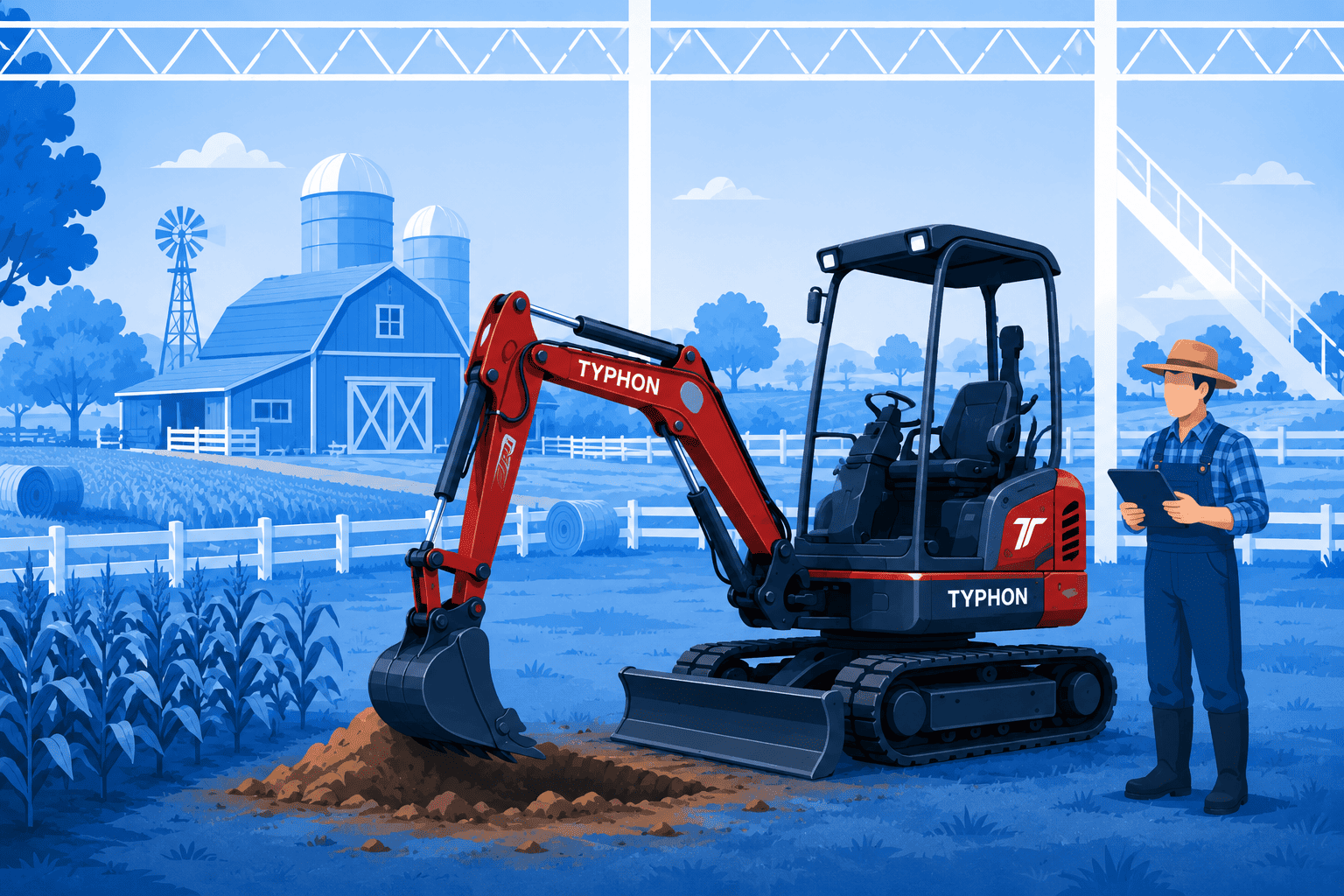
A working farm demands durable tools that are ready to roll the second something breaks. Farmers use compact excavators to patch busted water lines in the middle of winter, clear out heavily silted irrigation ditches, pop out deeply rooted hedge stumps, and handle bulk materials inside tight buildings where a large tractor simply cannot maneuver.
The Hidden Cost of Renting
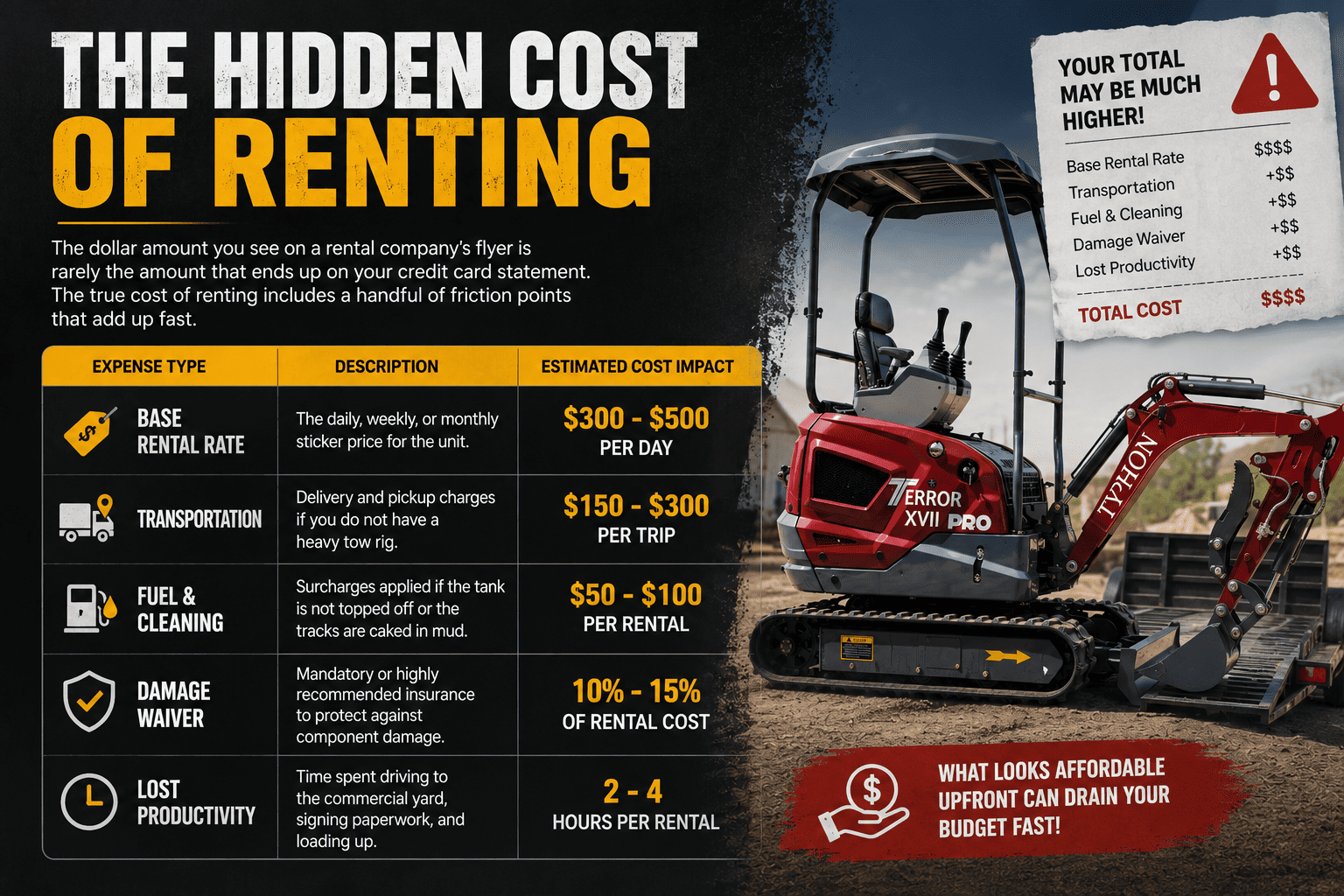
The dollar amount you see on a rental company’s flyer is rarely the amount that ends up on your credit card statement. The true cost of renting includes a handful of friction points that add up fast.
| Expense Type | Description | Estimated Cost Impact |
| Base Rental Rate | The daily, weekly, or monthly sticker price for the unit. | $300 – $500 per day |
| Transportation | Delivery and pickup charges if you do not have a heavy tow rig. | $150 – $300 per trip |
| Fuel and Cleaning | Surcharges applied if the tank is not topped off or the tracks are caked in mud. | $50 – $100 per rental |
| Damage Waiver | Mandatory or highly recommended insurance to protect against component damage. | 10% – 15% of rental cost |
| Lost Productivity | Time spent driving to the commercial yard, signing paperwork, and loading up. | 2 – 4 hours per rental |
Beyond the cash outlay, consider the logistical stress. If you get caught in traffic or hit a hidden rocky patch that delays your digging, missing your return window by even an hour can trigger an extra full-day charge. Furthermore, securing a machine for a holiday weekend requires booking weeks in advance, and if the weather turns completely sour, you are still on the hook for the bill.
Unexpected Jobs Become Easy
Ask anyone who has owned a compact excavator for a year or two, and they will tell you the same thing: The most valuable jobs are often the ones they never planned for. When a machine is sitting in your barn, you start tackling a long list of quick, minor improvements that you would never bother renting equipment to solve.
You will find yourself knocking out dozens of quick tasks, such as the following:
- Plucking out a jagged tree stump that keeps catching the deck of your lawnmower.
- Regrading a low spot in the gravel driveway after a sudden summer downpour.
- Sinking deep, stable holes for heavy corner gate posts is also important.
- Clearing out a clogged culvert pipe before the spring thaw causes an overflow.
- Setting heavy stone steps leading down to a backyard patio area.
- Burying a quick run of PVC pipe to route gutter water away from your foundation.
- Shifting massive landscaping boulders that would break a standard utility cart.
Budget Mini Excavators vs Premium Brands
The landscape for buying compact construction equipment has shifted dramatically over the last decade, giving buyers a much wider range of options that fit their financial comfort zone.
In the premium tier, legacy manufacturers like Caterpillar, John Deere, Bobcat, and Kubota continue to hold a massive share of the market. They build incredibly refined machines, back them up with expansive dealer networks, and offer top-tier cab features.
But that level of engineering demands a serious premium, with new machines easily running upwards of $40,000 to $60,000 depending on the weight class. Brands like SANY have carved out a solid middle ground, offering dependable performance at a more accessible entry point.
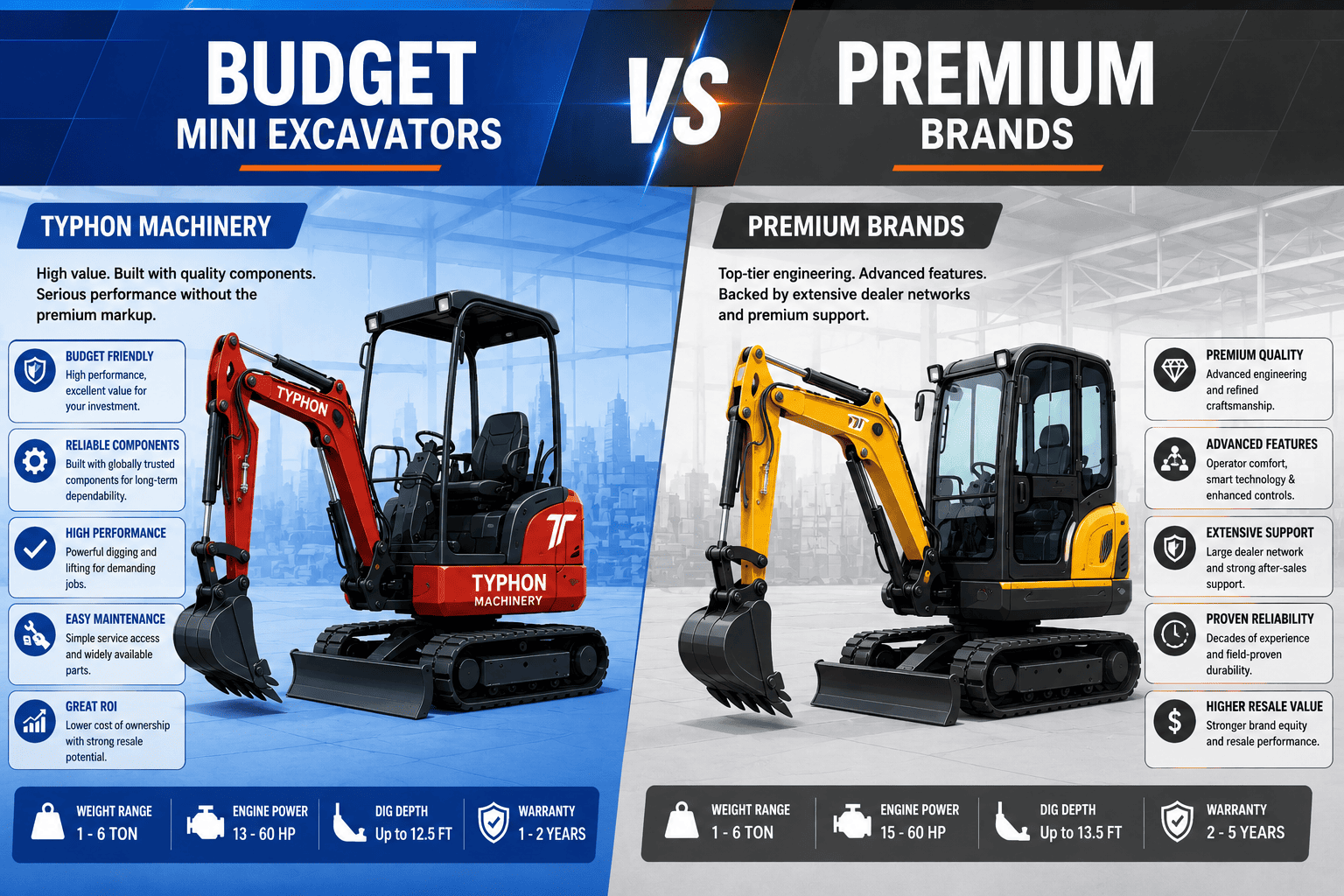
On the other hand, the market has seen a surge in value-driven, highly affordable budget brands like Typhon Machinery. Modern budget-conscious equipment has come an incredibly long way.
Instead of unproven configurations, many of these highly competitive machines are built around the exact same globally recognized, rock-solid components found in premium units—such as Eaton drive motors and heavy-duty hydraulic pumps. For an independent contractor starting out or a landowner who needs pure mechanical capability without the steep corporate markup, these value-focused lines provide an incredibly practical route to ownership.
Financing Makes Ownership Easier
You do not necessarily have to part with a massive chunk of your savings all at once to put a machine to work on your property. Equipment financing provides several clear paths to ownership that fit standard operational budgets.
- Low-Interest Financing: Many equipment dealers run competitive low-rate or promotional financing options for buyers with solid credit, keeping your upfront cash requirements minimal.
- Predictable Monthly Payments: In many instances, a structured monthly equipment payment is actually lower than what you would spend to rent the same machine for just three or four days out of the month.
- Rental Purchase Options: Certain dealerships offer programs where you can rent a machine short-term with a contractual agreement that a portion of those rental fees will count directly toward your down payment if you decide to keep it.
- Asset Equity: Every single payment you make on a loan goes toward building real equity in a physical machine that carries tangible market value, rather than leaving you with nothing but a stack of temporary rental receipts.
- Section 179 Business Deductions: Commercial contractors can often take advantage of special tax provisions that allow them to deduct the full purchase price of qualifying equipment during the tax year it is put into service, offering a massive boost to year-end cash flow.
When Renting Is Still Better
Even though owning your own iron offers massive benefits, it is important to stay objective. Renting is still the smarter path if:
- Your workload consists of a single, isolated project—like digging out a broken concrete swimming pool—and you will truly have no use for a boom after that.
- You only need a machine for a brief weekend project every few years.
- You live on a tight suburban lot with absolutely no room to park a dedicated machine or a heavy-duty flatbed trailer.
- You have zero desire to check fluids, change filters, grease pins, or turn a wrench.
- Your line of work requires entirely different machine scales from one week to the next—needing a micro-digger for an indoor basement job on Monday and a 20-ton earthmover for a commercial site clear on Friday.
Maintenance Costs
Owning heavy equipment means taking on the responsibility of preventative maintenance. While compact diggers are built like tanks, ignoring their basic mechanical needs will eventually lead to steep repair bills. The encouraging news is that keeping these machines running properly is a straightforward process that most handy owners can easily manage themselves.
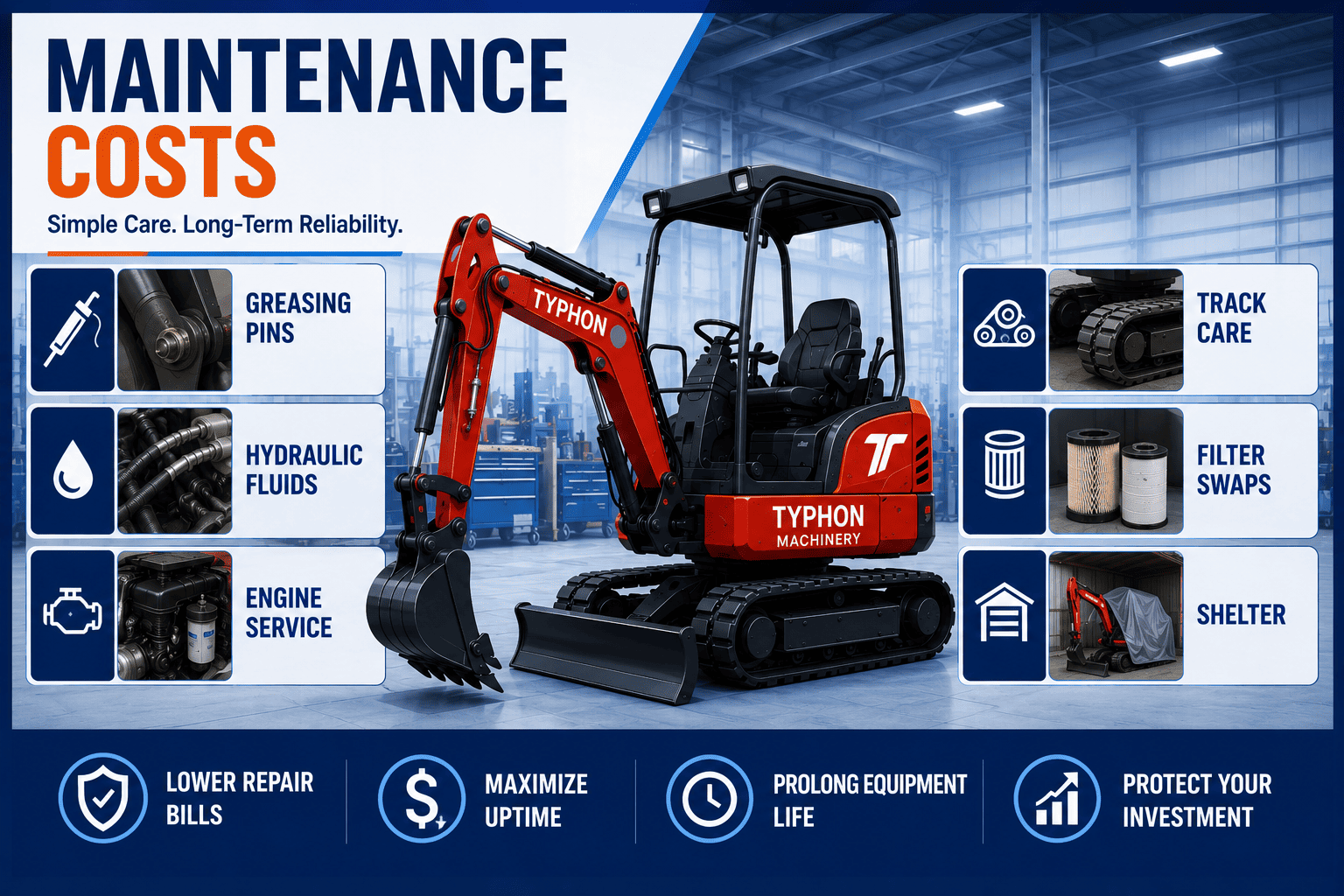
Your routine maintenance will generally involve the following:
- Greasing Pins: Pumping fresh grease into the boom joints, bucket pins, and main swing bearing—ideally every 10 hours of active operation to prevent metal-on-metal wear.
- Hydraulic Fluids: Monitoring reservoir levels regularly and swapping out hydraulic fluid and system filters at the intervals recommended by the manufacturer.
- Engine Service: Performing standard diesel engine oil changes and filter updates to keep the heart of the machine clean.
- Track Care: Checking the tension on your rubber tracks, clearing packed rock and mud out of the undercarriage rollers, and planning for eventual track replacements down the road.
- Filter Swaps: Keeping air intake and fuel delivery filters fresh to guard against contamination in dusty working environments.
- Shelter: Keeping the unit covered with a heavy tarp or parked inside a three-sided shed to protect hydraulic hoses from intense sun damage and preserve the electrical system.
While an annual fluid change might cost you a bit of time and a couple of hundred dollars in filters and oil, staying on top of it prevents the kind of major internal component failures that ground a machine for weeks.
Resale Value
A major factor that completely alters the financial picture of buying a mini excavator is what happens when you are finished using it. Unlike standard passenger cars or consumer electronics that drop like a stone in value the second you take them home, well-kept compact construction equipment holds its value incredibly well.
Premium nameplates like Kubota, Bobcat, John Deere, and Caterpillar are legendary for their slow depreciation curves on the secondary market. Similarly, value-driven alternatives like Typhon hold up remarkably well because the market is always hungry for compact, accessible machines that individuals can buy without financing a fortune.
Your ultimate resale value hinges on three core factors: the total hours registered on the meter, a clear history of regular greasing and oil changes, and the physical wear on the undercarriage tracks and main hydraulic pumps. A machine that is treated right can frequently be sold after years of hard service for a massive percentage of what you originally paid for it, making your actual long-term net cost of ownership remarkably low.
Choosing the Right Mini Excavator
If you have weighed the options and are ready to start looking through mini excavator for sale listings, you need to look past the paint color and match the actual mechanical specs to the work you have planned.
Keep these key factors at the top of your checklist:
- Operating Weight: A heavier machine provides more stability and raw breakout force, but you must ensure your current truck and trailer can legally handle the gross weight on the highway.
- Max Dig Depth: Make sure the boom can easily reach below your local winter frost lines or get deep enough for your planned footings and utility runs.
- Hydraulic Thumb: Do not skip this feature. A machine equipped with a responsive thumb allows you to pick up, sort, and stack materials rather than just moving dirt around in a standard bucket.
- Independent Boom Swing: This design allows the excavator boom to pivot left or right independently of the main cab rotation, letting you dig a straight trench directly alongside a concrete wall or fence line.
- Engine Power: Opt for a proven diesel power plant; they deliver the low-end torque required for heavy digging and offer far greater operational longevity than gasoline engines.
- Auxiliary Hydraulic Flow: Pay close attention to the gallons per minute (GPM) rating if you intend to run demanding attachments like concrete breakers, post drivers, or flail mowers.
- Undercarriage Width: Some smaller models feature hydraulically retractable tracks, letting you narrow the footprint to slide through standard yard gates and then widen it for working stability.
Why Many Buyers Choose Typhon Machinery
When it comes down to selecting a machine that makes financial sense, the goal is always to maximize your capability while protecting your capital. This balance is precisely why so many landowners and independent operators have started moving toward TYPHON Mini Excavators rather than taking on massive debt for a legacy brand name.
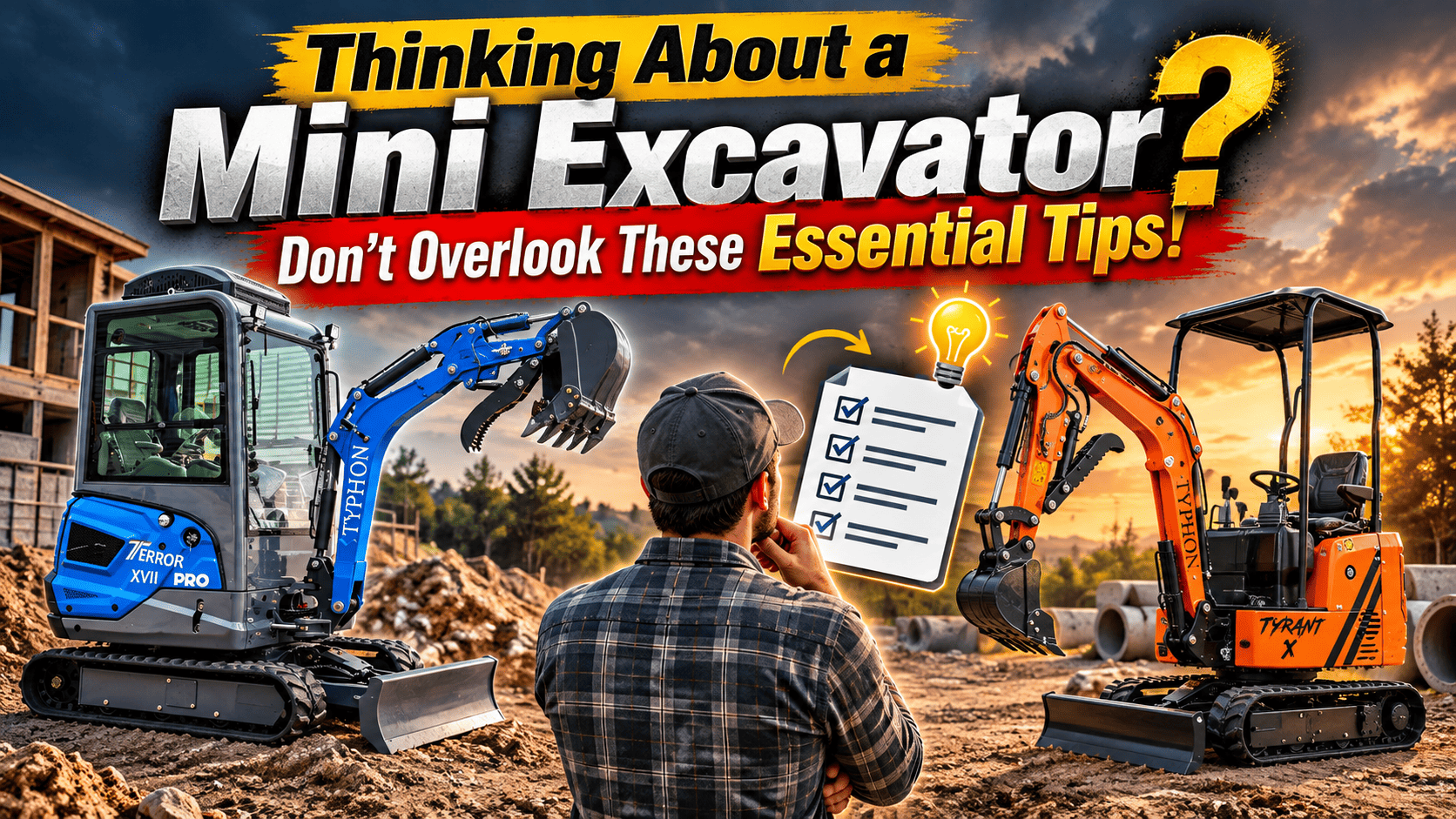
Machines such as the TYPHON TERROR XVII PRO and the heavy-duty TYPHON TERROR XVIII Prestige are built to strike a highly practical balance. They incorporate premium-grade hydraulics and smooth joystick configurations into a robust, accessible frame. By using dependable engines like Kubota diesel power plants, these units ensure straightforward emissions compliance, easy cold-weather starts, and simple access to universal replacement parts down the line. With standard features like integrated hydraulic thumbs and spacious operator layouts, they deliver professional performance at a price point that makes sense for family farms, local contractors, and serious property improvement enthusiasts alike.
Frequently Asked Questions
Is buying a mini excavator cheaper than renting?
Yes, it is significantly cheaper if you have regular, ongoing work. If your total rental bills are on track to pass the $5,000 mark, buying a dependable machine and maintaining it will generally save you a substantial amount of money in the long run compared to paying endless rental yard fees.
How many hours do mini excavators last?
A well-maintained diesel compact excavator can easily deliver between 7,000 and 10,000 hours of reliable field service. For a private landowner or a light contractor, it can take a lifetime of weekend work to put that many hours on a machine.
Do mini excavators hold value?
They hold their value remarkably well. Because small excavators are always in high demand by landscapers, farmers, and acreage owners, a clean machine with low hours will always command a solid price on the used market.
Can homeowners own one?
Absolutely. A large number of homeowners with rural properties or substantial acreage buy compact excavators under the 3-ton mark because they are straightforward to learn, fit easily into standard outbuildings, and make short work of heavy property maintenance.
What size mini excavator is best?
For general utility work, farm maintenance, and residential landscaping, a machine weighing between 2,000 and 6,000 pounds is usually the sweet spot. It provides ample power for serious digging while remaining light enough to haul safely behind a standard three-quarter-ton truck.
Are value-focused budget mini excavators reliable?
Yes, provided you purchase from an established distributor that backs their equipment. Many modern value-focused machines are built around highly reliable, globally recognized engine and hydraulic components, making them exceptionally tough and easy to maintain.
What maintenance is required?
The most important task is daily greasing of the boom and bucket pins to keep wear down. Beyond that, you just need to keep an eye on your track tension, change the engine oil regularly, and swap out the hydraulic and fuel filters according to the manual.
Is financing worth it?
Financing is an excellent option if you want to keep your working cash flow intact for other business needs or project supplies. It turns a significant capital expenditure into a stable, predictable monthly operating cost.
Final Thoughts
Stepping away from the rental desk and investing in your own equipment is a major decision, but it ultimately comes down to a clear assessment of your time and your upcoming project list. If you are looking at a multi-year list of property improvements, a farm that constantly throws new maintenance challenges your way, or a growing business that needs to respond to client calls instantly, having a machine ready to roll changes everything.
When you weigh whether a mini excavator is worth the money, look past the initial sticker price. Account for the hours wasted driving back and forth to the rental yard, the project delays caused by bad weather windows, and the strong residual value these machines retain down the line. By aligning your budget with your physical workload and choosing a capable, reliable machine, you gain absolute control over your schedule, your property, and your projects.