Skip to content
The Future of Mini Excavators: Technology, Electrification, and Market Growth
The construction industry is experiencing one of the largest revolutions in decades. The future of mini excavators is being redefined by technology, sustainability mandates, and the growing number of industries that rely on compact machinery to accomplish the job at hand—from AI-powered grading to battery-powered digging.
Quietly, mini excavators have become the backbone of modern construction sites—nimble enough to work in urban gardens and powerful enough to do serious infrastructure work. And now they’re getting smart. With manufacturers like TYPHON Machinery pushing the limits of what compact excavators can do and market forces driving electrification and automation, the next 10 years will see a dramatic evolution of how these machines are built, operated, and deployed.
This guide will cover the technology trends, environmental pressures, market growth data, industry challenges, and how leading-edge brands are already getting ahead of the curve in what’s driving the future of mini excavators.
What Are Mini Excavators?
Mini excavators, also called compact excavators or mini diggers, are hydraulic excavating machines that typically weigh less than 10 metric tons. They are designed to handle digging, trenching, grading, and material handling in tight or confined spaces where full-size excavators simply cannot operate.
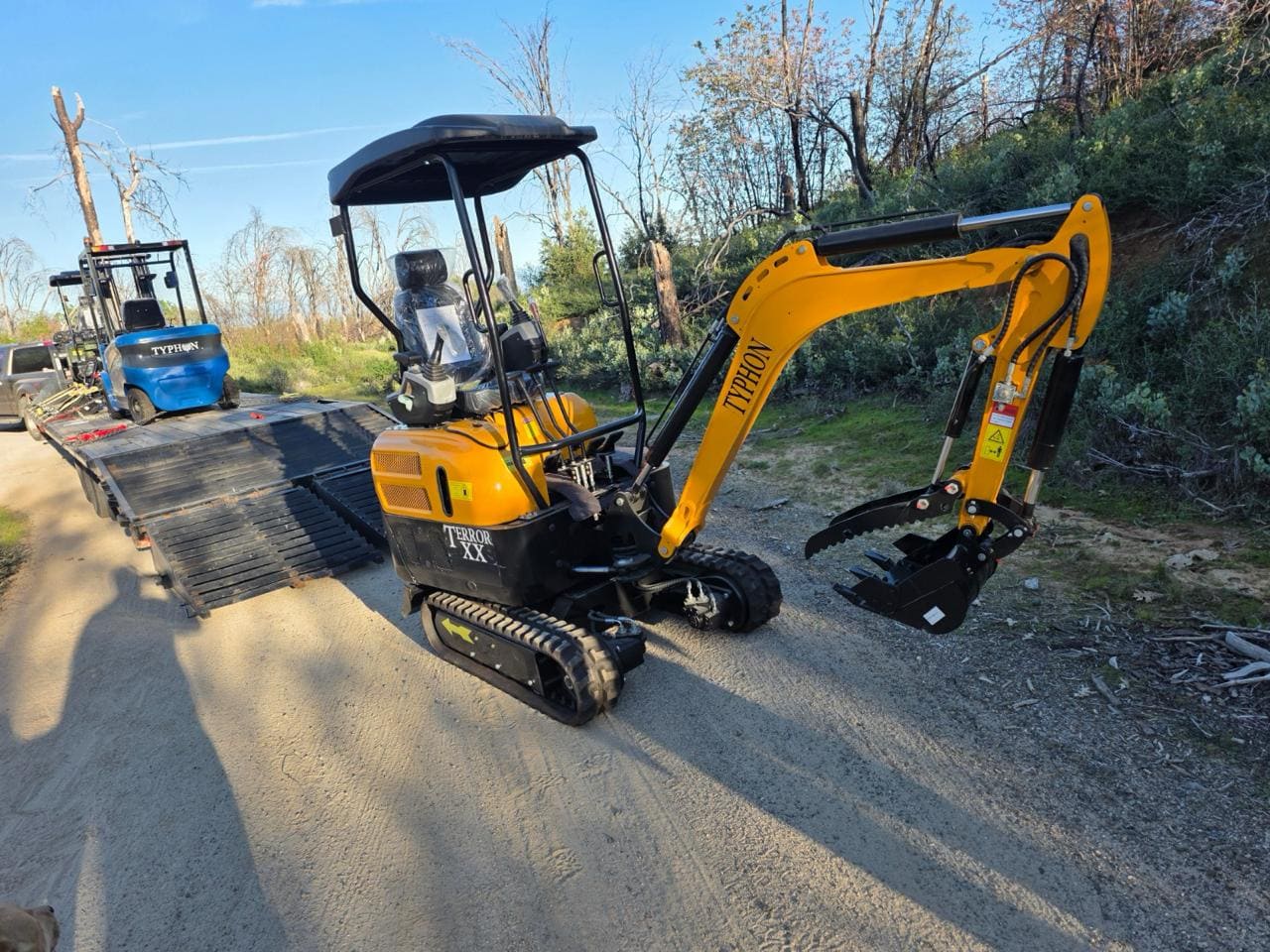
Key components include the following:
- A rotating upper structure (house) with operator cab
- A boom, arm (dipper), and bucket assembly
- Rubber or steel tracks for ground mobility
- A hydraulic system powering all movements
- Diesel or (increasingly) electric powertrains
Common applications span residential and commercial construction, landscaping, utility trenching, agricultural work, and demolition. Their compact footprint makes them especially valuable in urban environments, indoor worksites, and orchard farming.
Current market position: Mini excavators represent one of the fastest-growing segments in the global construction equipment industry. The 2–5 ton weight class remains the most popular, while the 5–10 ton category is the fastest-growing in terms of adoption.
Current State of the Mini Excavator Market
The global mini excavator market is in a robust expansion phase. According to Market Research Future, the market was valued at approximately $8.26 billion in 2024 and is projected to reach $15.82 billion by 2035, growing at a CAGR of 6.08% over the forecast period.
Several dynamics are fueling this growth:
Urban construction density is rising across Asia-Pacific, North America, and Europe, making compact equipment a necessity rather than a convenience. Infrastructure projects—roads, utility corridors, and residential developments—are expanding steadily, and mini excavators are often the first machine on-site and the last to leave.
The rental market is also booming. Rental platforms now account for a growing share of mini excavator usage, particularly among small-to-medium enterprises that prefer operational flexibility over capital ownership. The rental segment is expanding at roughly 5–8% annually, fueled in part by environmental regulations that are pushing fleets toward cleaner electric models.
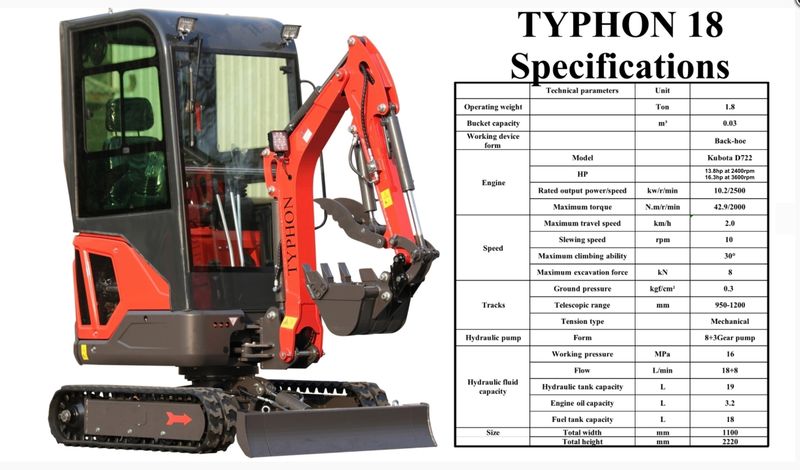
TYPHON Machinery has entered this growing market with a range of compact excavators—including the TYPHON TERROR X, XI STORM, XVII, XVII LUX, XVII PRESTIGE, XVIII, and XX series—that deliver Kubota-powered performance at prices that make ownership possible for independent contractors and small businesses.
Market Snapshot
- Global mini excavator market size (2024): ~$8.26 billion
- Projected market size by 2035: ~$15.82 billion
- Market CAGR (2025–2035): 6.08%
- Rental segment growth: 5–8% annually
Advancements in Technology and Automation
Artificial Intelligence Integration
AI is no longer a distant ambition in construction equipment — it’s already on the job site. AI-assisted digging systems can now analyze soil resistance in real time and automatically adjust hydraulic pressure for optimal efficiency. Precision grading algorithms are reducing operator error rates while speeding up finish work.
In August 2025, Caterpillar announced an AI-driven mini excavator model specifically designed to optimize operational efficiency — a clear signal that AI integration is moving from premium flagship models toward the broader compact equipment segment.
For operators, AI-assisted controls translate to faster learning curves. A novice operator can achieve results closer to an experienced hand, reducing the labor shortage pressure that the construction industry continues to face.
Brands like TYPHON Machinery have focused on intuitive joystick controls and responsive pilot systems—the TYPHON TERROR XVII has been praised by users for having controls that are “very responsive” for precision work like grading around pool installations—a foundation on which AI-enhanced control layers will naturally be built.
Autonomous and Semi-Autonomous Operation
Remote-operated and autonomous excavators are shifting from prototype to practical application. Stanley Black & Decker’s Remote Operational Control (ROC) technology—which can be installed on existing compact machinery—demonstrated that autonomy doesn’t require purpose-built machines from scratch.
By 2030, industry observers expect semi-autonomous fleets to become mainstream on larger job sites, with mini excavators executing pre-programmed trench layouts or grading paths with minimal operator intervention. By 2035, fully autonomous micro-excavators working in tightly coordinated swarms on pipeline and utility projects are a realistic expectation.
In dangerous environments—underground mining, contaminated sites, steep terrain—autonomous operation eliminates human risk entirely, and mini excavators are ideally sized for these remote-control applications.
Smart Sensors, IoT, and Telematics
Telematics systems, once reserved for large fleet operations, are now standard features on modern compact excavators. These systems collect granular performance data: engine hours, hydraulic temperatures, fuel consumption, idle time, and fault codes. Fleet managers can monitor entire equipment inventories remotely through cloud dashboards.
Predictive maintenance is perhaps the most immediately valuable application. By analyzing operating patterns, telematics systems can flag potential component failures before they cause costly downtime. This is especially relevant for independent owner-operators like TYPHON Machinery customers, who rely on a single machine for their livelihood and can’t afford unexpected breakdowns mid-project.
IoT connectivity is also enabling geofencing — restricting equipment operation to designated site boundaries — and operator behavior analytics, which help companies identify training needs and reduce accident rates.
Expert Insight: Industry analysts at Construction Equipment magazine highlight AI, telematics, grade control, and connected fleet management as the defining trends shaping construction equipment through 2026 and beyond. These are not future features; they are current purchasing criteria.
Environmental Regulations and Sustainability
Global Emission Standards
Emission regulations are among the most powerful forces reshaping mini excavator design. In the United States, the EPA’s Tier 4 Final standards mandate significant reductions in particulate matter and nitrogen oxide emissions from non-road diesel engines. The European Union’s Stage V regulations go further, pushing toward near-zero particulate emissions.
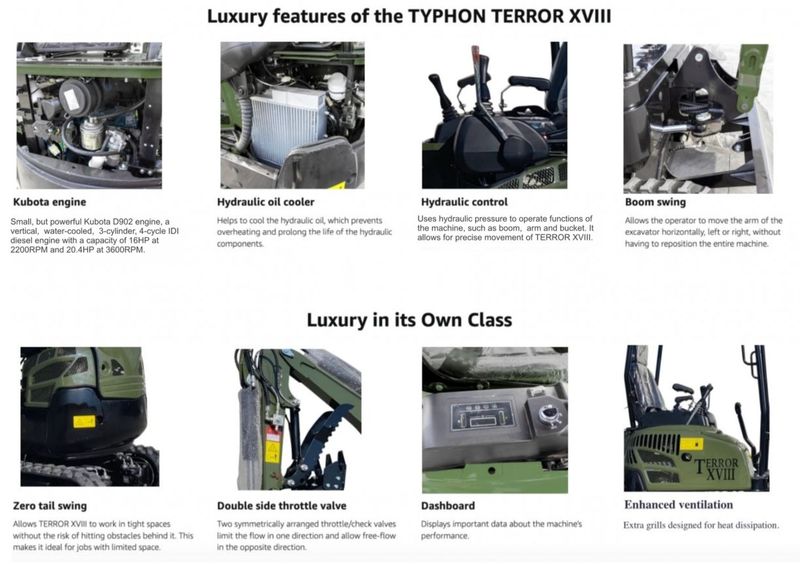
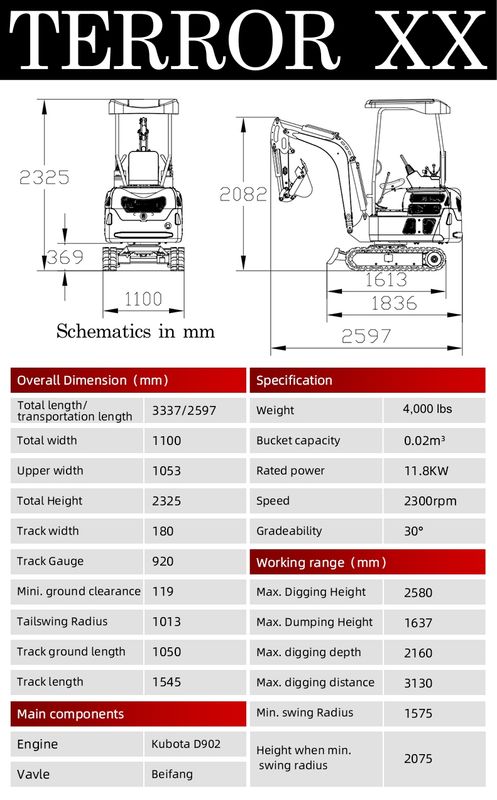
For equipment manufacturers, compliance is not optional — it is the baseline. Brands like TYPHON Machinery are already meeting this bar: every model in the TYPHON TERROR series, including the TERROR XVII LUX and the TERROR XX, is equipped with an EPA-certified Kubota D902 engine, ensuring compliance with current environmental standards while delivering the diesel power that contractors depend on.
Sustainable Construction Practices
Beyond regulatory compliance, sustainability is becoming a genuine purchasing factor for contractors—particularly those bidding on government projects where green construction credentials carry weight. Carbon reduction targets at the municipal and national levels are flowing down into procurement requirements, encouraging buyers to consider a machine’s life cycle emissions, not just its upfront cost.
Eco-Friendly Equipment Demand
Stricter emissions requirements and corporate sustainability initiatives are pushing manufacturers toward cleaner technologies. The market response has been clear: electric and hybrid compact excavators are growing faster than the diesel segment, and manufacturers who don’t develop credible electrification roadmaps risk losing ground to competitors who do.
Rise of Electric and Hybrid Mini Excavators
Why Electrification Is Growing
Electric mini excavators solve several pain points simultaneously. Fuel costs are eliminated or dramatically reduced. Maintenance requirements drop—electric motors have far fewer moving parts than diesel engines, and there’s no engine oil, no air filters, and no fuel injectors to service. Noise levels fall sharply, enabling operation in noise-sensitive environments like residential neighborhoods, hospital precincts, and indoor sites. And of course, direct emissions drop to zero at the point of use.
Electric models are projected to capture approximately 40% of the rental market by 2026, driven by growing demand from contractors with sustainability mandates and urban project requirements.
Battery Technology Improvements
The technology making electric excavators practical is improving rapidly. Lithium-ion battery packs with 6+ hour runtimes are now available in compact form factors suitable for mini excavators. Fast-charging capability is reducing downtime. Energy management systems are extending battery life by intelligently modulating power delivery during different phases of operation.
Boleo and NESHER NX2500 represent current-generation electric mini excavators with lithium-ion battery systems and biodegradable hydraulic fluids—proof that the technology is production-ready, not speculative.
In the longer term, solid-state batteries and hydrogen fuel cell systems are expected to further extend operational range, helping to overcome one of the main barriers to adopting all-electric construction equipment.
Hybrid Systems
Hybrid diesel-electric systems offer a pragmatic bridge for contractors who need full-day operational range without access to charging infrastructure. Komatsu unveiled a new line of eco-friendly hybrid mini excavators in July 2025, reflecting the industry-wide move toward multi-mode powertrains. Diesel-electric hybrids capture braking energy, operate in electric-only mode in emissions-sensitive zones, and revert to diesel when extended power is needed.
For TYPHON Machinery customers working in areas with limited charging access, diesel-electric hybrid variants would be a natural product evolution—providing the fuel savings and emission reductions that the market demands while preserving the runtime flexibility of conventional machines.
Statistics Callout:
- Electric models projected to capture 40% of rental market by 2026
- Mini excavator market CAGR 2025–2035: 6.08%
- Global excavator market projected to reach $138.7B by 2035 at 5.5% CAGR
Growth Opportunities Across Industries
Mini excavator demand is now primarily driven by sectors beyond construction. The versatility of compact excavators has unlocked significant adoption across a wide range of sectors.
Residential Construction
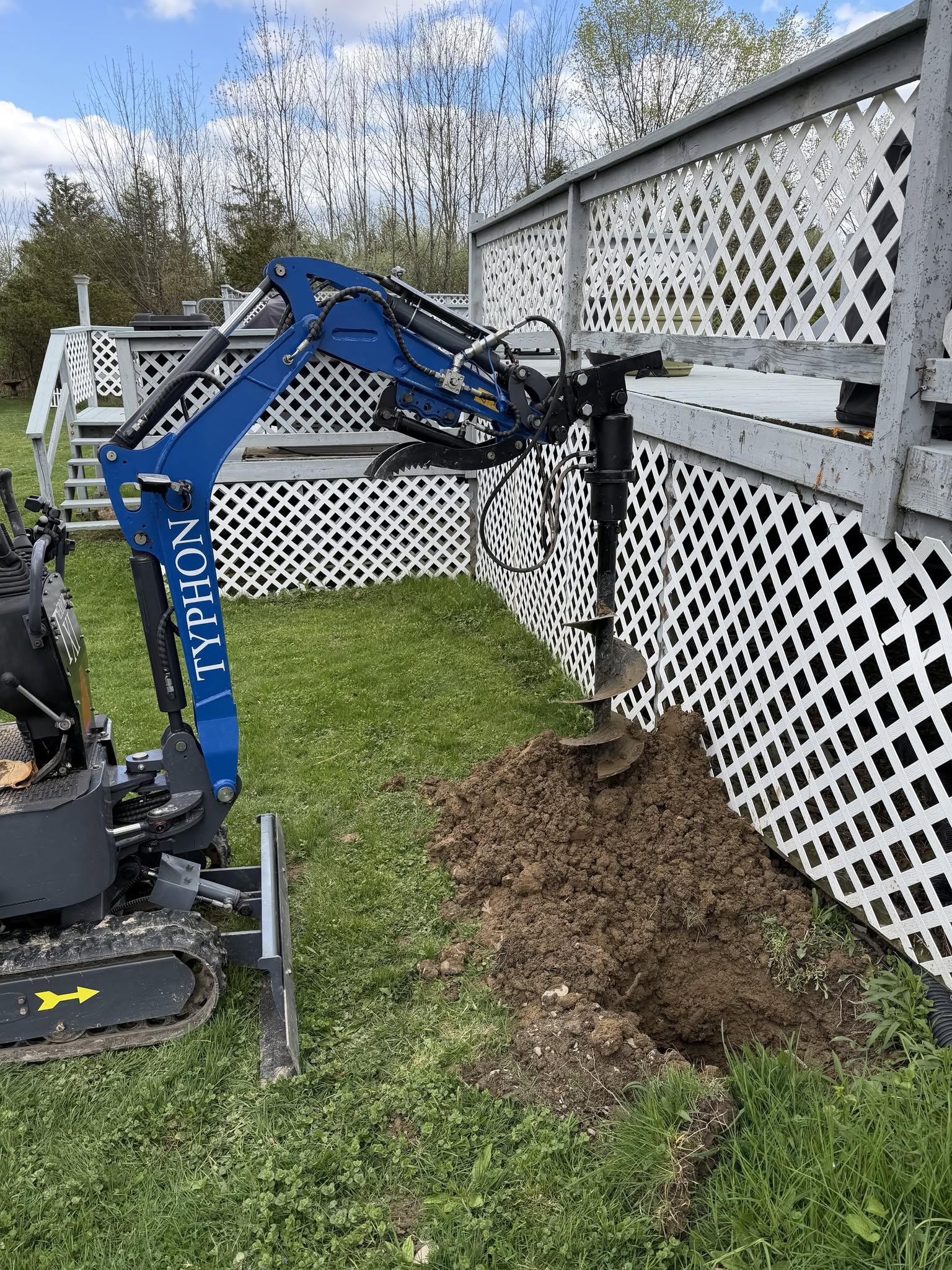
Single-family home building, foundation work, pool installation, and basement excavation all rely heavily on mini excavators. The TYPHON TERROR XVII series, with its precision pilot controls and cab comfort features, is specifically suited for the residential contractor who moves between multiple sites daily.
Commercial Construction
Urban commercial developments—retail fit-outs, office renovations, and hospitality builds—frequently involve constrained job sites where mini excavators are the only viable excavation option. Their low ground disturbance and maneuverability make them the contractor’s preferred choice.
Utility Projects
Gas pipelines, water mains, electrical conduit, and fiber optic trenching all rely on mini excavators. Utility work drives significant mini excavator demand because the machines can work in existing rights-of-way with minimal surface disruption.
Landscaping
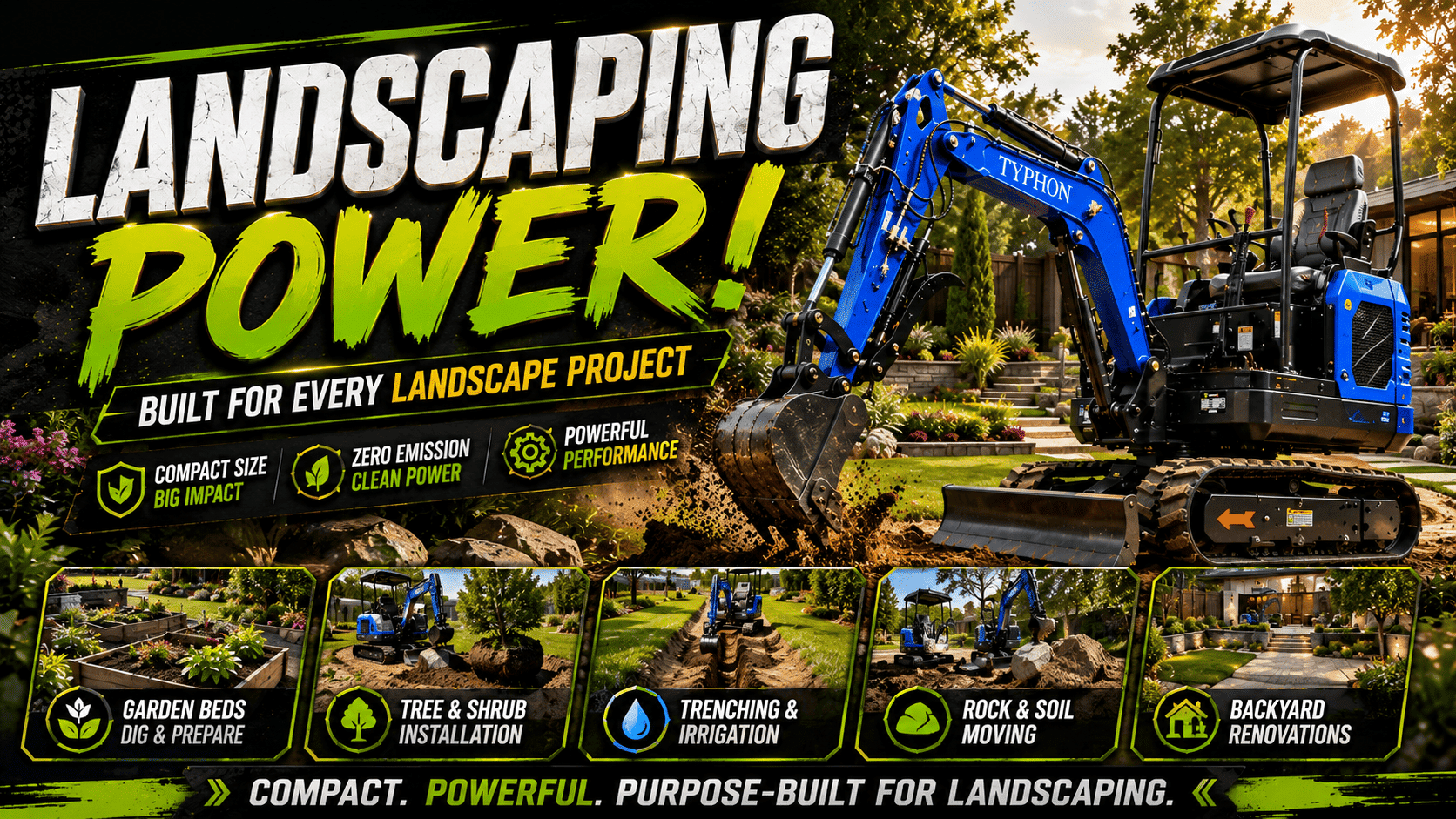
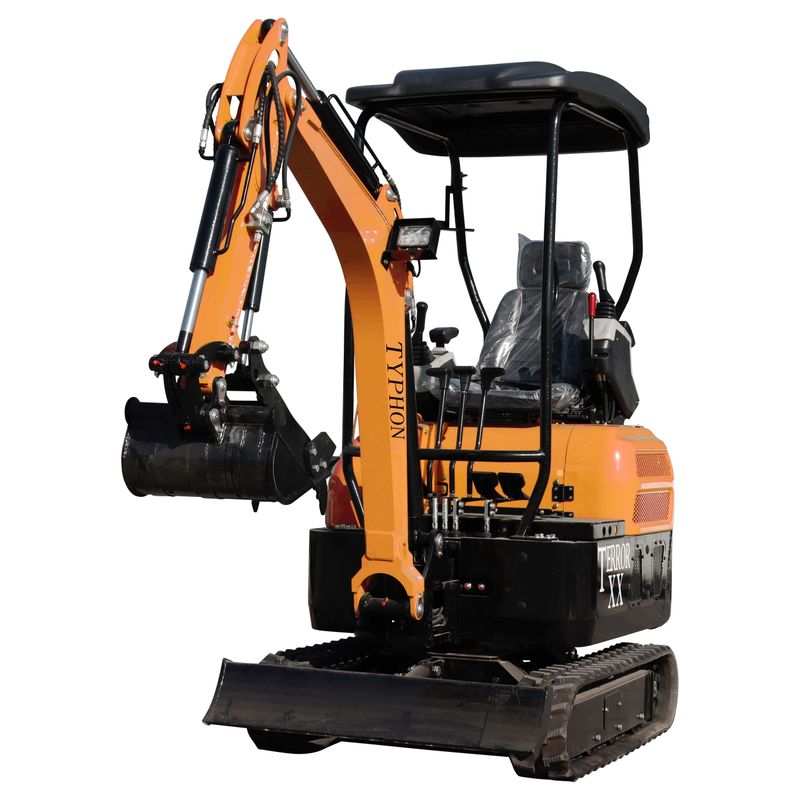
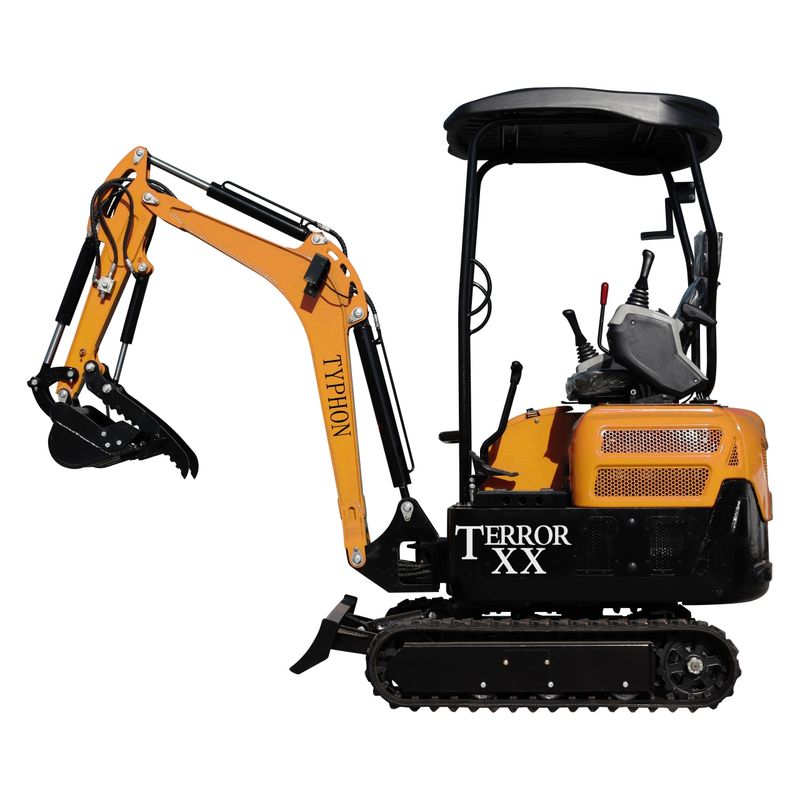
From estate garden design to municipal park renovation, landscaping professionals have embraced mini excavators as essential tools. The TYPHON TERROR XX series, with its agricultural focus — designed for planting, fertilizer application, and orchard work—directly addresses this segment. Its superior heat dissipation and flexible transport configuration make it ideal for multi-site landscaping contractors.
Agriculture
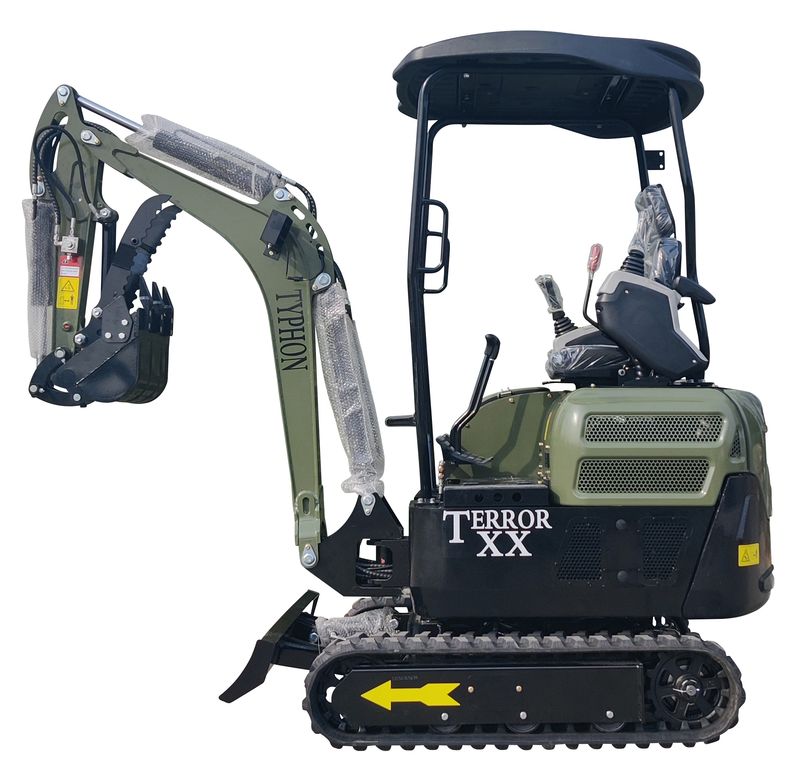
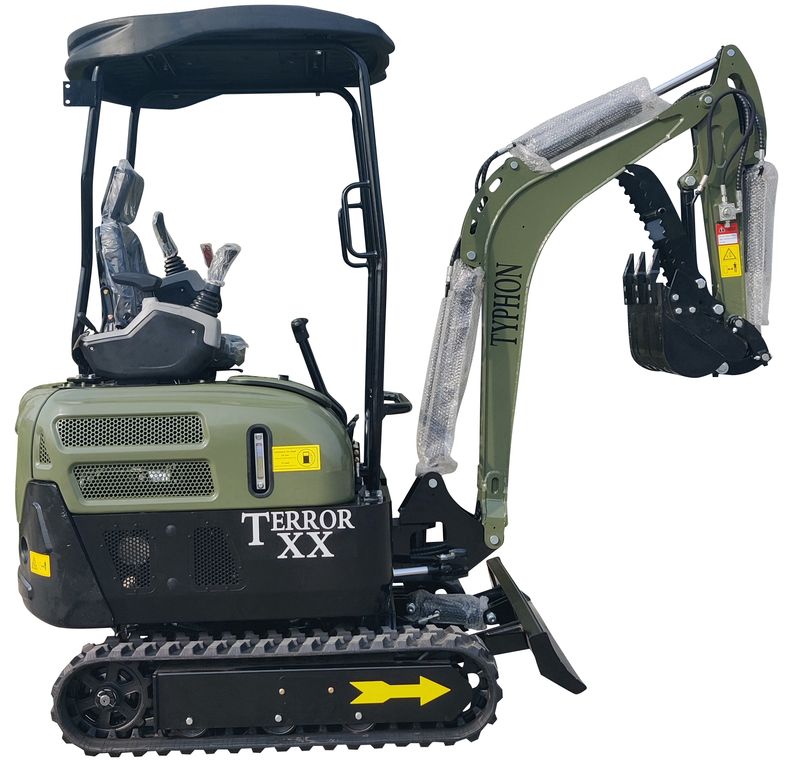
Drainage trenching, irrigation installation, land leveling, and orchard maintenance are driving agricultural mini excavator adoption globally. TYPHON’s TERROR XX “green” edition was specifically designed with orchard applications in mind — a clear strategic move to capture agricultural buyers.

Renewable Energy Projects
Solar farm installation, wind turbine foundation preparation, geothermal system installation—renewable energy infrastructure requires significant earthmoving work in locations that are often remote, making compact and transportable mini excavators the logical choice.
TYPHON Machinery: Compact Power for a Changing Industry
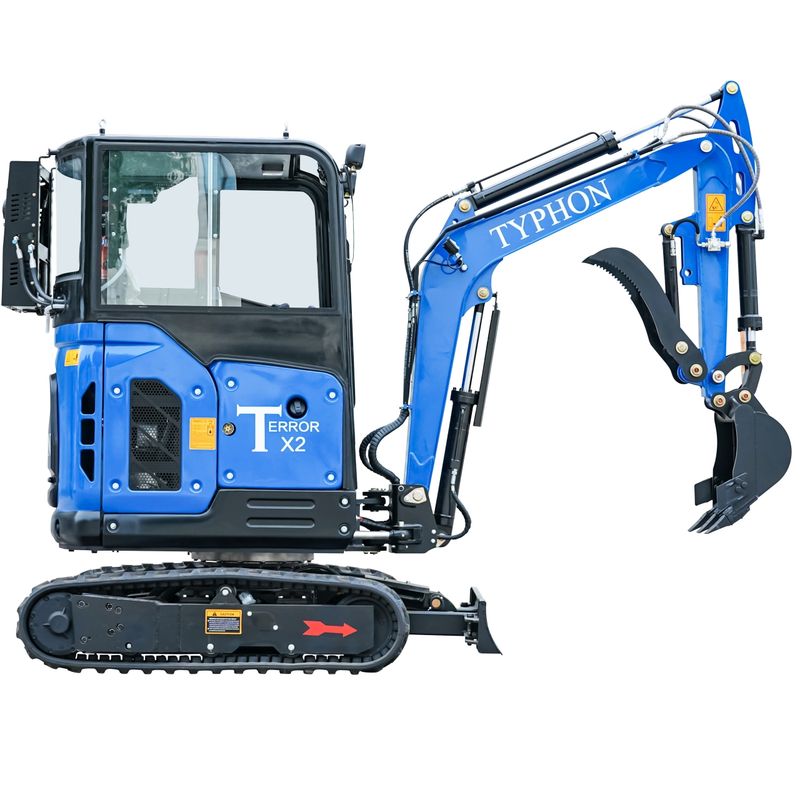
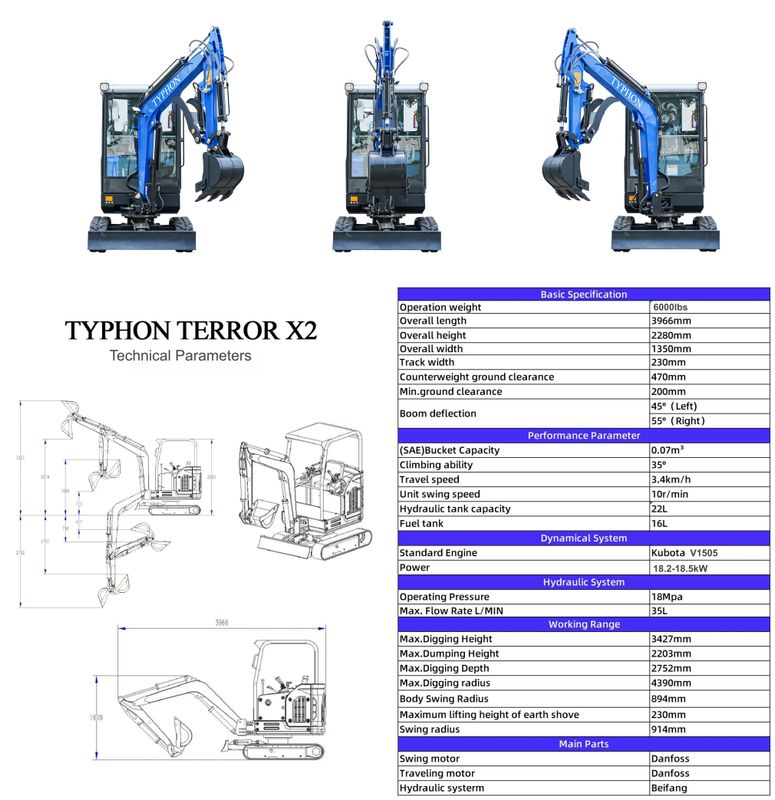
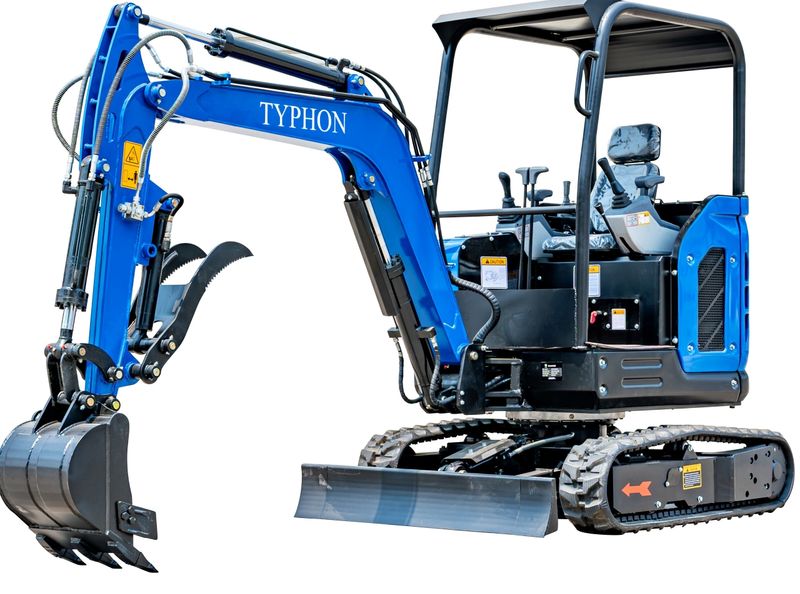
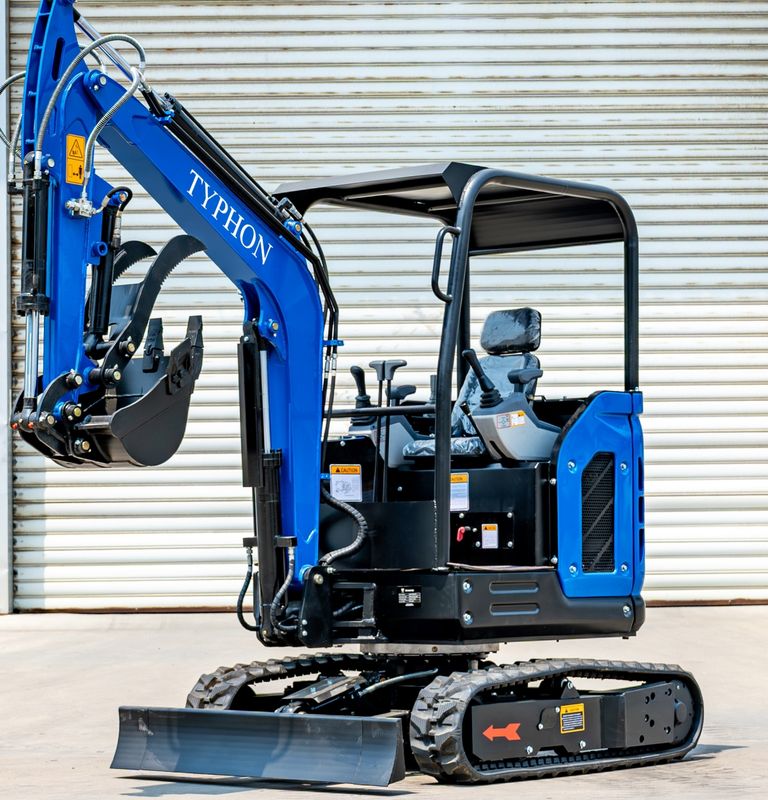
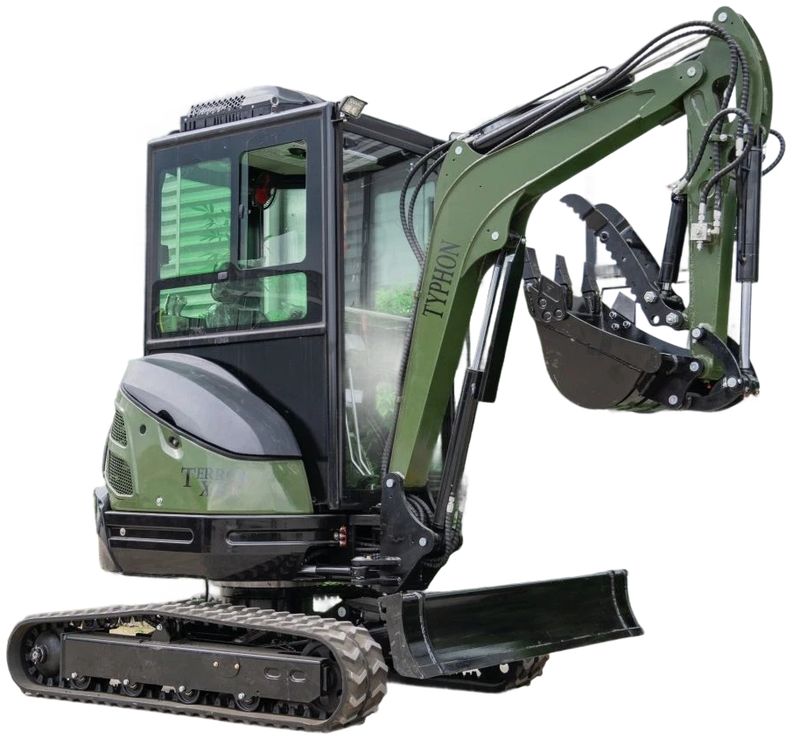
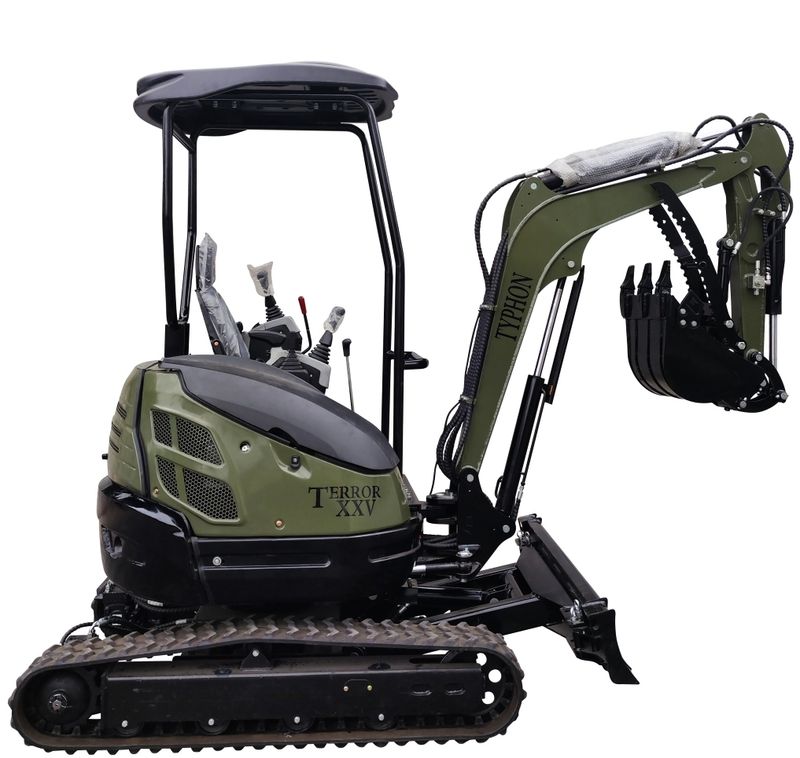
TYPHON Machinery has built a compelling lineup of mini-excavators designed to meet the practical needs of independent contractors, small construction businesses, and agricultural operators—all at pricing that makes ownership achievable.
| Model | Weight | Key Feature |
| TYPHON TERROR X STORM | 1.0 Ton | Canopy, hydraulic thumb, compact trench digger |
| TYPHON TERROR XI STORM | 1.1 Ton | Boom swing, hydraulic thumb clip, garden/farm/road use |
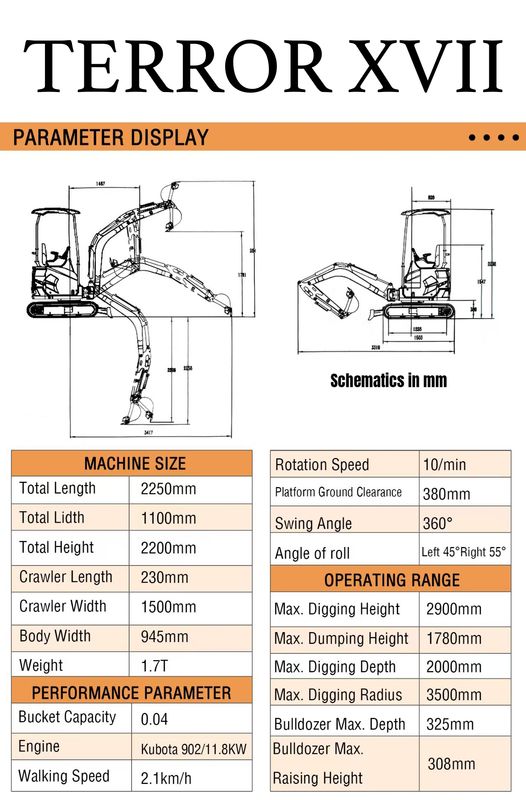
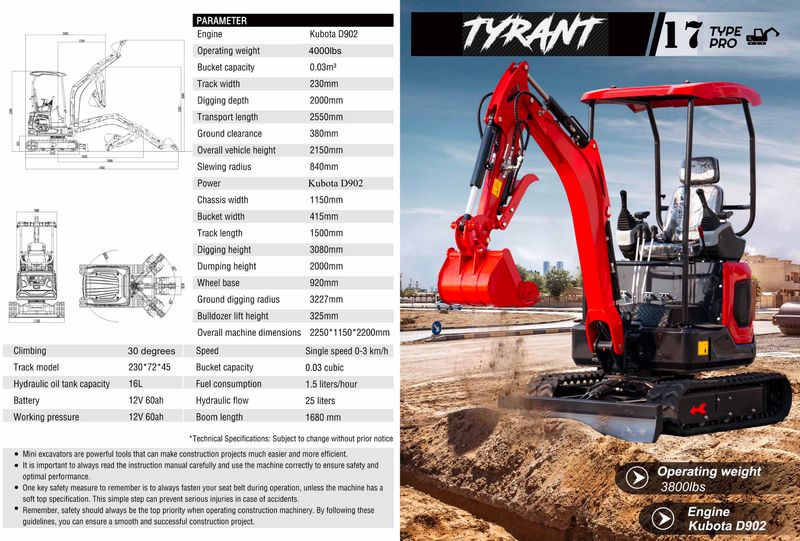
| TYPHON TERROR XVII LUX | 3,800 lbs | EPA-certified Kubota D902, rubber track |
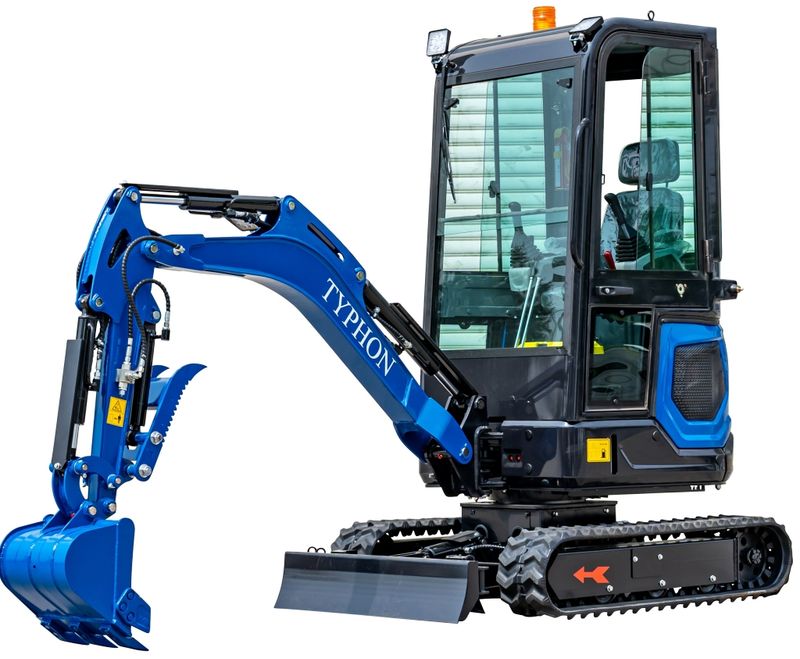
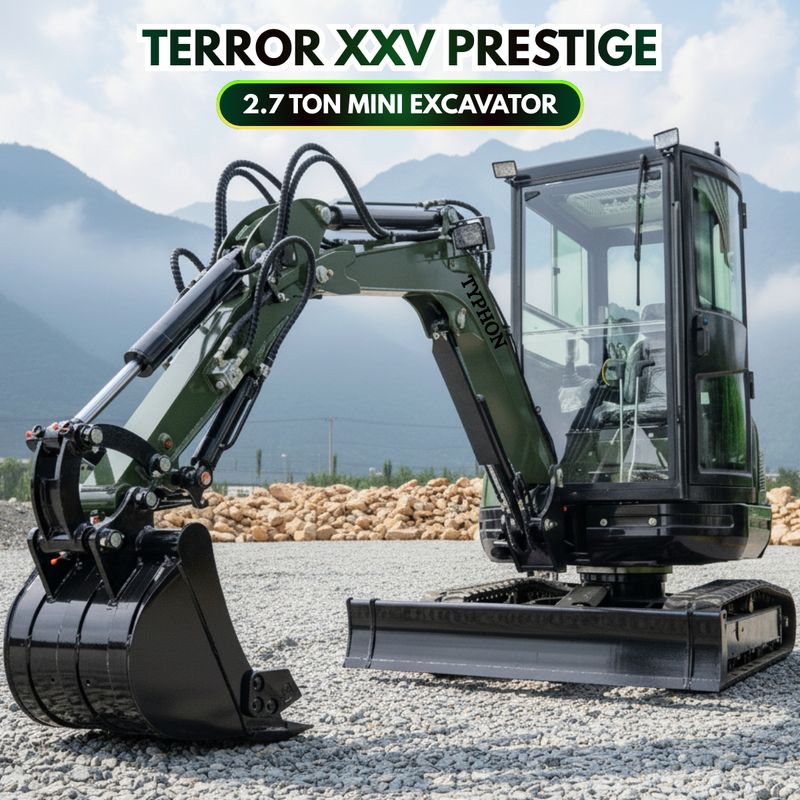
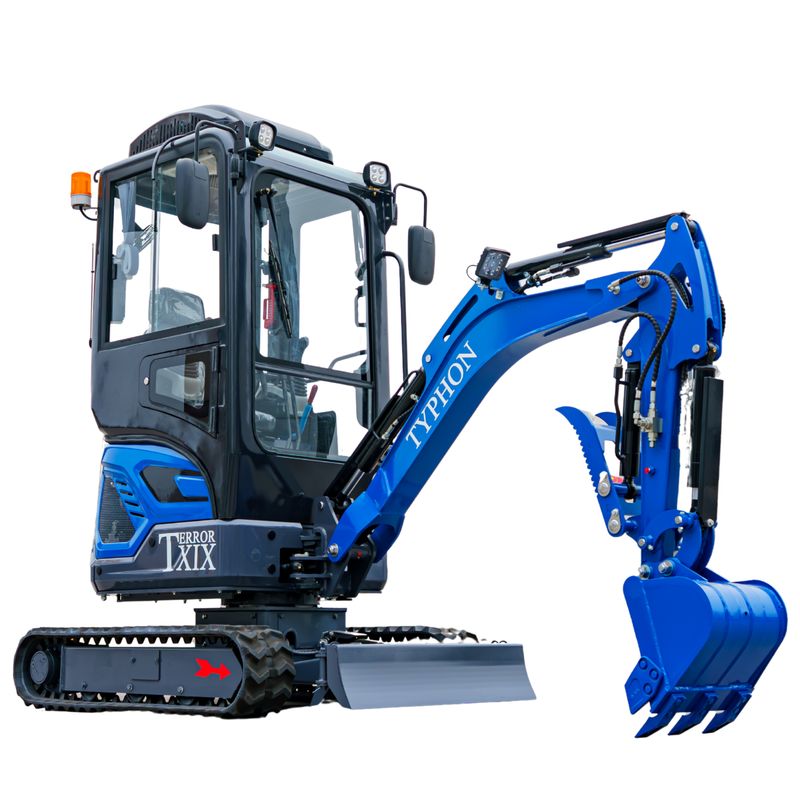
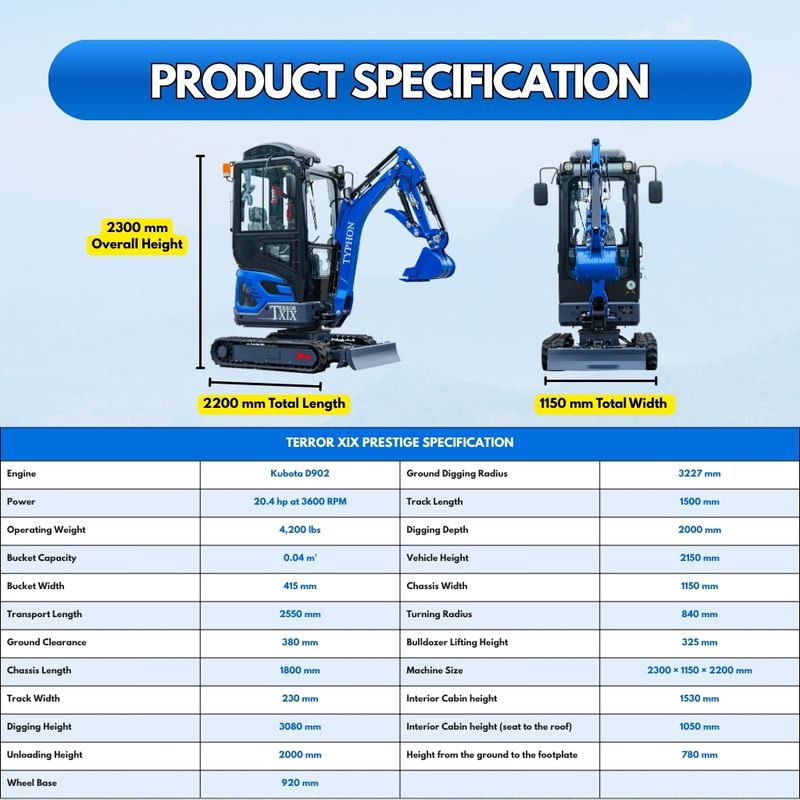
| TYPHON TERROR XVII PRESTIGE | 4,000 lbs | Full cabin with A/C and heating, Kubota D902 |
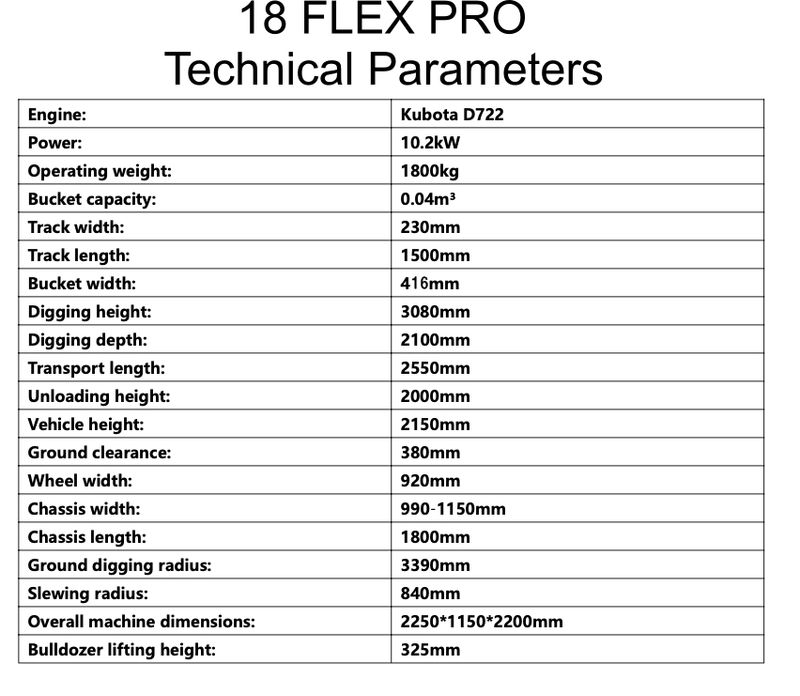
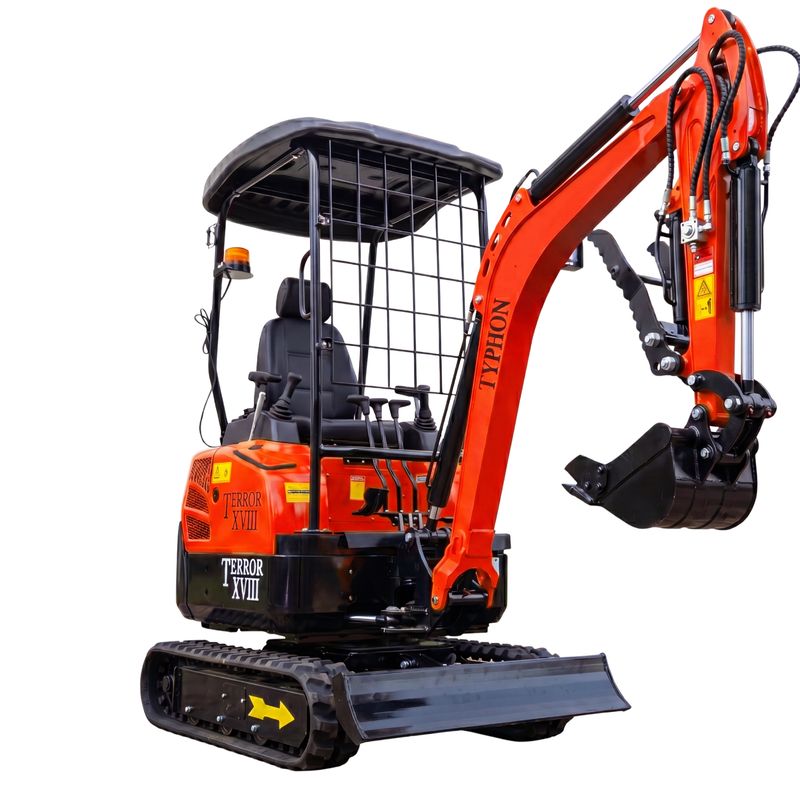
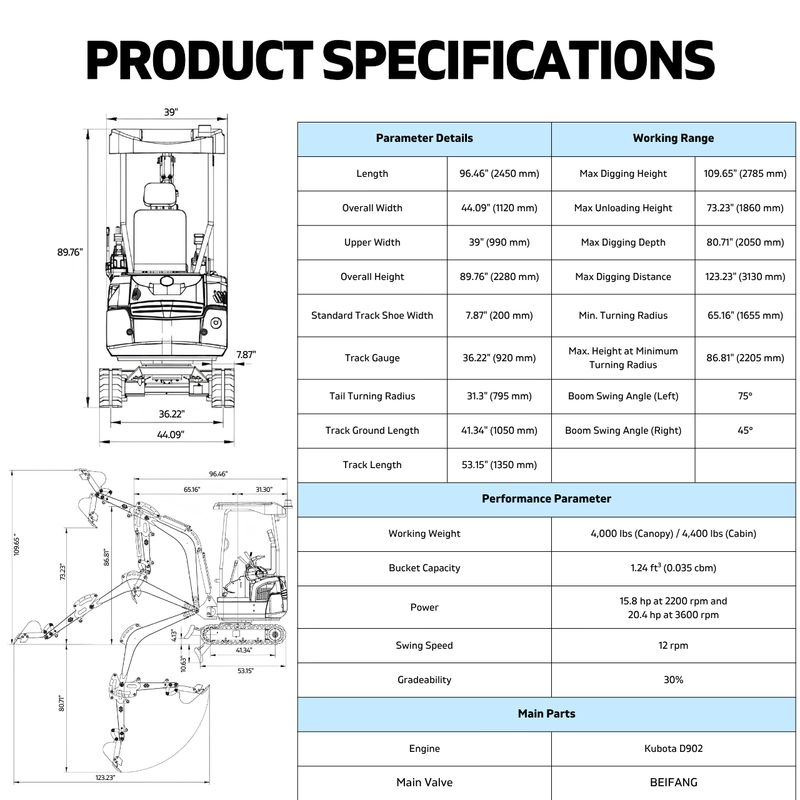
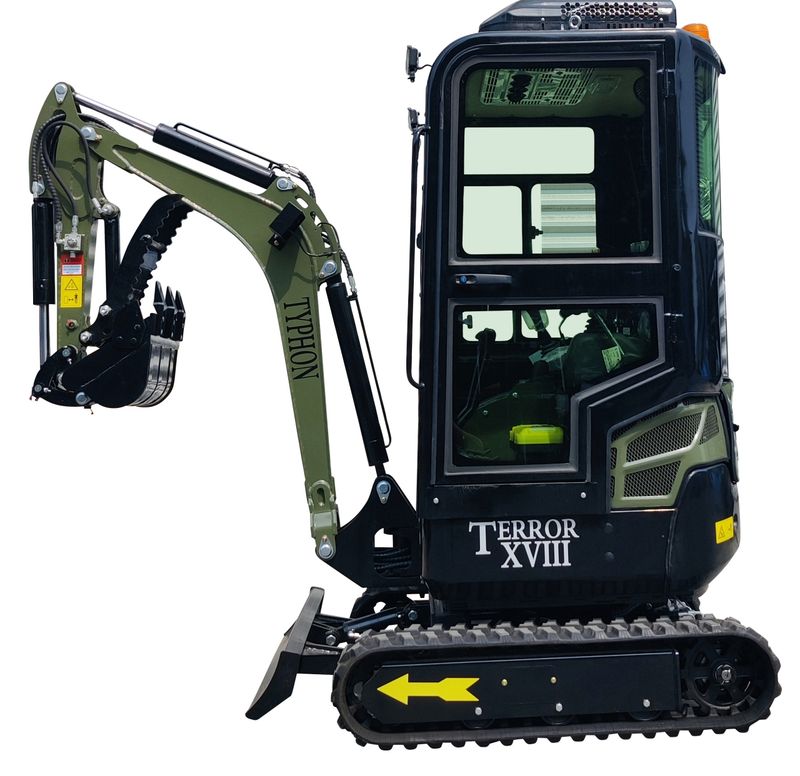
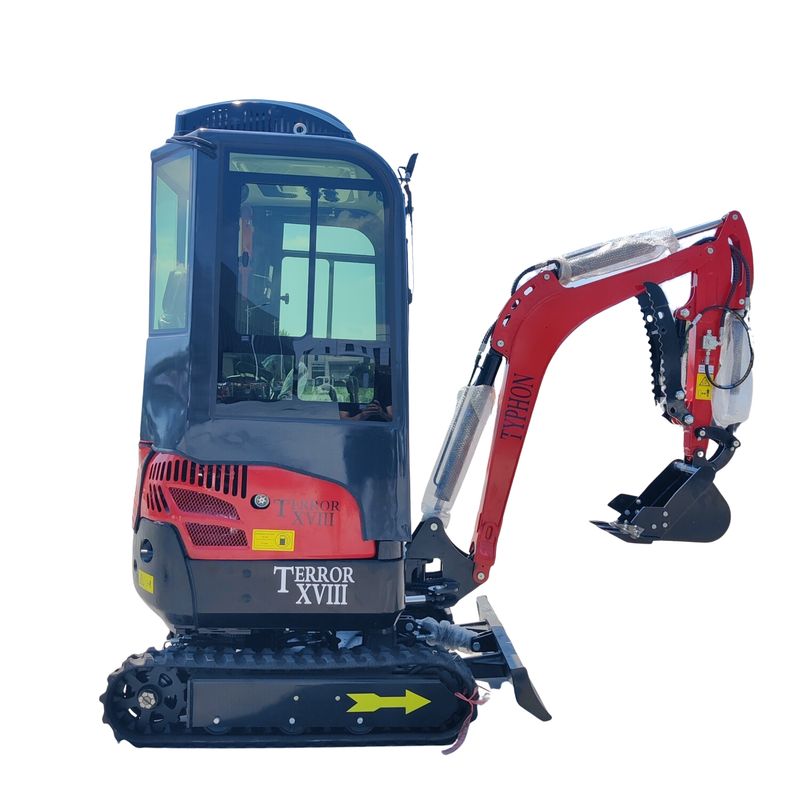
| TYPHON TERROR XVIII | 4,000 lbs | 7.3L fuel tank, 18.9L hydraulic tank, 2060mm dig depth |
| TYPHON TERROR XX | 4,000 lbs | Orchard/agricultural design, 20.5L hydraulic tank |
| TYPHON TERROR XX (Green) | 4,000 lbs | Agricultural-specific, EPA Kubota D902, orchard-optimized |
All TYPHON models ship with EPA-compliant Kubota engines (where applicable), comprehensive 1-year warranties, and expert support. Customer reviews consistently praise the responsiveness of the pilot controls—one verified buyer noted the TERROR XVII is ideal for “precision grading around pool installs” due to its smooth, non-lurching control response.
Mini Excavators For Sale in USA
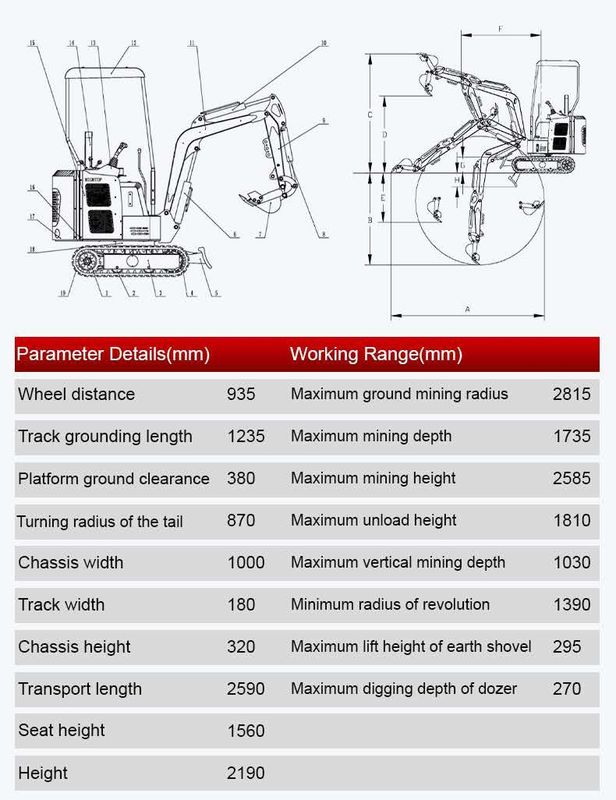
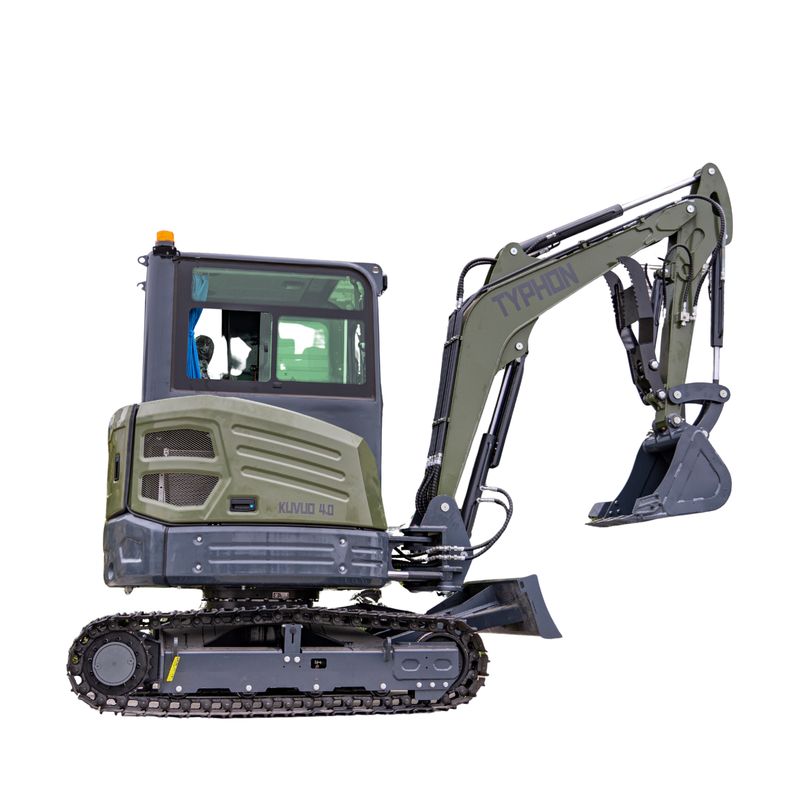
The TERROR range of mini excavators by TYPHON offers high fuel efficiency, maximum durability and low price. With more than 10 models on sale in the United States, ranging from 800 kg to 4,000 kg, TYPHON mini excavators provide the right type of service whatever your construction demands. Visit TYPHON Machinery to make a purchase online or request for more product information!
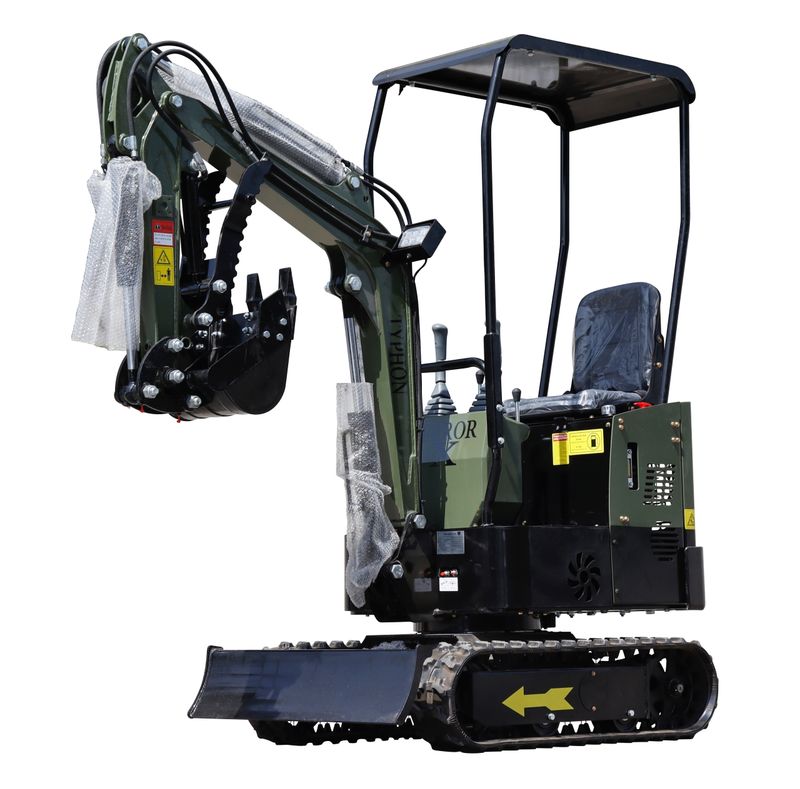
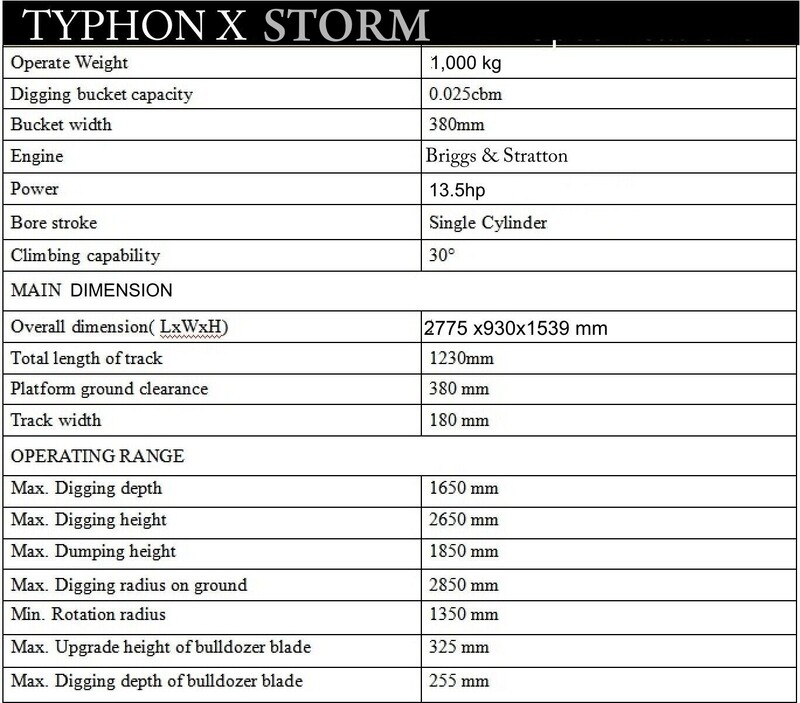
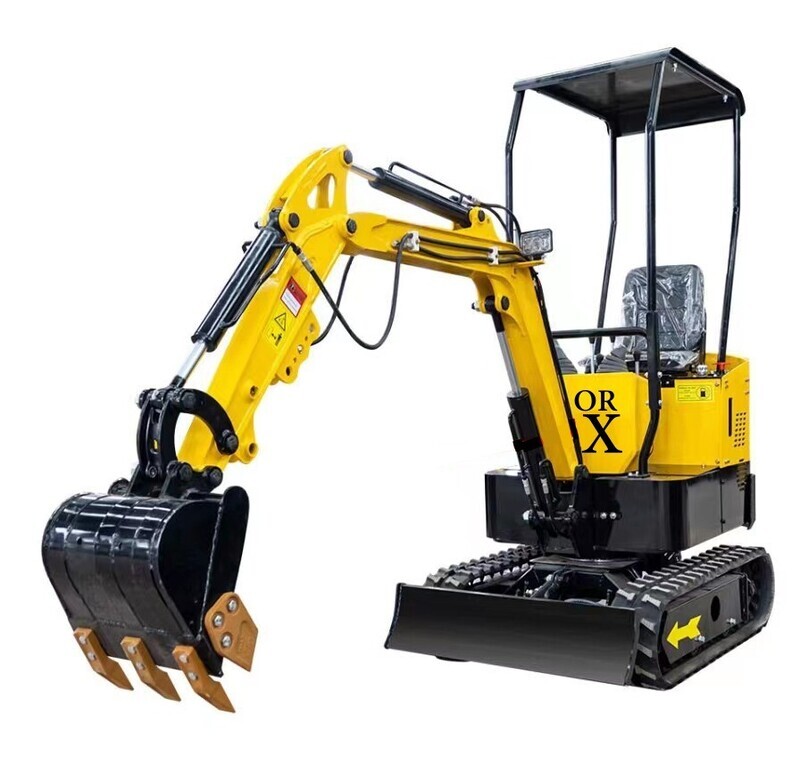
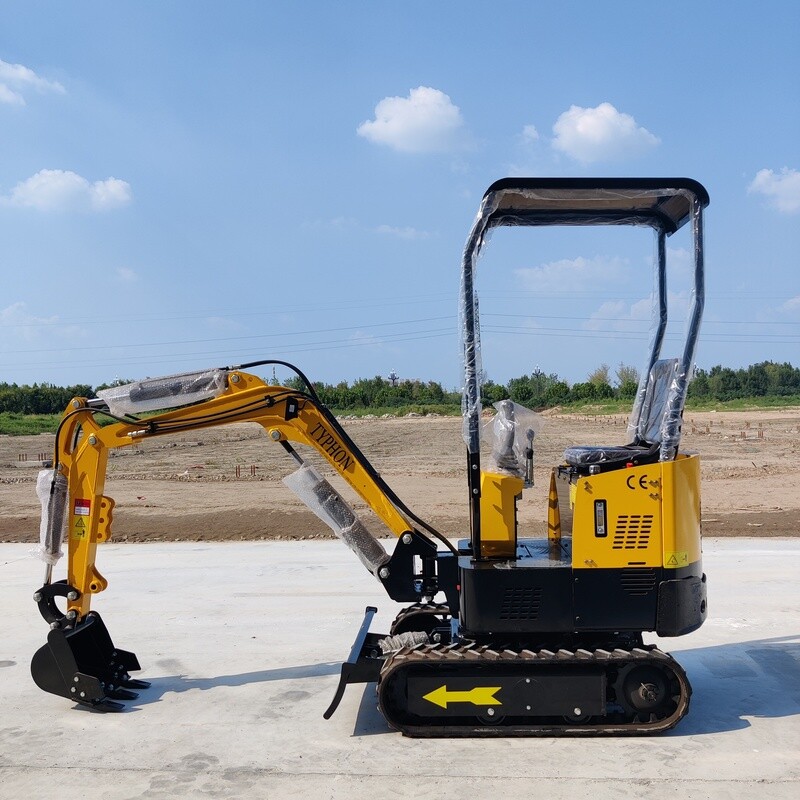
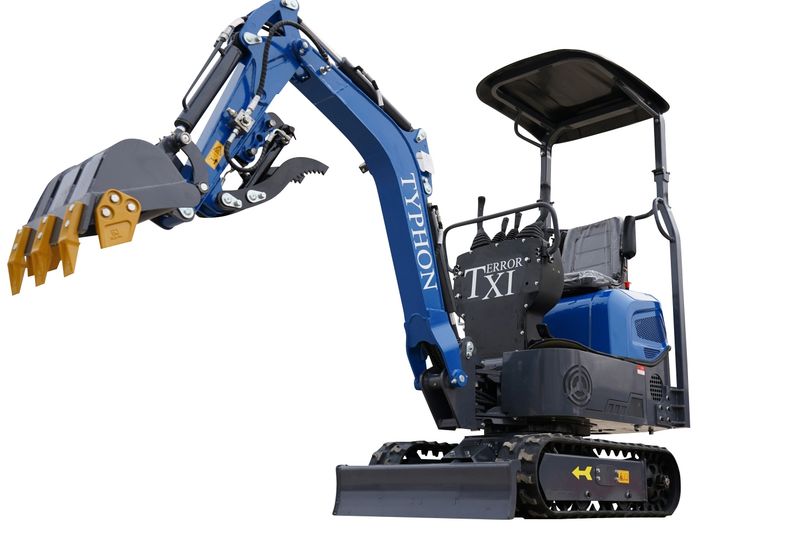
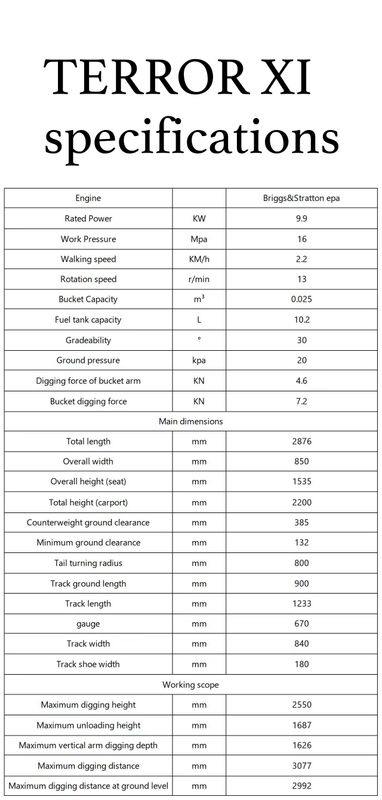
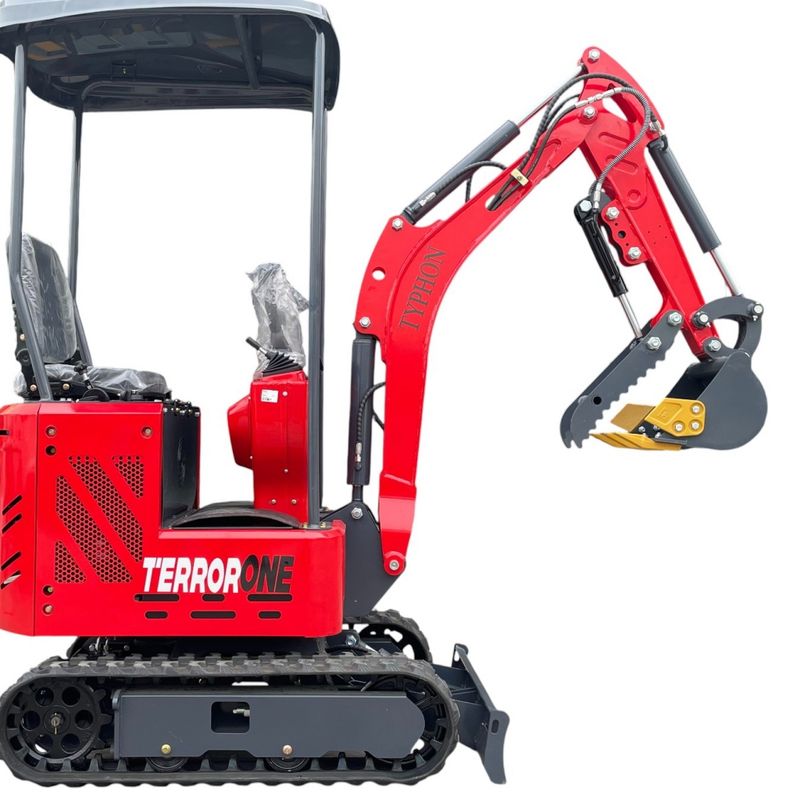
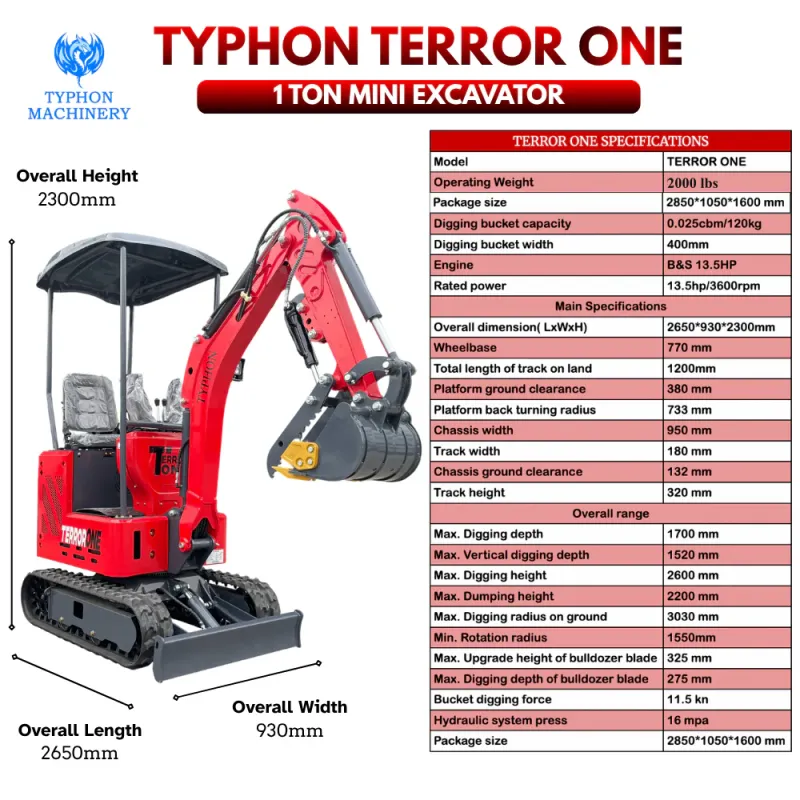
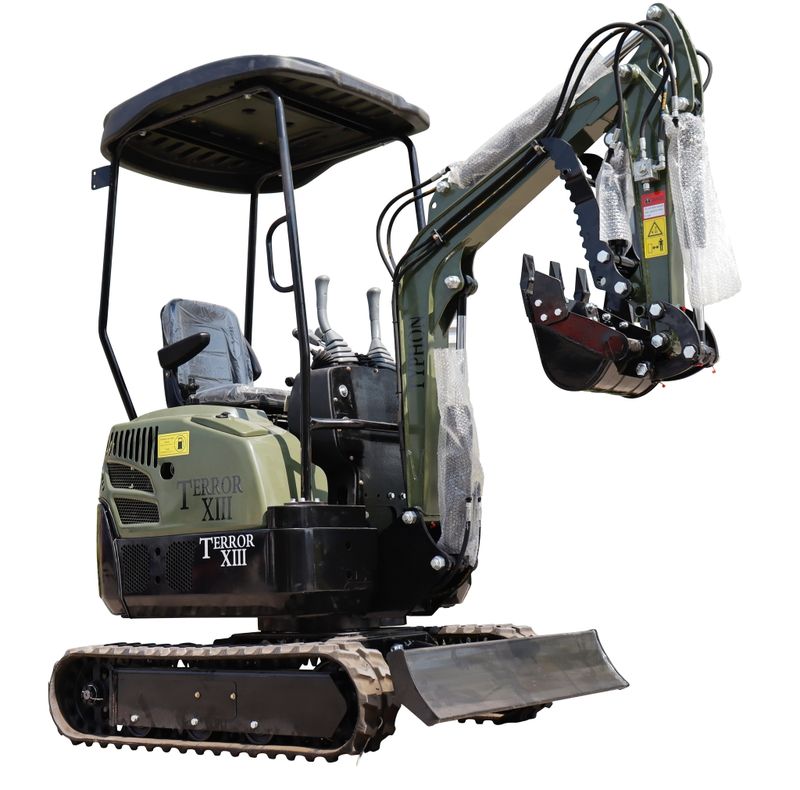
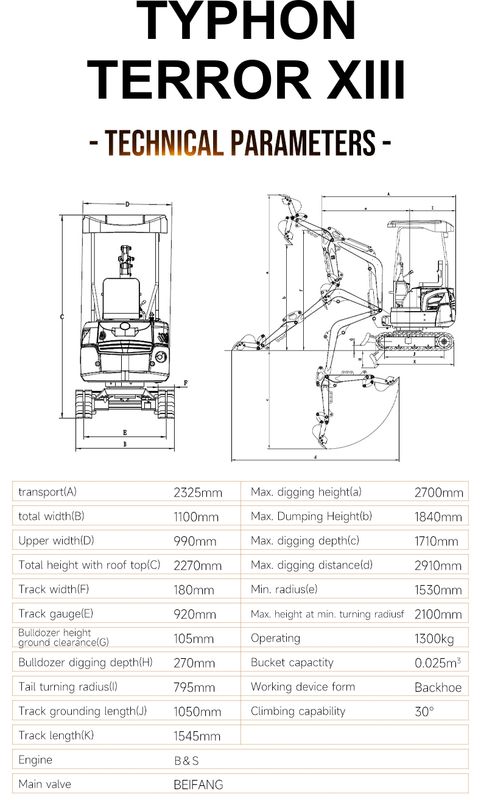
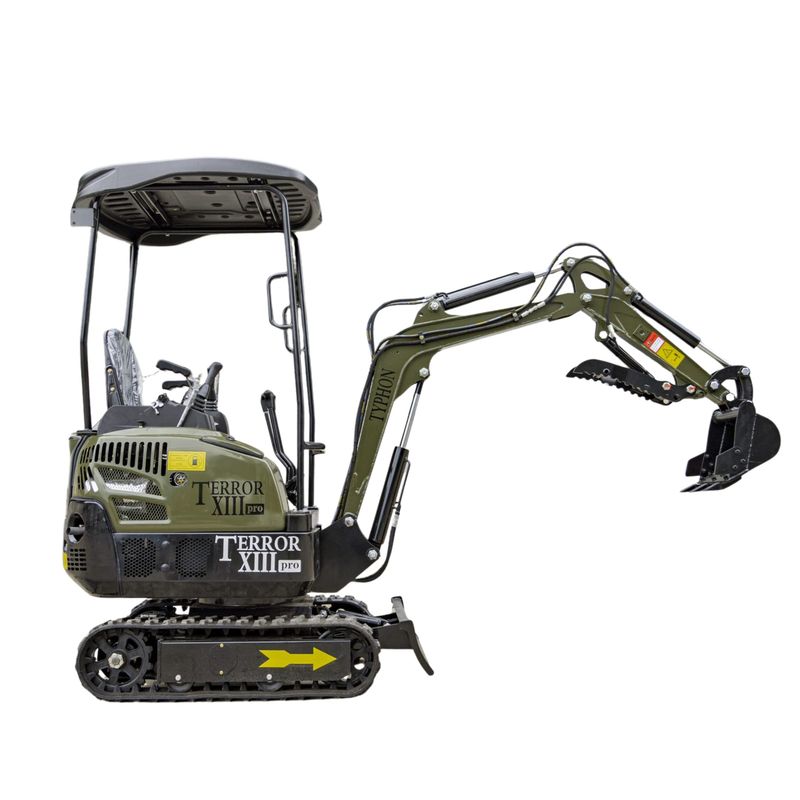
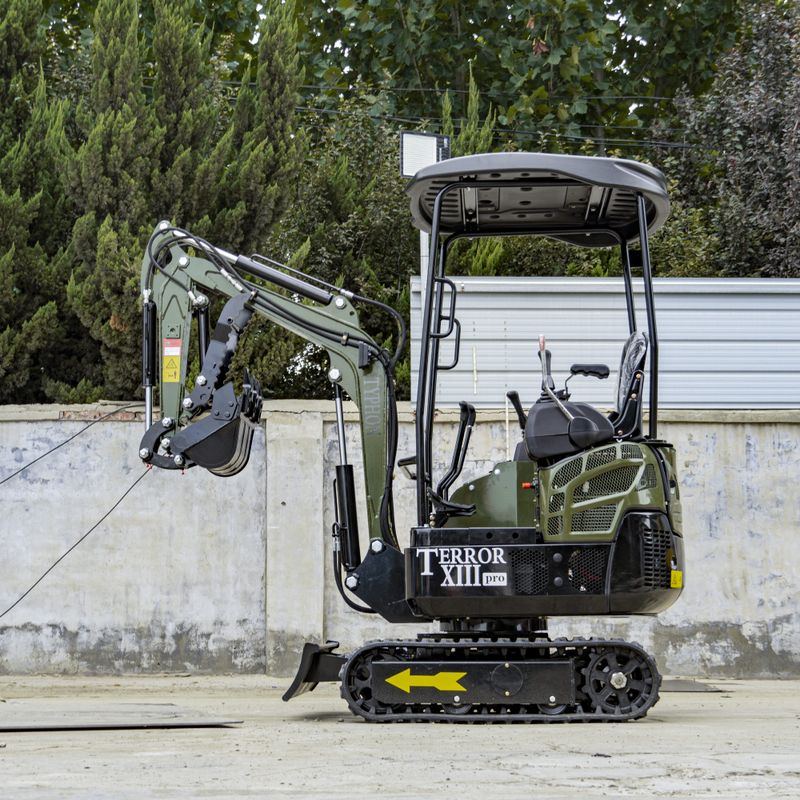
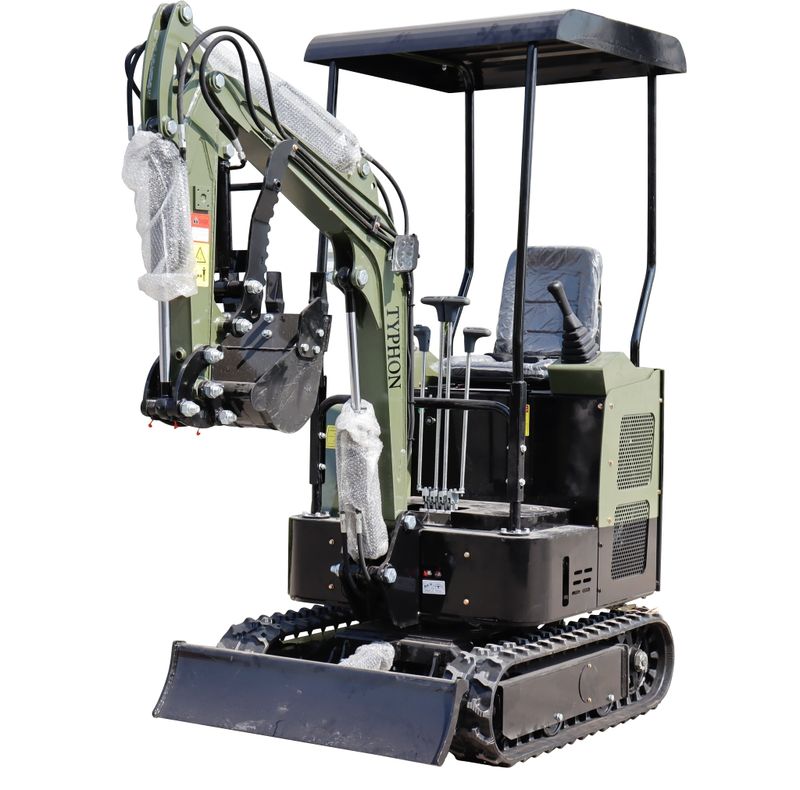
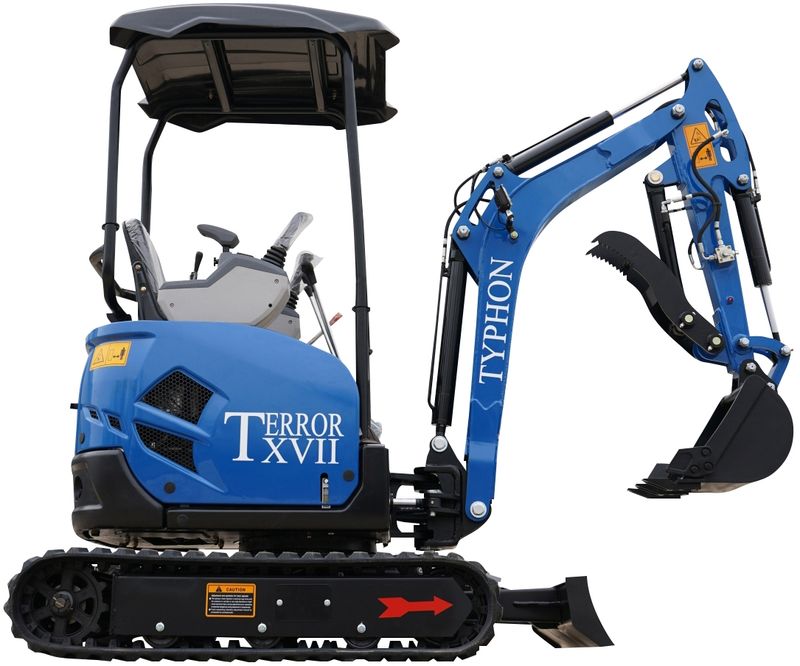
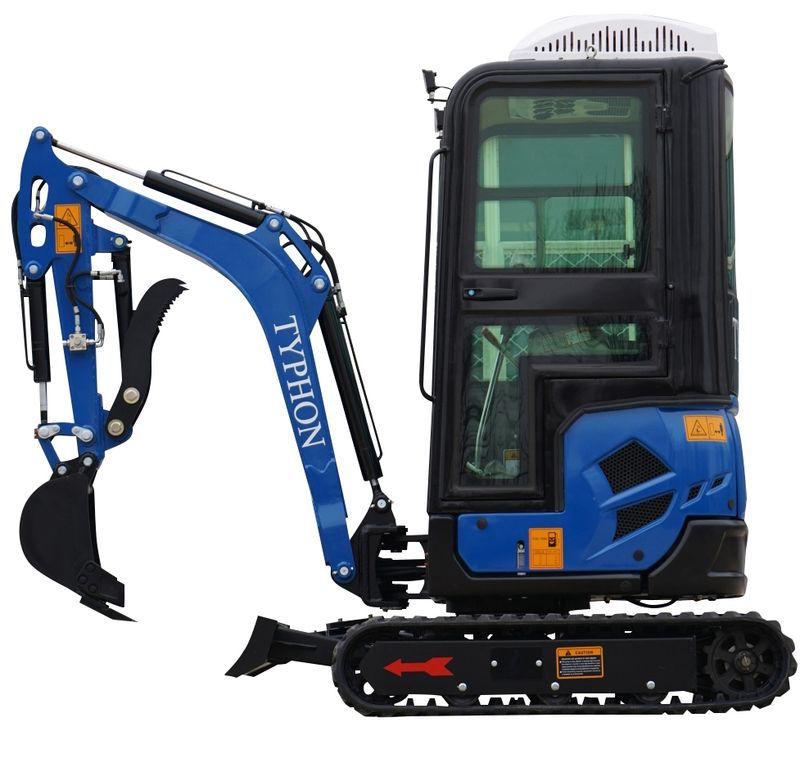
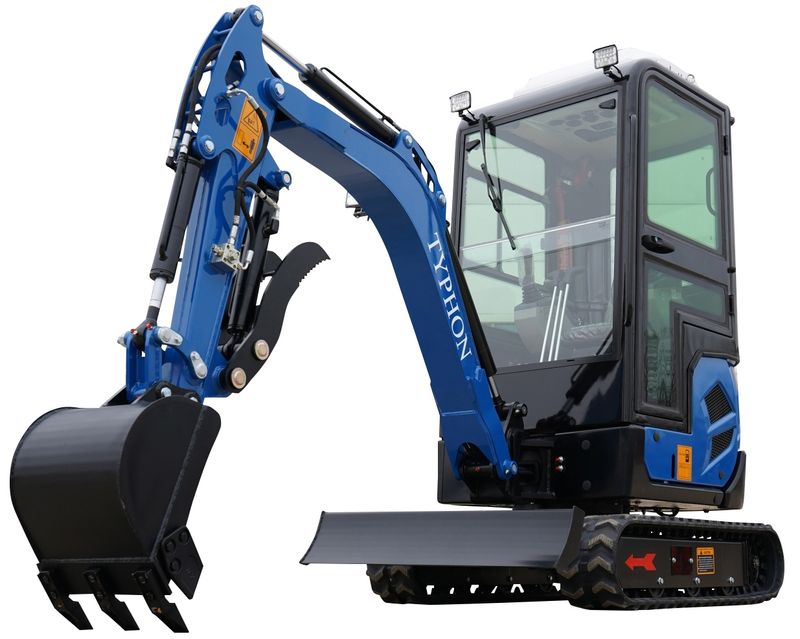
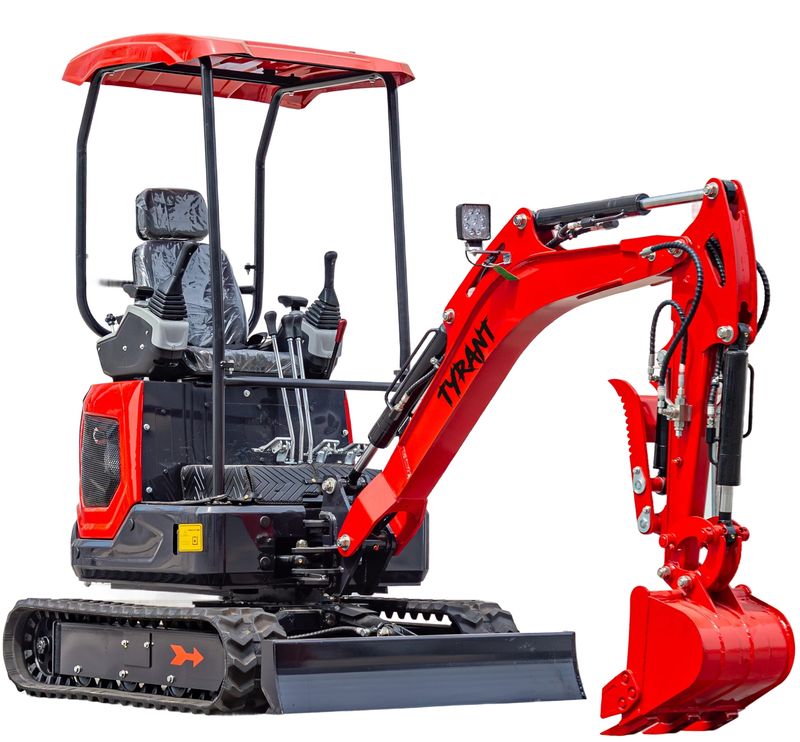
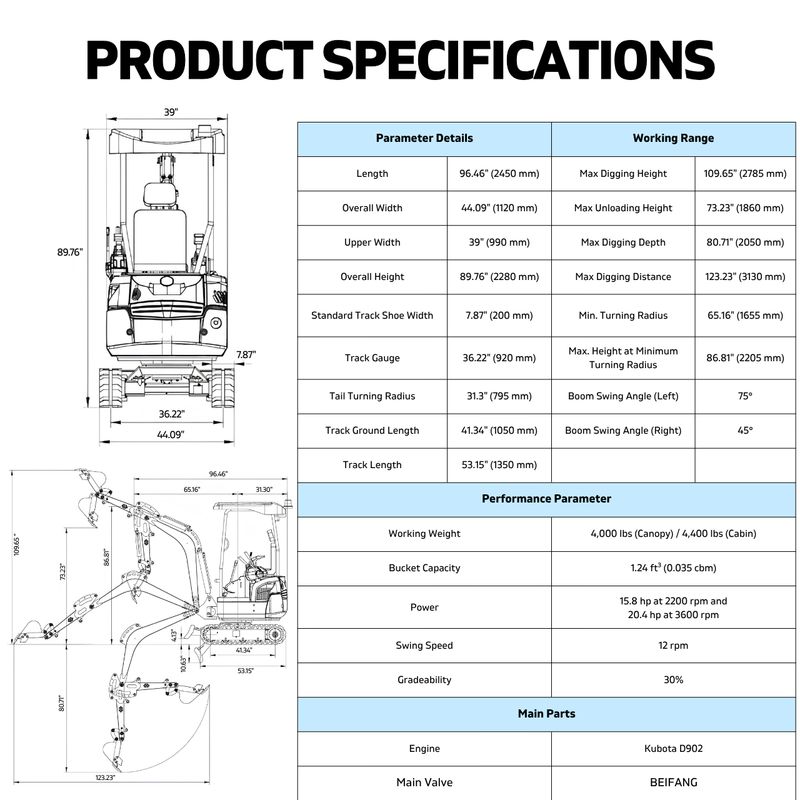
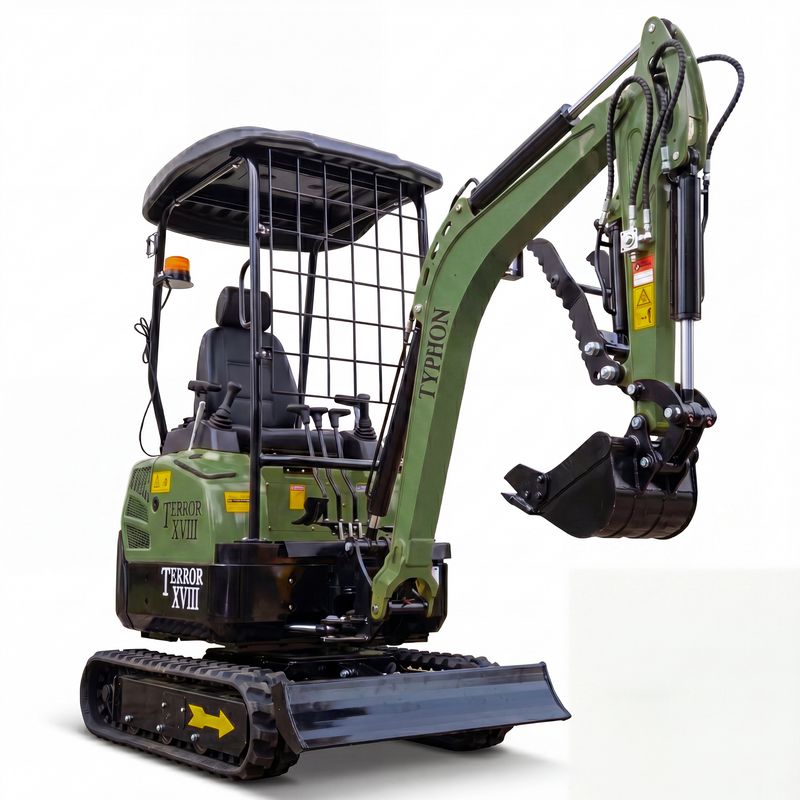
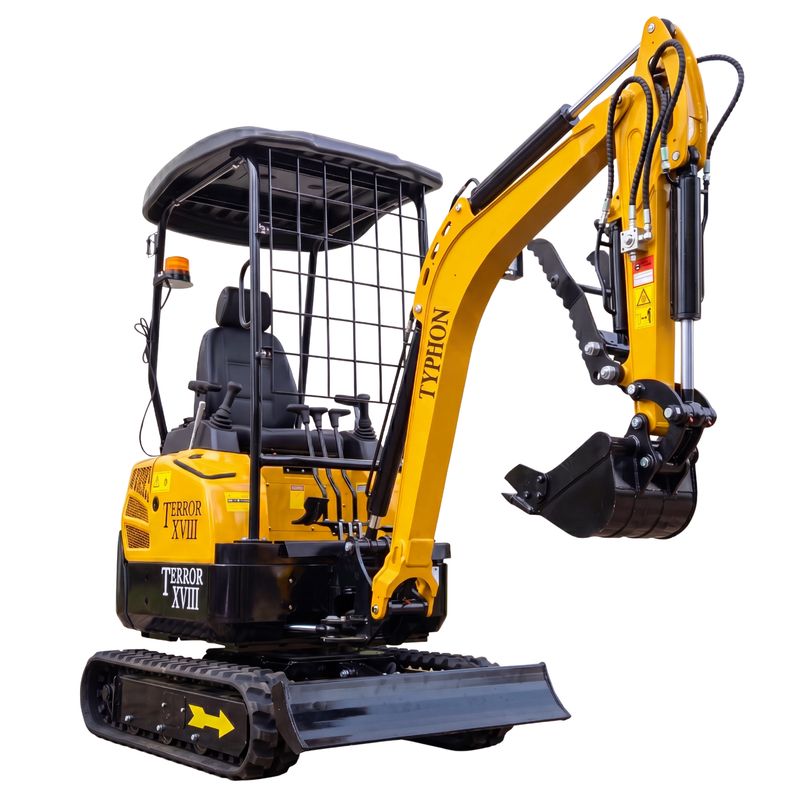
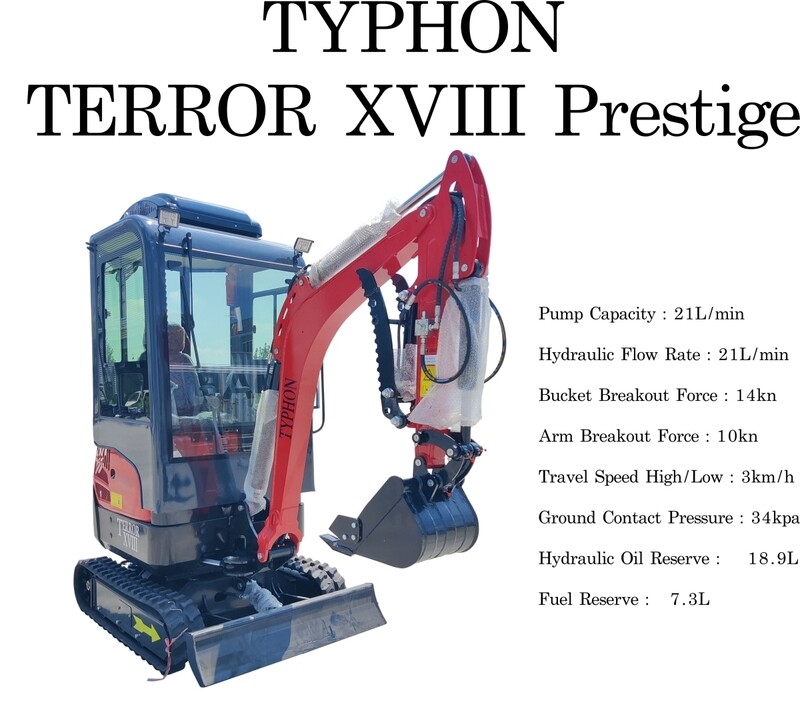
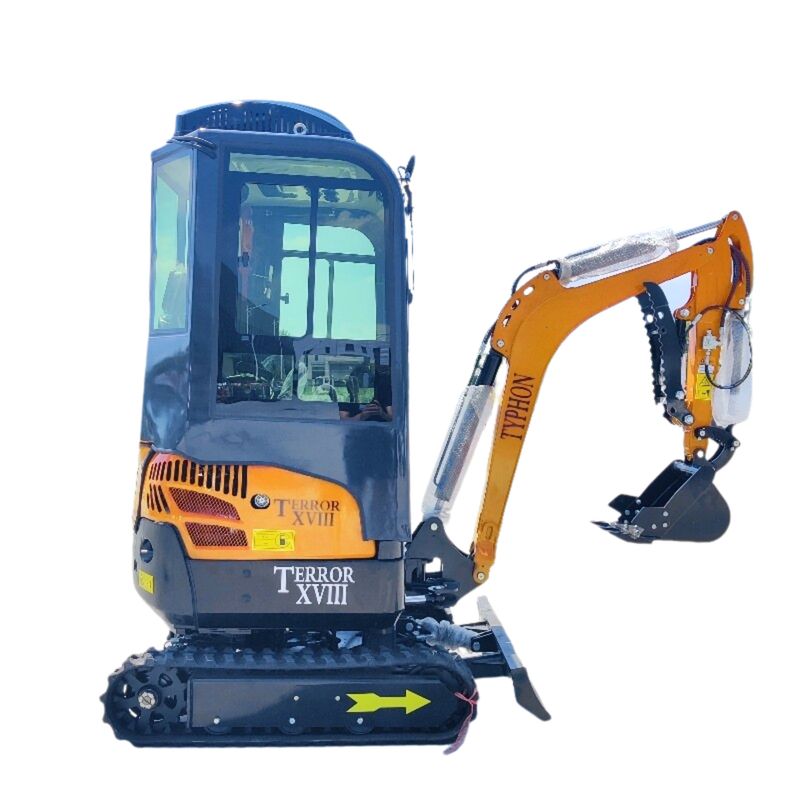
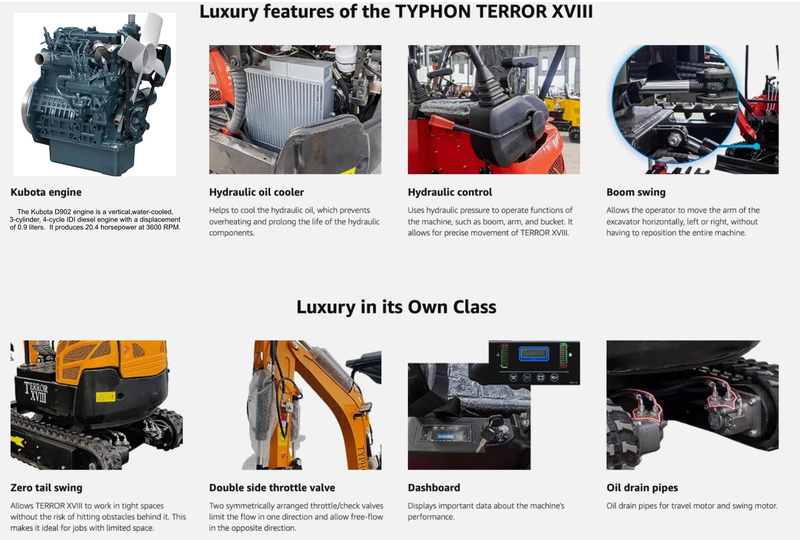
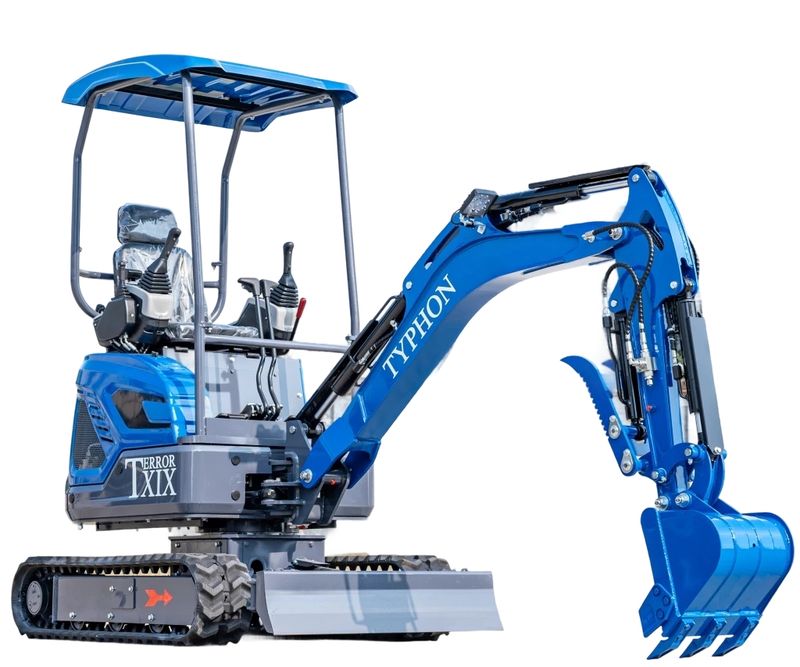
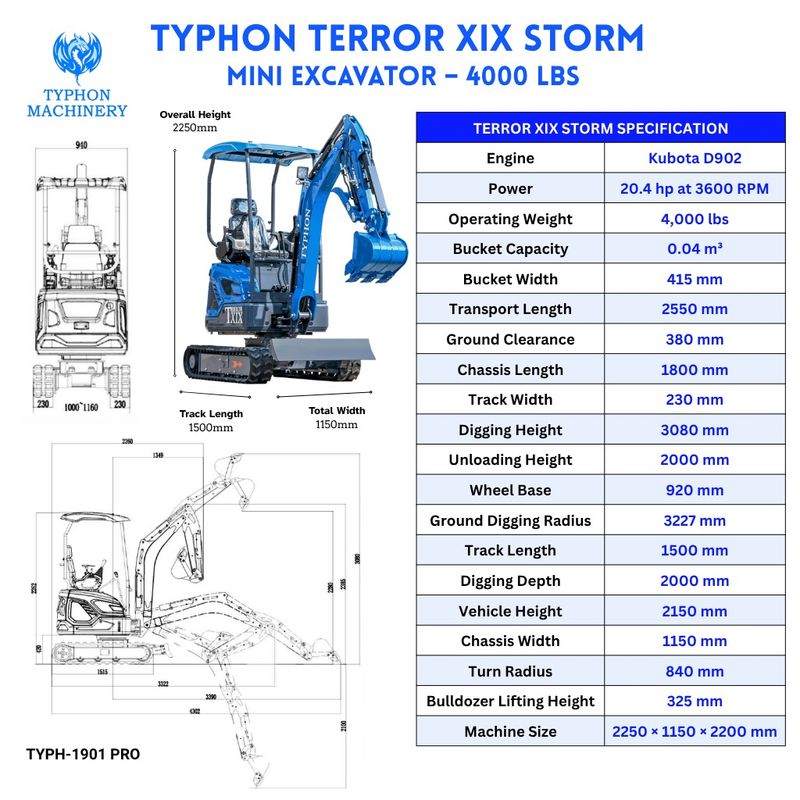
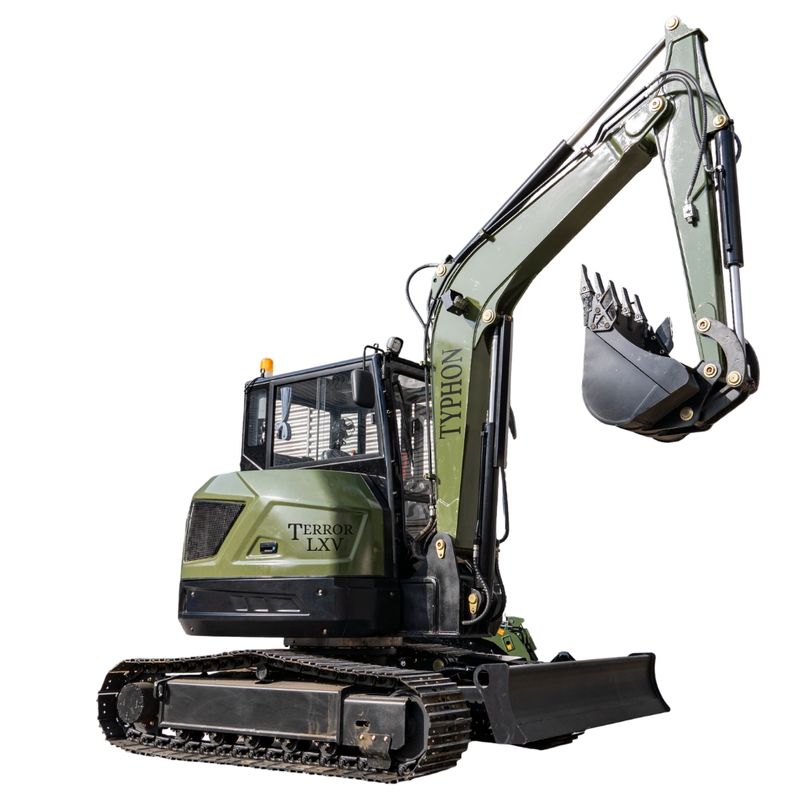
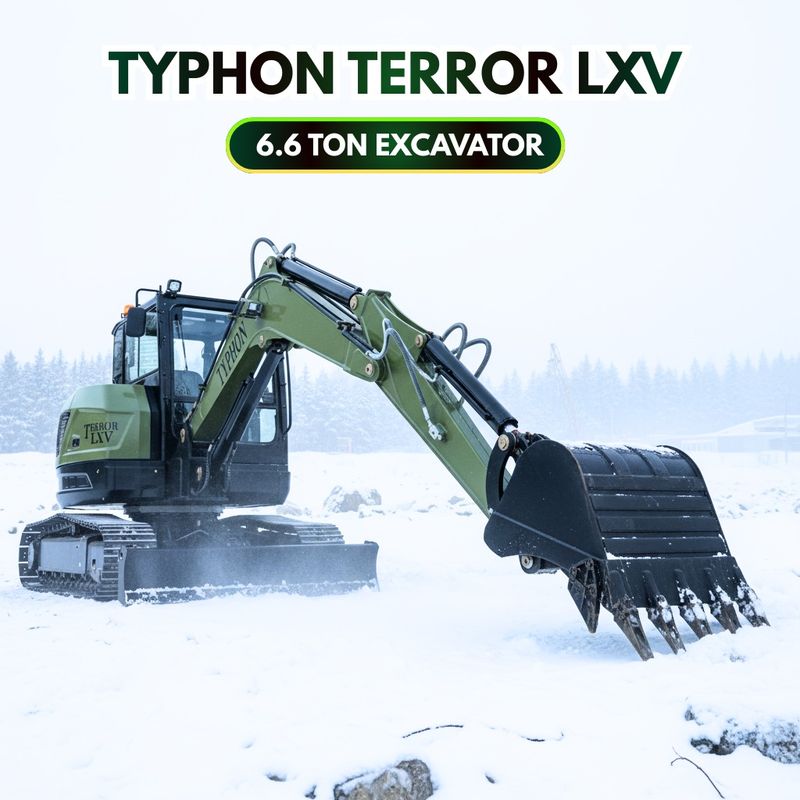
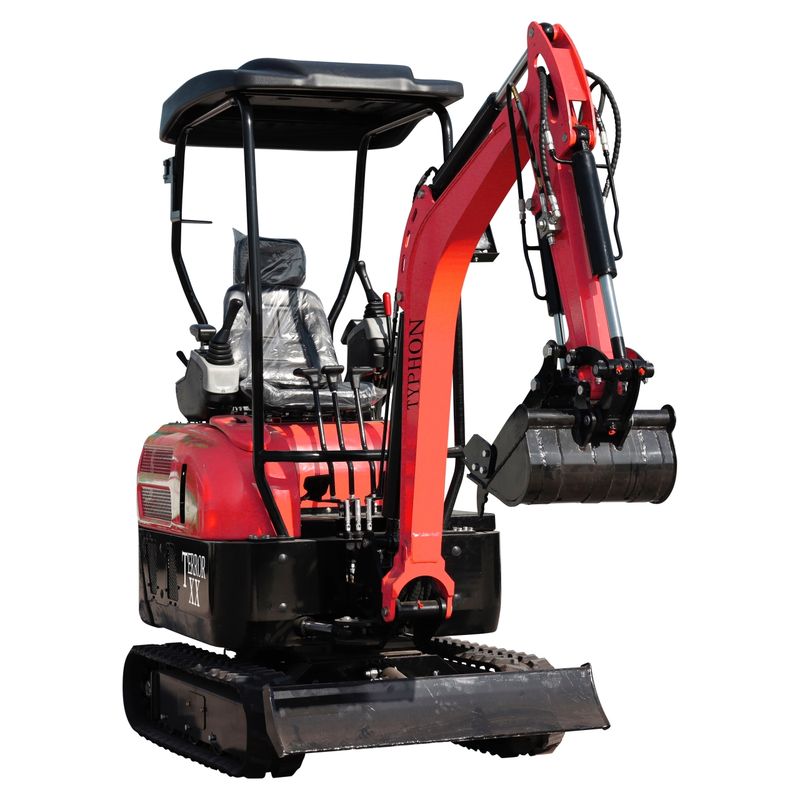
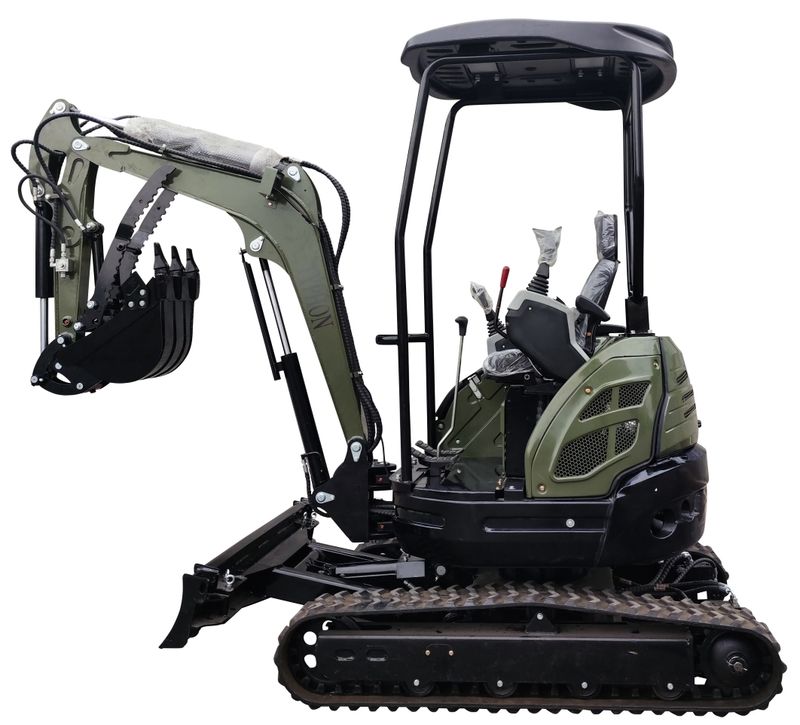
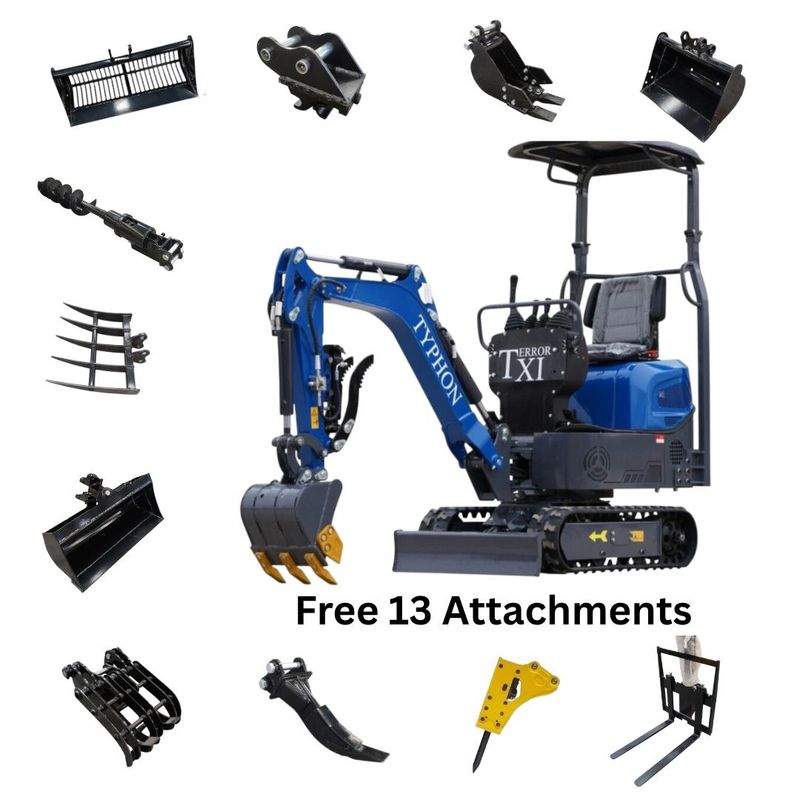
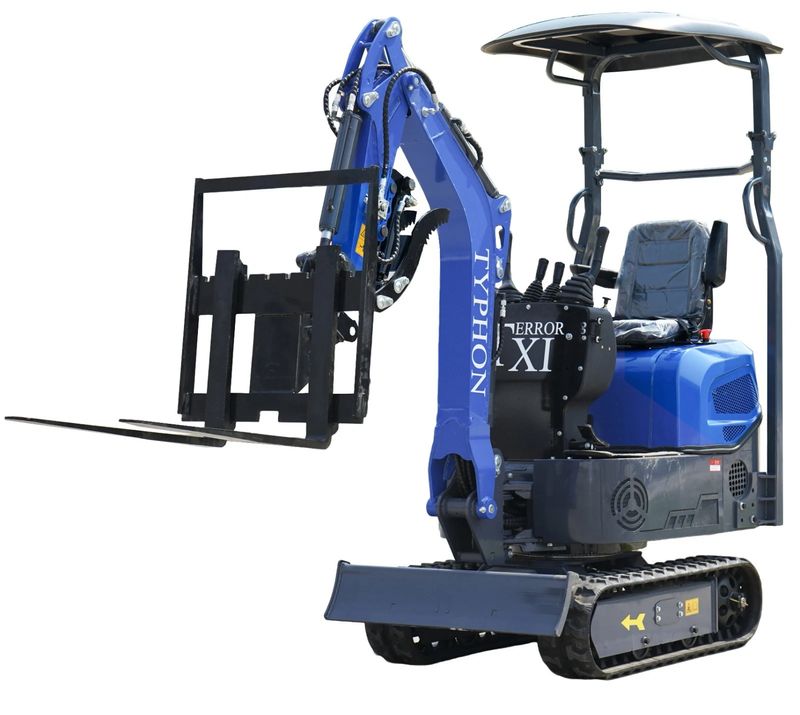
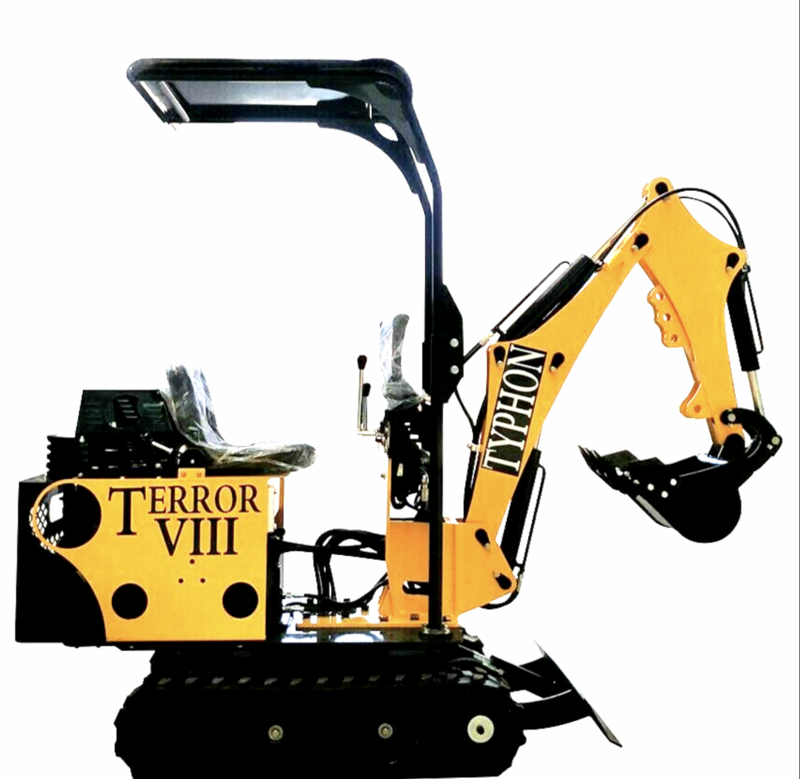
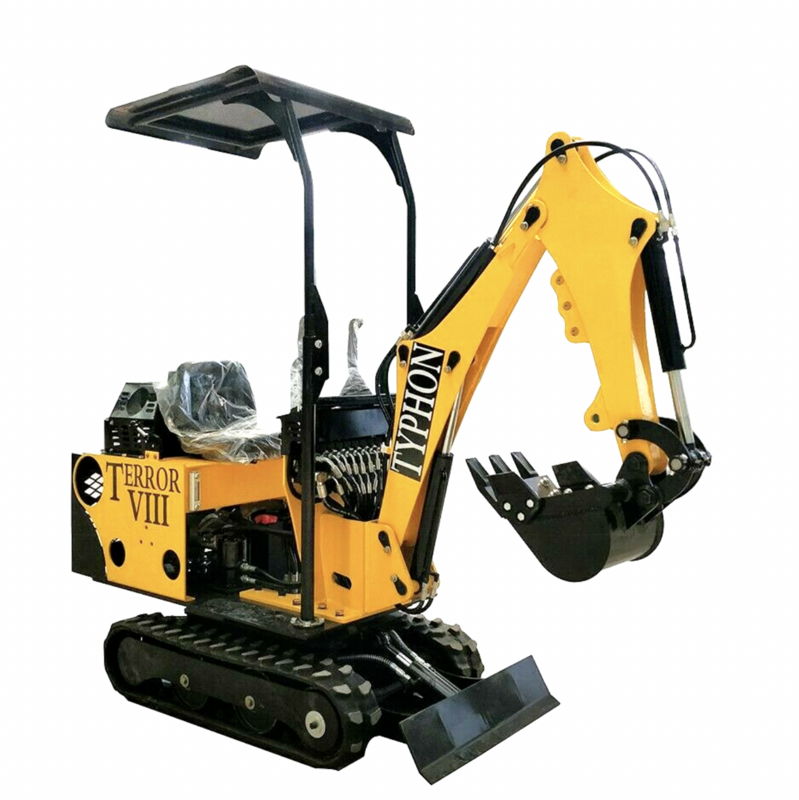
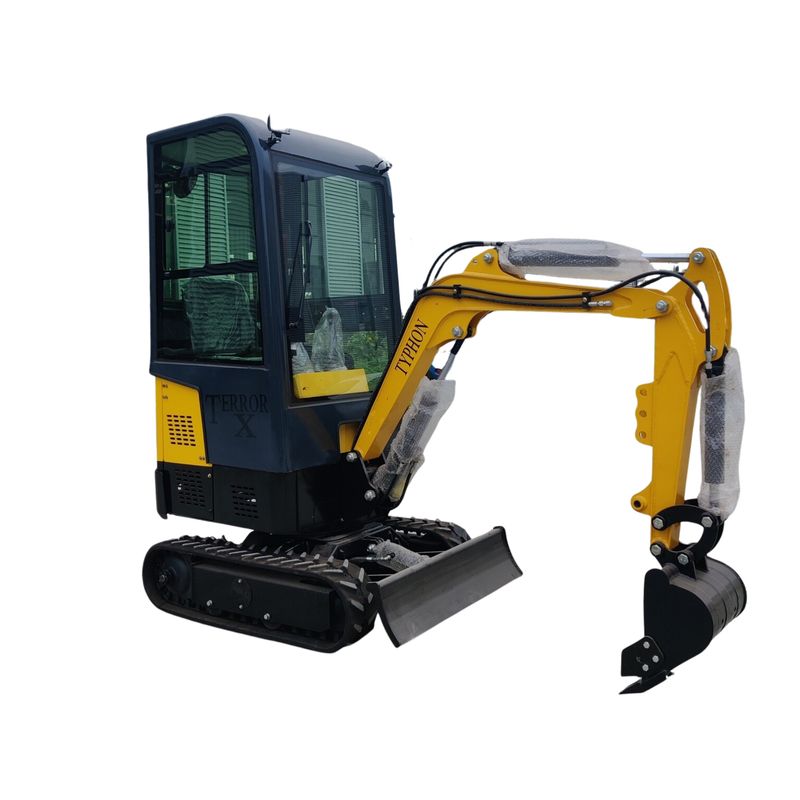
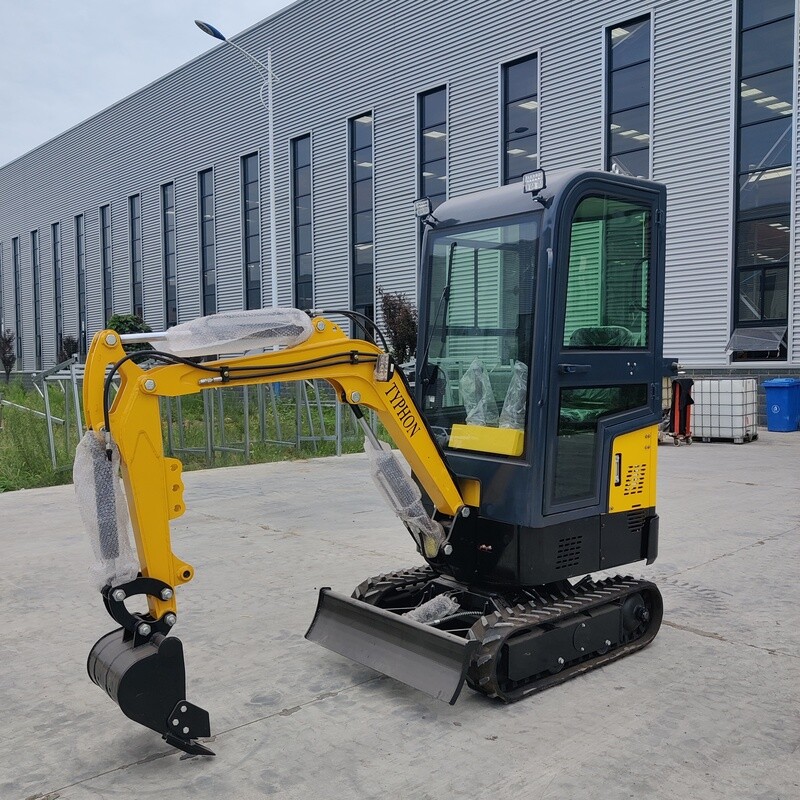
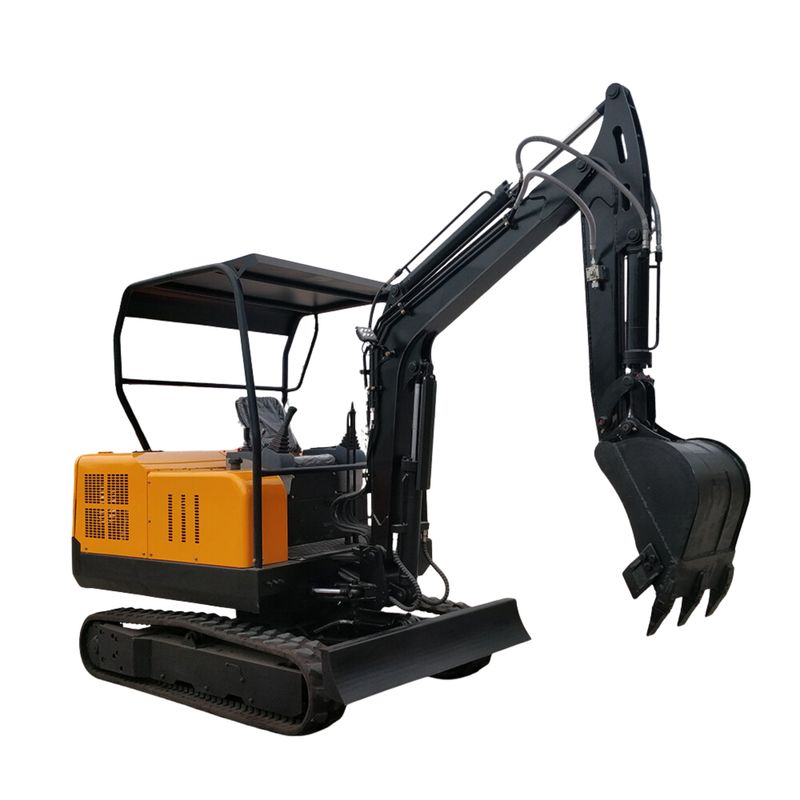
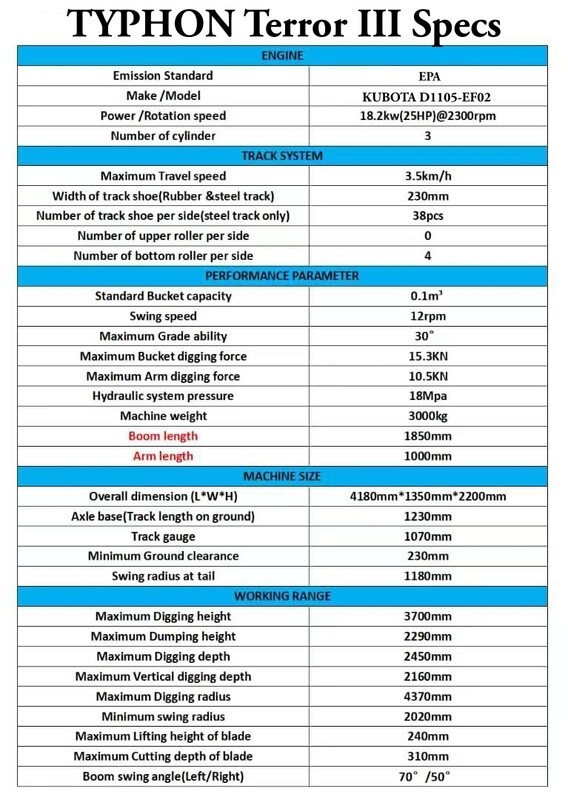
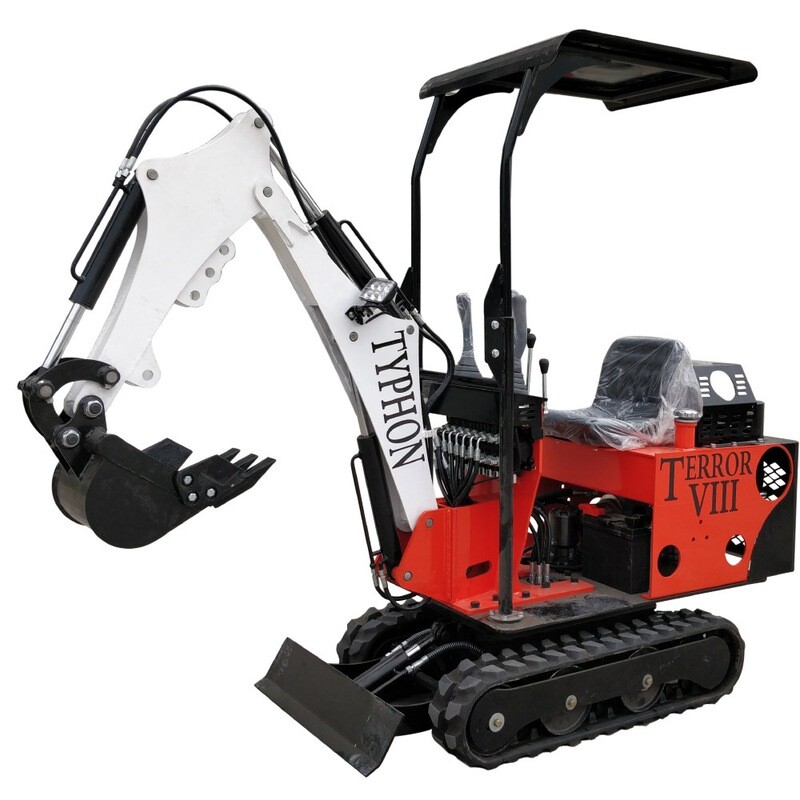
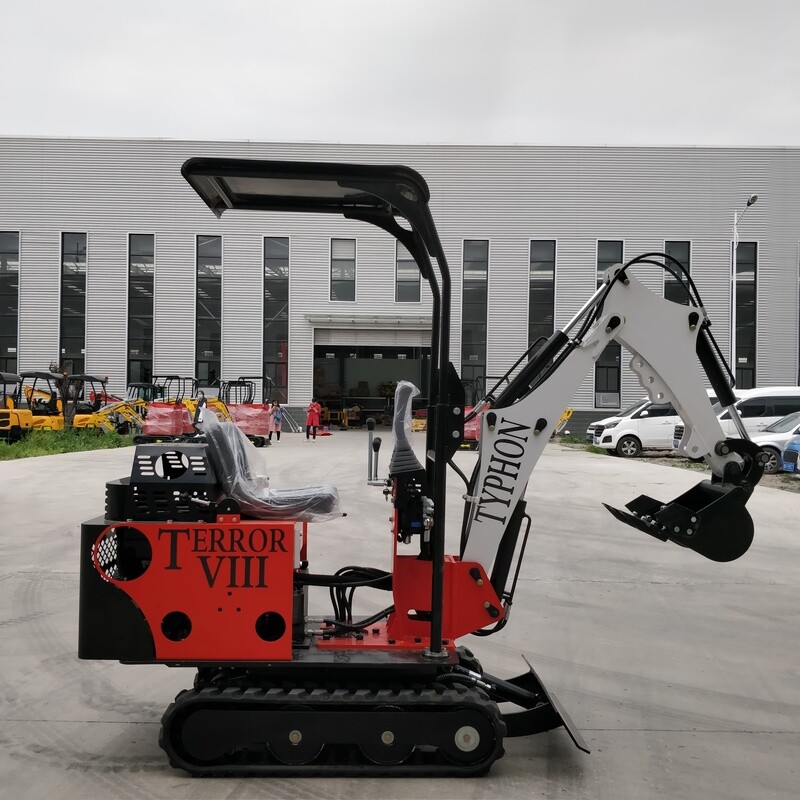
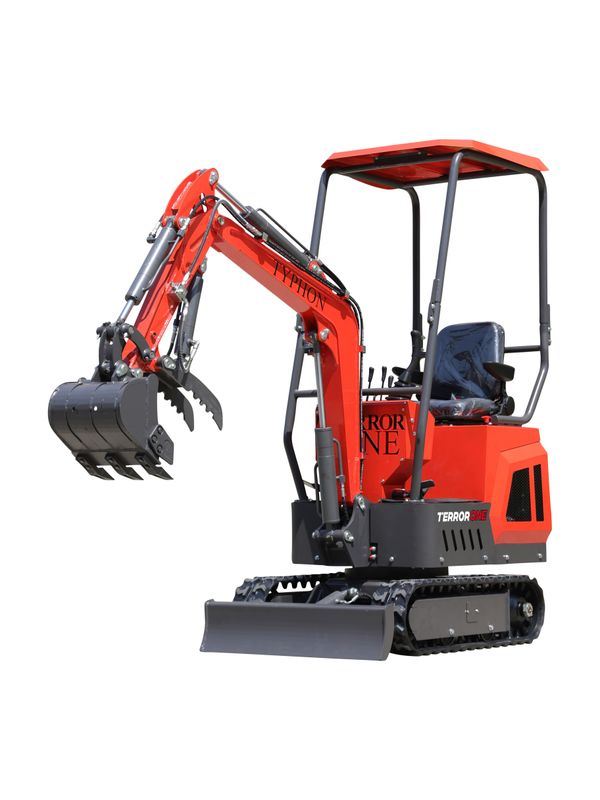
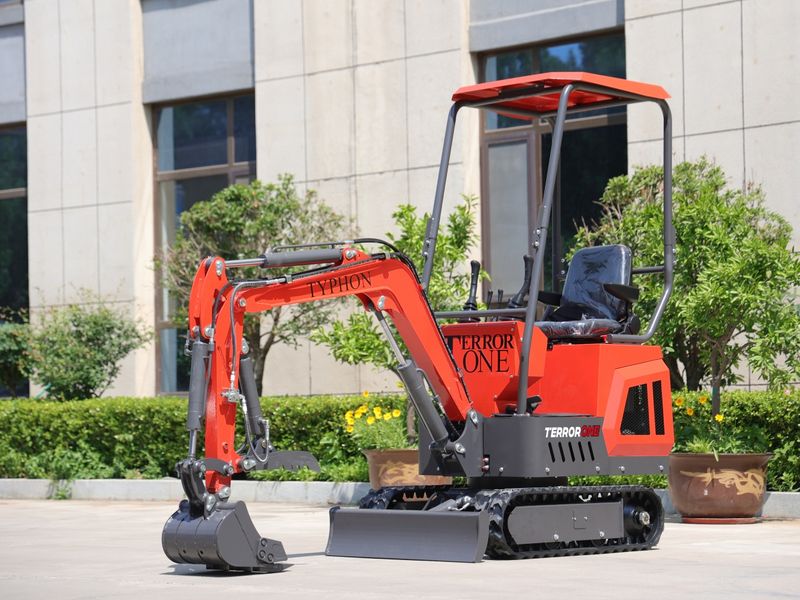
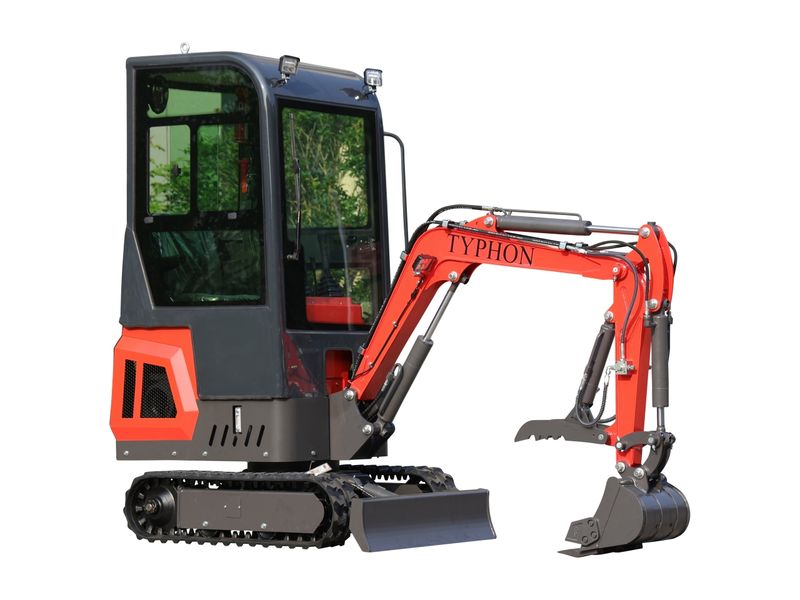
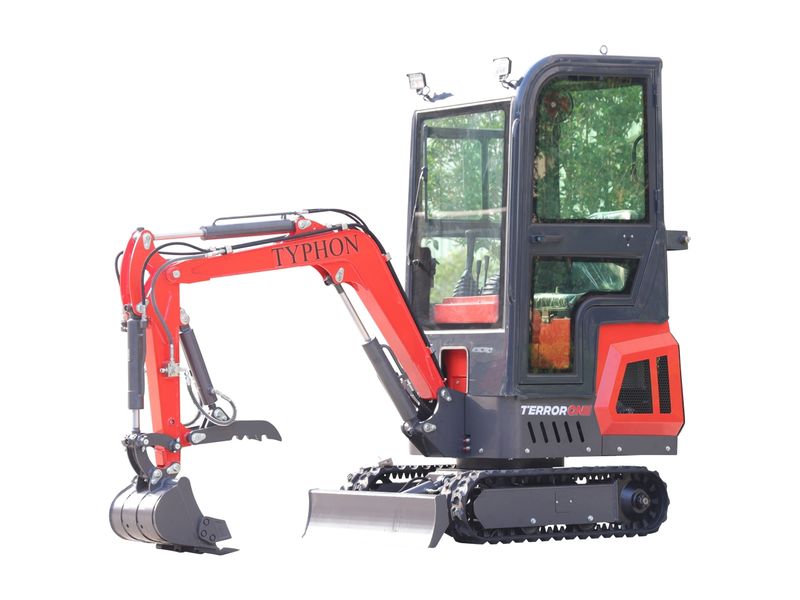
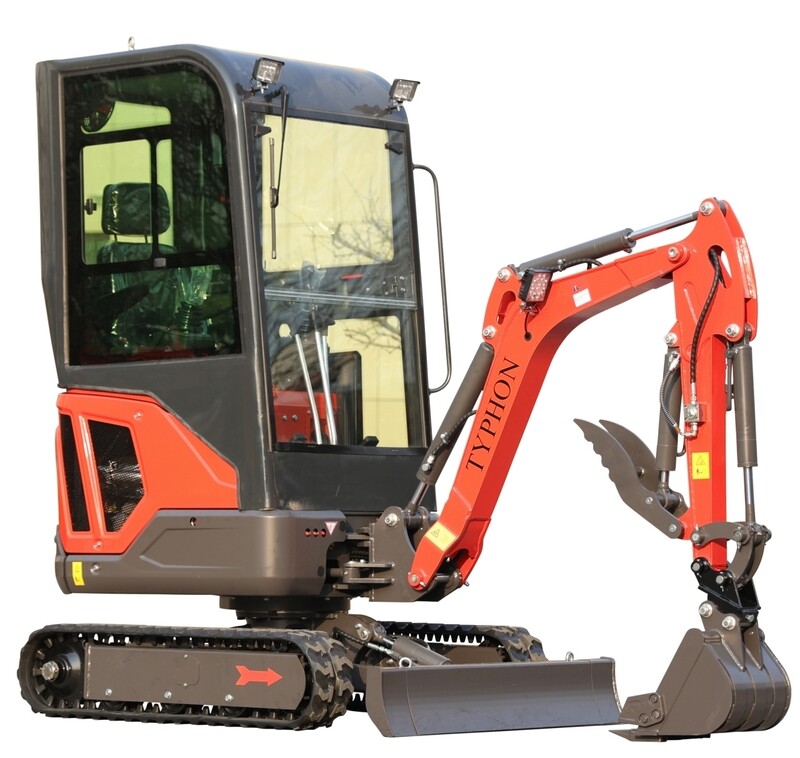
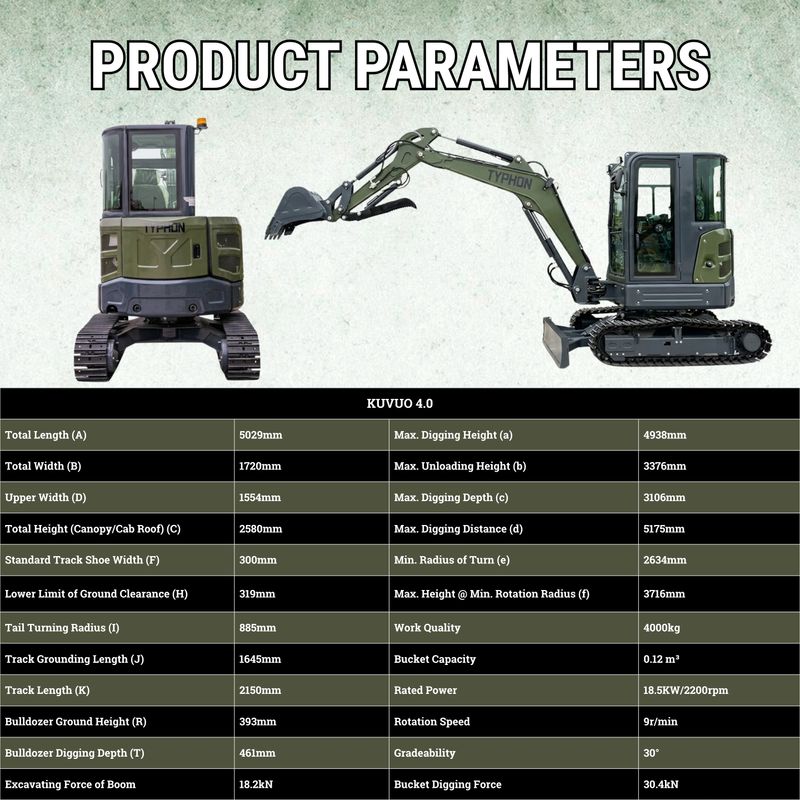
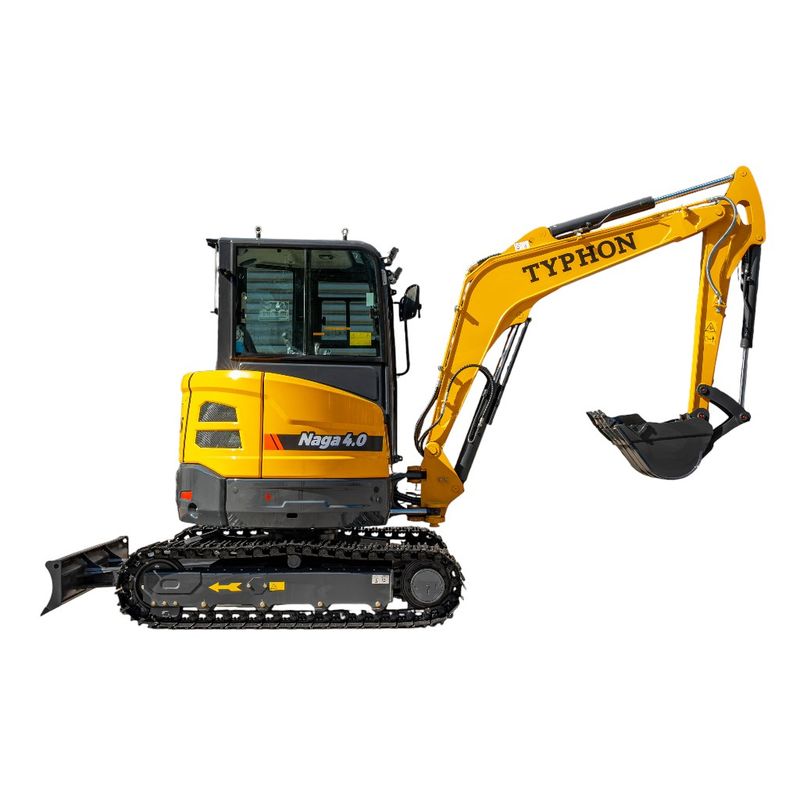
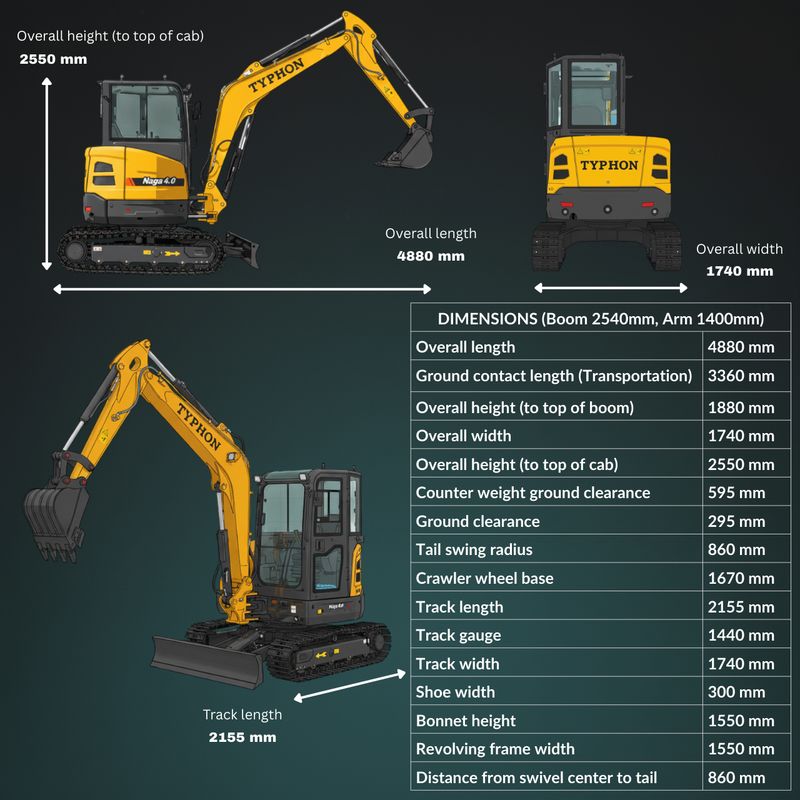
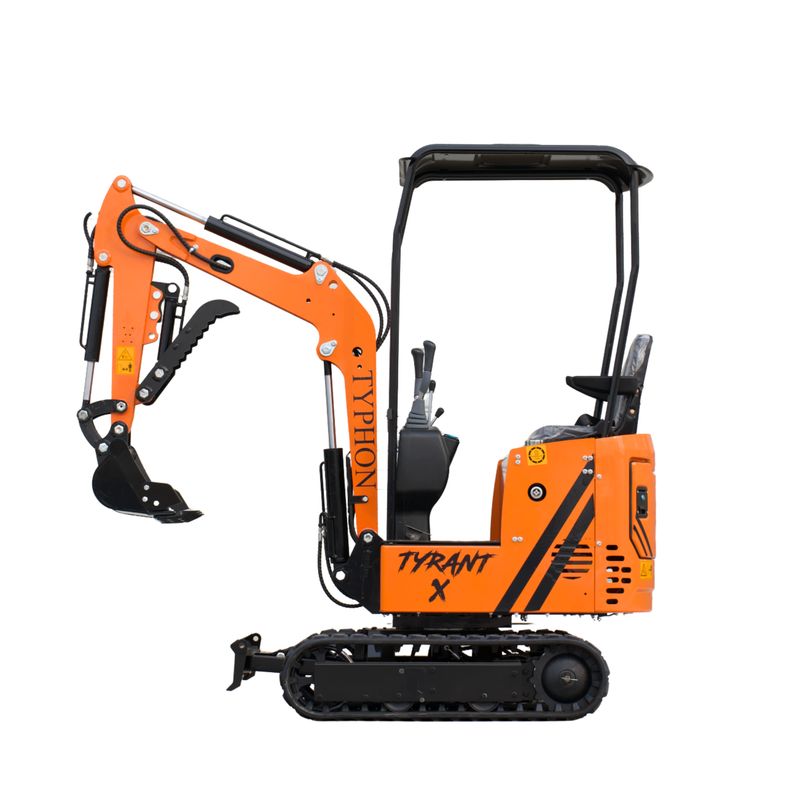
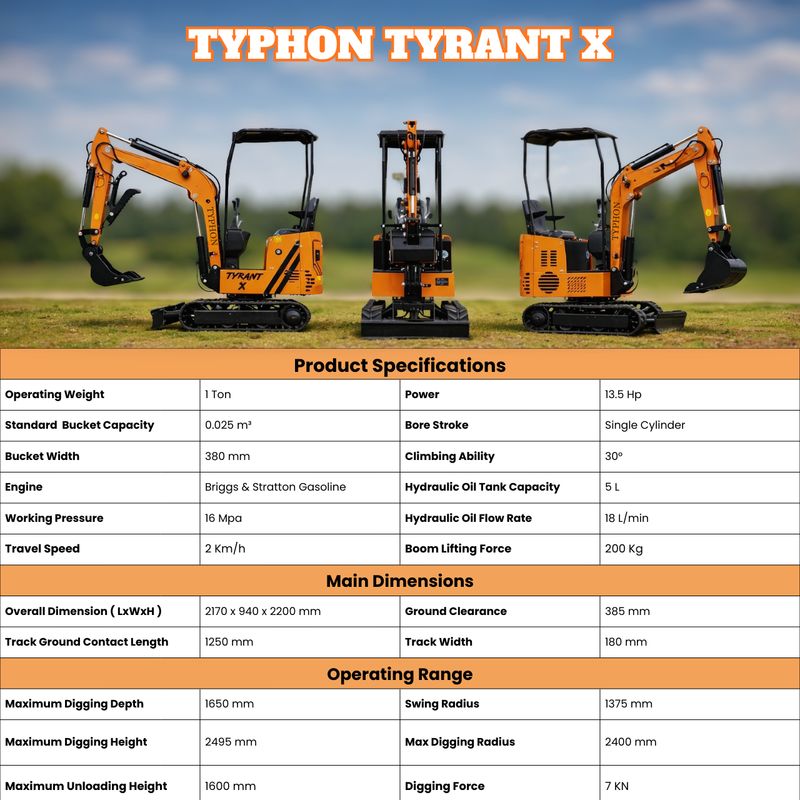
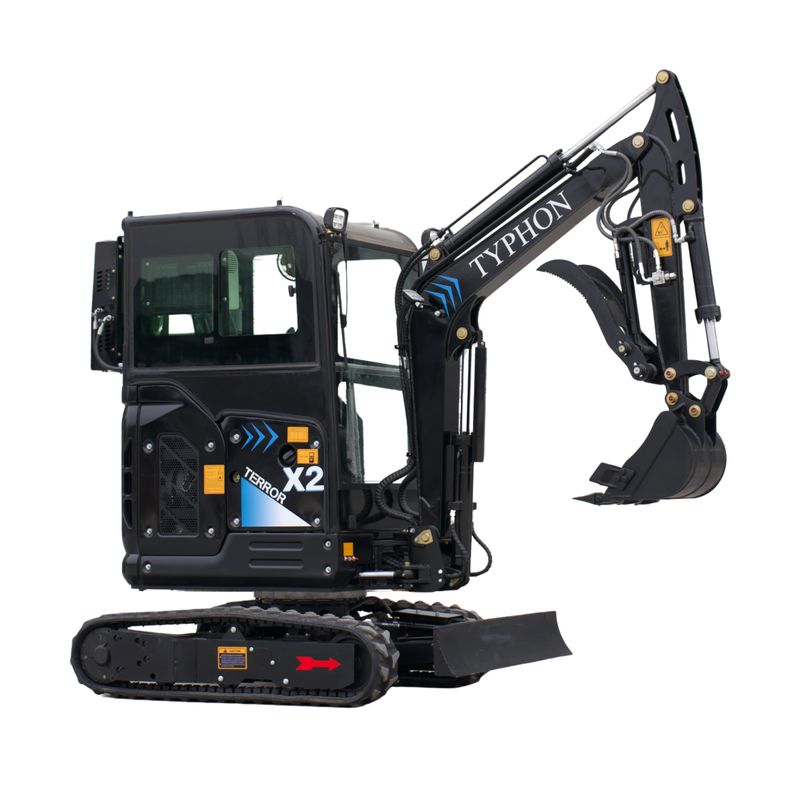
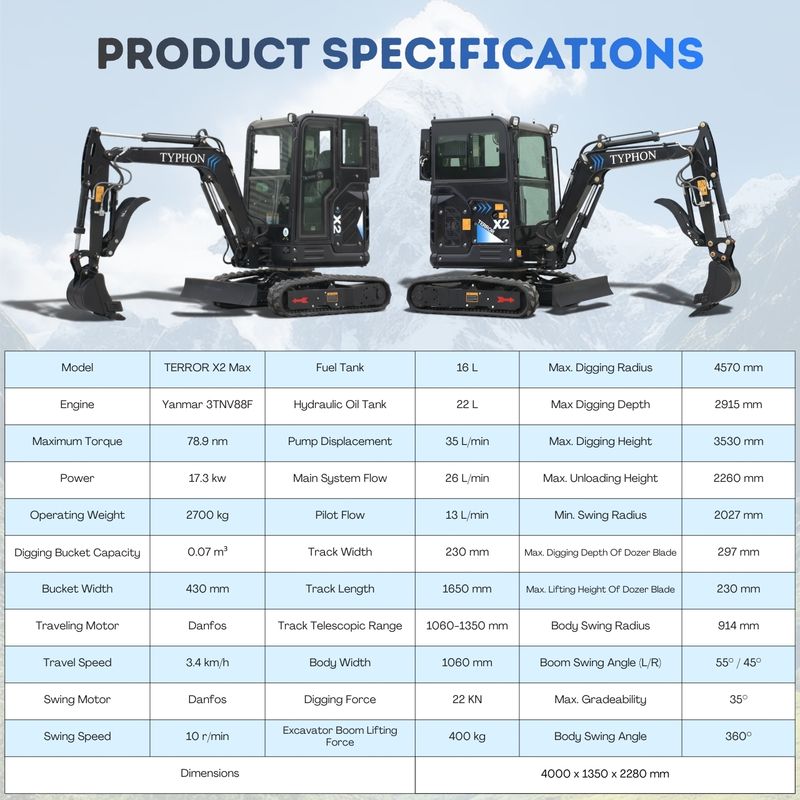
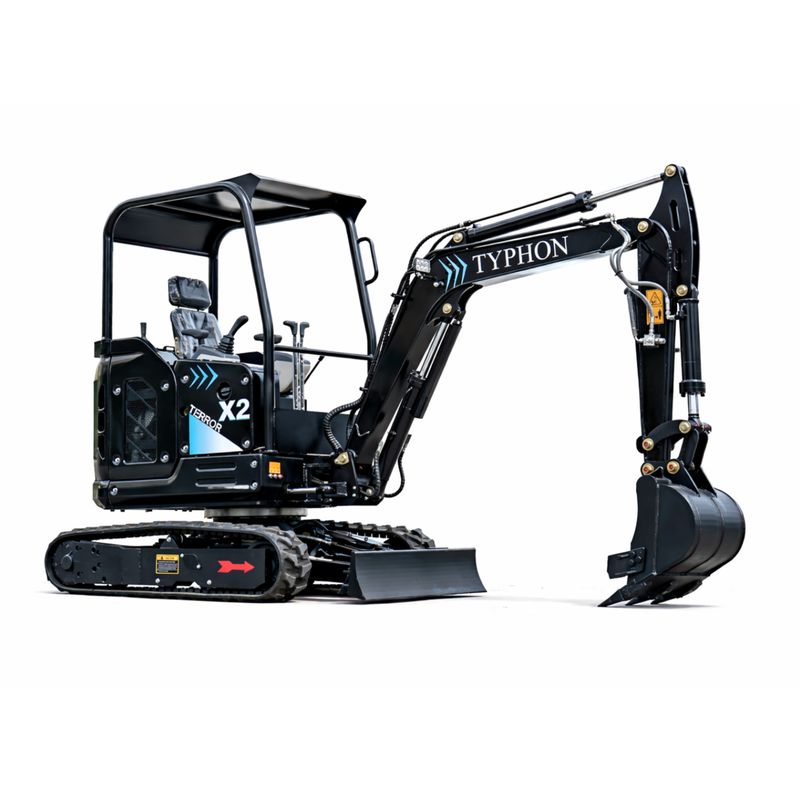
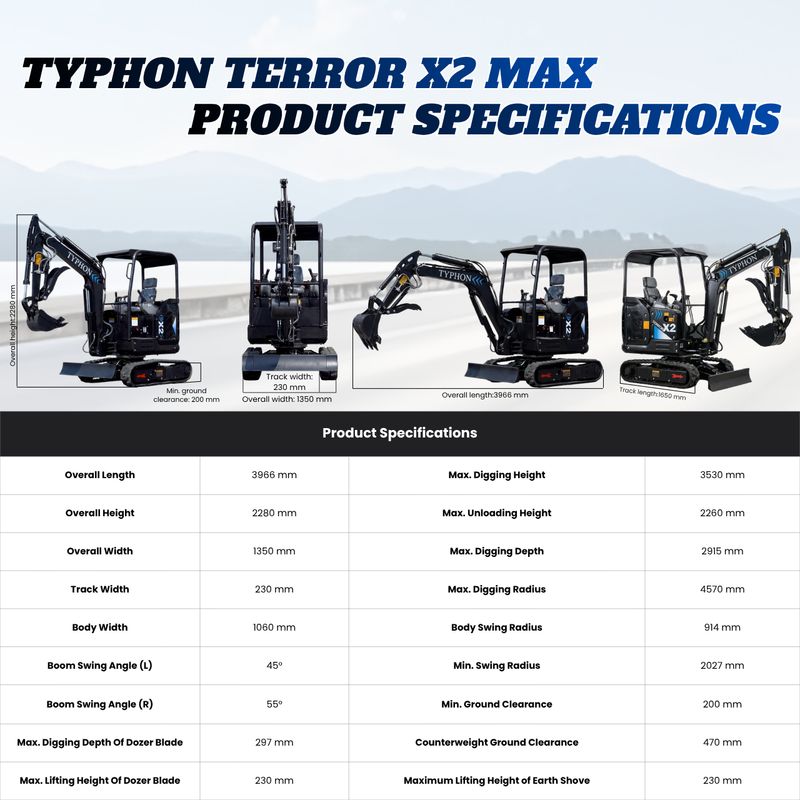
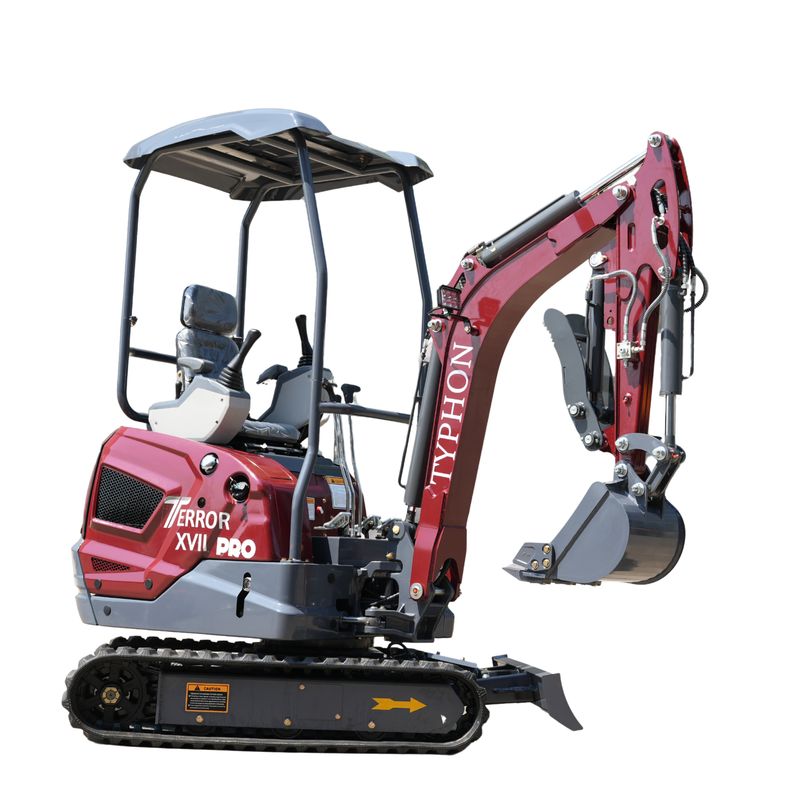
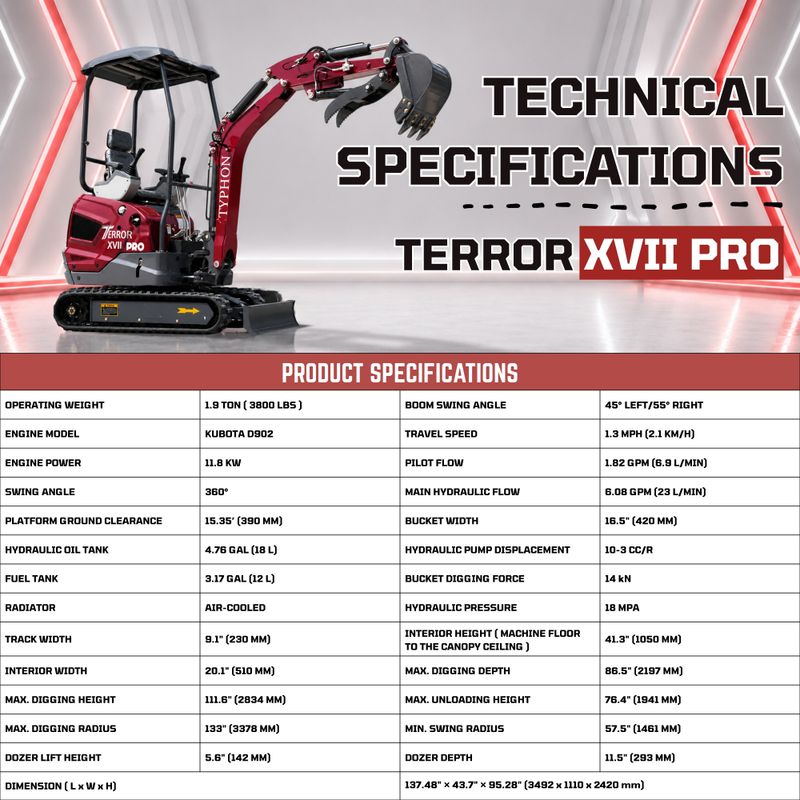
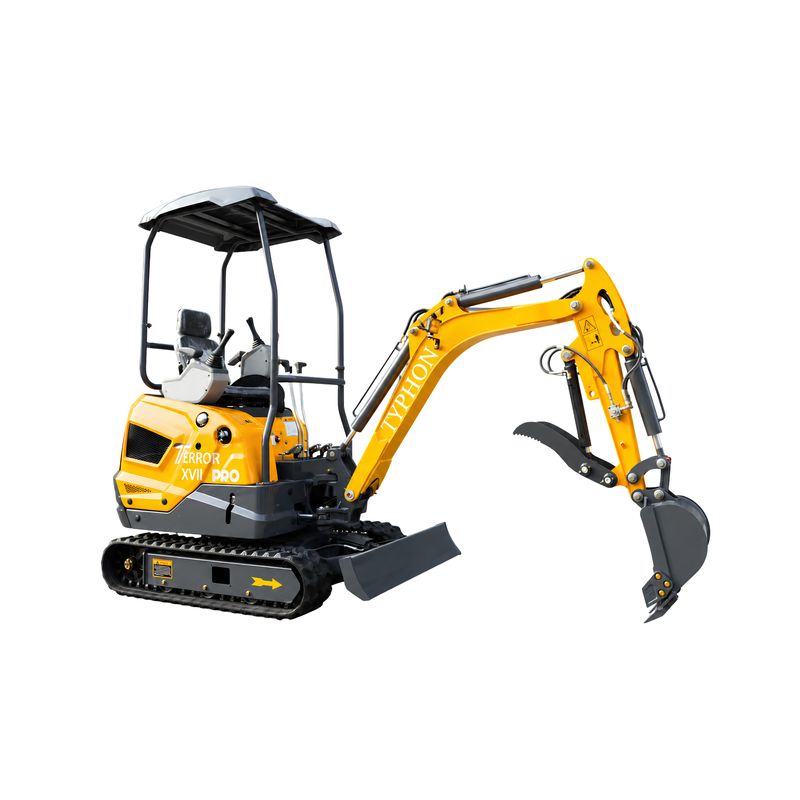
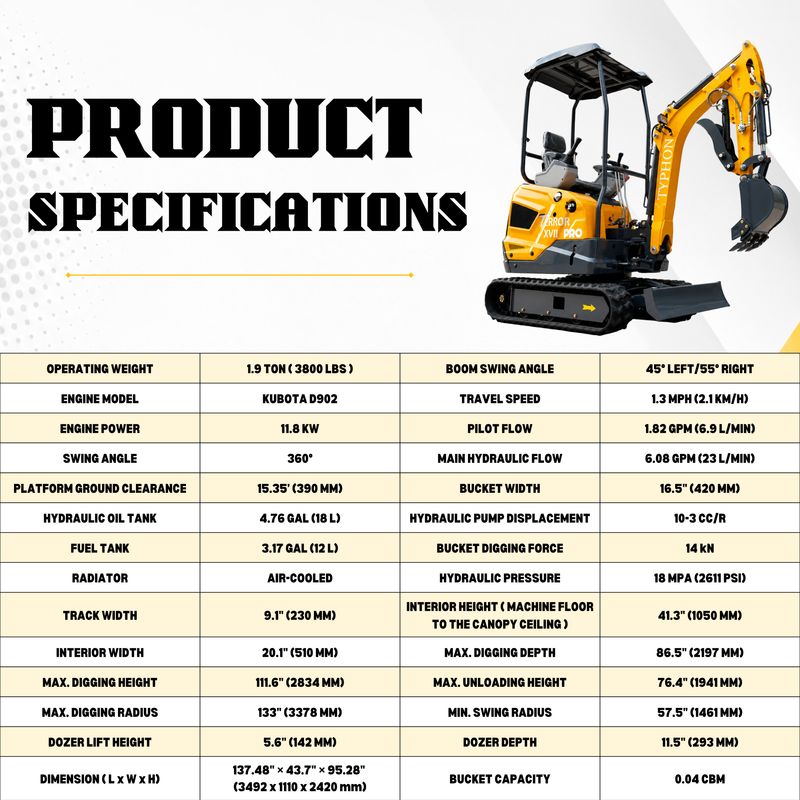
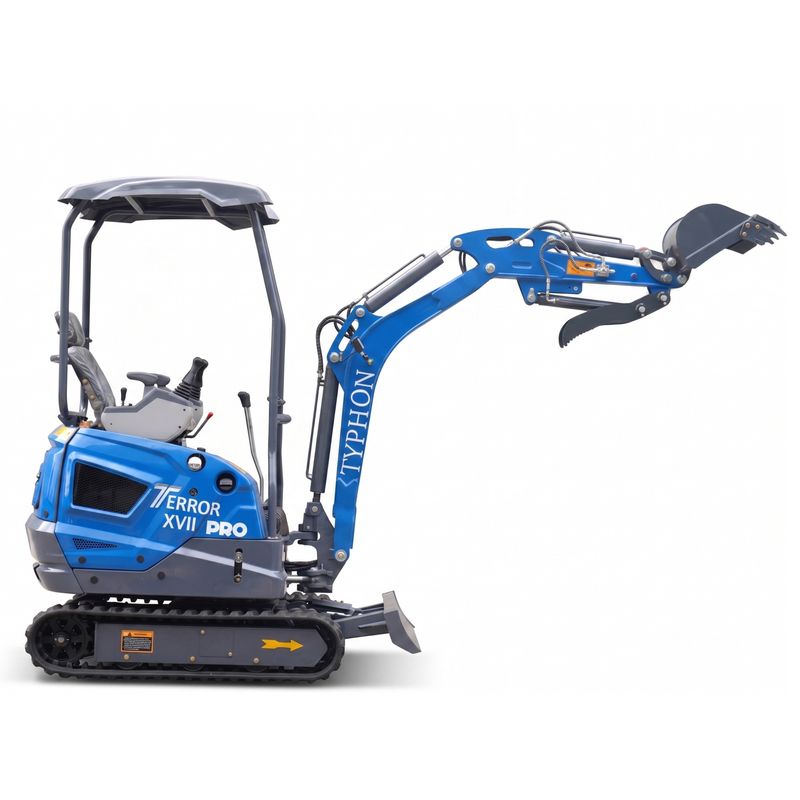
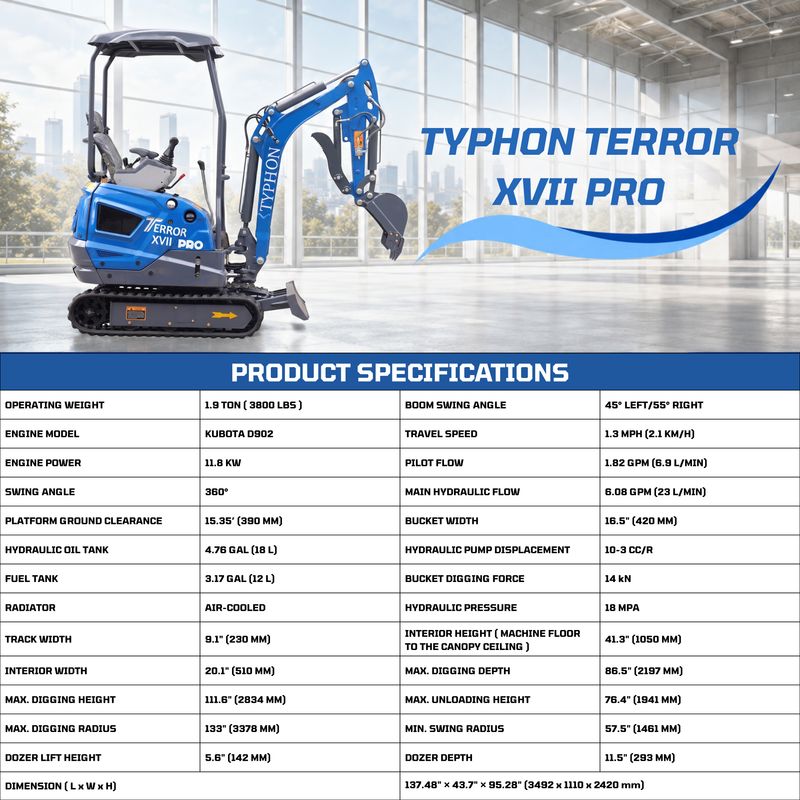
As the market moves toward smarter, greener compact excavators, TYPHON’s Kubota-based diesel foundation gives the brand a credible platform from which to evolve toward hybrid and AI-assisted configurations.
Competition from Other Small-Scale Equipment
Mini excavators don’t operate in a vacuum. Contractors evaluating compact equipment purchases consider a range of machine types depending on their specific work profile.
| Equipment Type | Advantages | Limitations |
| Mini Excavators | 360° rotation, deep digging, zero-tail swing options, precision grading | Higher upfront cost vs. loaders |
| Compact Track Loaders | Fast material movement, excellent traction, versatile attachments | Limited digging depth, no rotation |
| Skid Steers | Lower cost, high lift capacity, wide attachment compatibility | Wheeled versions struggle on soft ground |
| Backhoe Loaders | Two-end versatility (bucket + loader), road-transportable | Bulkier, less maneuverable in tight spaces |
Mini excavators hold a critical competitive advantage in any work requiring rotation, depth, or confined-space operation. For trenching and precision grading, they are essentially unmatched in the compact category.
However, compact track loaders continue to pressure the market for above-ground material handling tasks, and budget-conscious buyers sometimes opt for skid steers where pure digging performance isn’t the priority. The competitive response from mini-excavator manufacturers has been to expand attachment ecosystems—hydraulic thumbs, breakers, augers, and compaction wheels—so that a single mini excavator can justify its purchase price across multiple task types.
TYPHON Machinery addresses this directly with its growing attachments catalog, enabling TERROR series owners to expand their machine’s utility far beyond basic bucket digging.
Industry Challenges Ahead
No balanced analysis of mini excavator trends is complete without acknowledging the headwinds.
Equipment costs remain a barrier for smaller contractors. Electric and hybrid models carry significantly higher upfront prices than diesel equivalents, even as lifecycle savings are real. Financing and rental programs are partially bridging this gap, but capital access remains a challenge for independent operators.
Charging infrastructure is the most frequently cited barrier to electric excavator adoption. Construction sites in rural or developing-market locations may have no access to adequate power supply. This is a genuine constraint that won’t be solved by battery technology alone — it requires grid investment and industry coordination.
Skilled operator shortages continue to plague the construction industry globally. While automation and AI are beginning to offset this, the transition period creates real operational risk for businesses that can’t attract qualified machine operators.
Technology adoption barriers are particularly acute for smaller operators. Telematics systems, IoT platforms, and AI-assisted controls require not just hardware investment but digital literacy and workflow adaptation. The industry will need better training infrastructure to capture the full productivity potential of smart compact equipment.
Economic uncertainty—tariff changes, interest rate movements, and construction spending cycles—can quickly dampen equipment demand, as new U.S. tariff directives targeting imported construction equipment demonstrated in 2025, introducing notable cost pressures across supply chains.
Community discussions among heavy equipment operators consistently flag charging range, upfront costs, and reliable service networks as the practical concerns that matter most to real buyers—insights that should ground any analysis that leans too heavily on optimistic projections.
Expert Predictions for the Future of Mini Excavators
By 2030
- AI-assisted operation will be standard equipment on mid-range and premium compact excavators, significantly reducing skill barriers
- Electric models will account for a substantial share of rental fleet acquisitions in North America and Europe
- Semi-autonomous operation will be commercially available, with manufacturers offering remote-control packages as factory-fitted options
- Telematics integration will be universal, with most machines shipping connected as standard
- Smarter job sites will coordinate machine movements with site management software in real time
By 2035
- Semi-autonomous fleets of mini excavators will execute coordinated excavation and grading plans with minimal human supervision on large infrastructure projects
- Solid-state batteries will enable full-day electric operation without mid-shift charging, eliminating the runtime objection to electrification
- Digital twins of individual machines will enable continuous performance optimization throughout a machine’s operational life
- Hydrogen fuel cell powertrains will provide zero-emission options for applications where battery weight or recharge time is prohibitive
- Remote operations will enable a single skilled operator to supervise multiple autonomous machines simultaneously, transforming labor economics on large job sites
Industry forecasts from Future Market Insights and Market Research Future align on this trajectory: automation, AI assistance, machine guidance systems, electrification, and connected equipment ecosystems will define the mini excavator landscape through 2035.
Key Takeaways
- The global mini excavator market is projected to nearly double from $8.26 billion in 2024 to $15.82 billion by 2035, growing at 6.08% CAGR
- Electric mini excavators are projected to capture 40% of the rental market by 2026, driven by sustainability mandates and lower lifecycle costs
- AI-assisted digging and precision grade control are transitioning from premium features to standard expectations on modern compact excavators
- Telematics and IoT connectivity are enabling predictive maintenance and fleet management for operators of all sizes
- TYPHON Machinery’s TERROR series (X through XX) offers EPA-compliant, Kubota-powered performance at accessible price points for independent contractors
- Hybrid diesel-electric systems represent the pragmatic bridge for operators in areas with limited charging infrastructure
- Semi-autonomous mini excavators are expected to become commercially mainstream by 2030
- Charging infrastructure—not battery technology—remains the biggest bottleneck to widespread electric excavator adoption
- Mini excavators hold a unique competitive advantage over compact track loaders and skid steers in any application requiring rotation, depth, or confined-space work
- Industry growth is increasingly driven by non-construction sectors: agriculture, landscaping, renewable energy, and utility services
- TYPHON TERROR XVII PRESTIGE’s full climate-controlled cabin reflects the broader industry trend toward operator comfort and productivity
- By 2035, autonomous and connected mini excavator fleets operating under remote human supervision are an achievable, not speculative, reality
Frequently Asked Questions
What is the future of mini excavators?
The future of mini excavators is defined by four converging forces: electrification, automation, connectivity, and diversification. Electric and hybrid models will increasingly replace diesel as battery technology matures and charging infrastructure expands. AI-assisted and semi-autonomous operation will become standard on mid-range models by 2030. Telematics and IoT connectivity will transform fleet management. And mini excavators will continue expanding into nonconstruction sectors—agriculture, renewable energy, and utilities—driving market growth toward $15.82 billion by 2035.
Will electric mini excavators replace diesel models?
Not completely, and not immediately. Diesel models will remain important for high-demand applications in areas with limited charging infrastructure. However, electric mini excavators are growing rapidly — projected to capture 40% of the rental market by 2026 — and hybrid systems are bridging the gap. Brands that don’t develop credible electrification roadmaps will face market pressure within this decade.
Are autonomous mini excavators becoming common?
Semi-autonomous capabilities—remote operation, GPS-guided grading, and automated cycle repetition—are already commercially available. Fully autonomous mini excavators executing complex multi-step tasks without operator intervention are expected to reach mainstream commercial availability by the early 2030s, initially on large infrastructure and mining projects.
How does AI improve mini excavator performance?
AI improves mini excavator performance in several ways: it adjusts hydraulic pressure in real time based on soil resistance (reducing wear and fuel consumption), enables precision grading to tight tolerances without experienced-operator skill requirements, facilitates predictive maintenance by analyzing sensor data for early fault detection, and allows semi-autonomous cycle execution in repetitive tasks like trench digging.
What industries use mini excavators the most?
Residential and commercial construction remain the largest market segments. However, utility work (trenching for gas, water, and electrical services), landscaping, agriculture, and renewable energy project installation are all rapidly growing use cases. Brands like TYPHON Machinery specifically design models—like the TERROR XX—for agricultural and orchard applications.
Are hybrid mini excavators worth the investment?
For operators working on projects in emissions-sensitive zones, near noise-restricted areas, or for clients with green procurement requirements, hybrid mini-excavators offer compelling ROI. Fuel savings, lower maintenance requirements, and access to restricted job sites can justify the higher upfront cost. For standard open-site work with no regulatory constraints, the calculus is less clear until hybrid pricing reaches closer parity with diesel models.
How sustainable are electric mini excavators?
Electric mini excavators produce zero direct emissions at the point of use, dramatically reducing their operational environmental footprint. When charged from renewable energy sources, lifecycle emissions can approach near zero. Even on fossil fuel-dominated grids, electric models tend to have significantly lower lifecycle emissions than diesel equivalents due to energy conversion efficiency advantages. Biodegradable hydraulic fluids — available on some models — further reduce environmental impact.
What technologies are shaping construction equipment?
The key technologies reshaping construction equipment include artificial intelligence for automated operation and predictive maintenance; telematics and IoT for real-time fleet monitoring; electric and hybrid powertrains for emissions reduction; machine guidance systems (GPS/laser grade control) for precision earthmoving; digital twins for machine lifecycle management; and autonomous operation systems for remote and hazardous site deployment.
Final Thoughts
The mini excavator market is at an inflection point. The machines that contractors rely on today — powerful, versatile, indispensable — are about to become significantly smarter, cleaner, and more capable. AI and automation will reduce the skill barriers that limit productivity. Electrification will reduce the operating expenses and environmental footprint that concern buyers and regulators alike. Connectivity will give owners unprecedented visibility into their equipment’s health and utilization.
Brands like TYPHON Machinery—which have built their reputation on making capable, EPA-compliant compact excavators accessible to independent contractors—are well-positioned to evolve with the market. The TYPHON TERROR series demonstrates that powerful, reliable excavation doesn’t have to come at premium prices. As the industry moves toward smarter and greener machines, the brands that combine engineering credibility with commercial accessibility will define the next chapter of mini excavator adoption.
For contractors, the strategic recommendation is clear: don’t wait for perfect electric or autonomous technology before investing in compact equipment. The machines available today — from proven Kubota-powered workhorses to emerging electric models — deliver real ROI. Businesses that build operational proficiency and fleet discipline now will be best positioned to adopt next-generation technology as it matures.
The future is compact, connected, and electric. And it’s arriving faster than most people think.
Looking for the latest mini excavator innovations and industry insights? Explore our expert guides and stay ahead of the future of construction equipment.