Skip to content
What’s the Average Lifespan of a Mini Excavator? 2026 Guide
If you ask five equipment dealers how long a mini excavator lasts, you’ll get five different answers. That’s not because nobody knows what they’re talking about—it’s because lifespan isn’t really an age question. Two machines rolled off the line the same year can end up in wildly different places a decade later.
One’s still digging every week without much fuss. The other is parked behind a shop somewhere with a blown hydraulic pump and a boom that wobbles more than it should. The gap between those two machines almost never comes down to the model year. It comes down to hours, maintenance, how hard the machine worked, and how carefully someone ran it.
This guide is meant to help you think about lifespan the right way—not chase a single magic number, but understand what actually determines whether a given mini excavator still has years of useful work left in it, and how to size that up before you buy.
What’s the Average Lifespan of a Mini Excavator?
Mini excavator lifespan gets talked about more in operating hours than in calendar years, and for good reason—two machines the same age can have completely different work histories depending on how much they’ve actually run.
A machine that’s been maintained properly can stay productive for many years and rack up many hours along the way, while one that’s been neglected can start causing headaches far sooner than its age would suggest. And here’s something a lot of buyers get wrong: a high-hour machine isn’t automatically a bad buy. A thick stack of service records often tells you more than the number on the hour meter ever will.
How Many Hours Does a Mini Excavator Last?
Hours tend to matter more than age, and it’s not difficult to see why once you think it through. A five-year-old machine run hard every single day has taken on far more wear than a ten-year-old unit that only came out on weekends. Age tells you almost nothing about that difference. Hours tell you a lot more about that difference.
Machines with low hours have generally seen light use, and assuming they were stored and cared for properly, they tend to have the most life left in them. Medium-hour machines have a real work history behind them but, with maintenance kept current, are often still well inside their productive window—nothing to be nervous about.
High-hour machines have been used more, and that shows up as more wear on the hydraulics, undercarriage, and engine. That said, solid documentation can go a long way toward offsetting the concern. Very high-hour machines are where you want to slow down and look closely, since the odds of accumulated wear on major components go up—though a machine that’s been properly rebuilt or cared for can still make sense at the right price.
Here’s the part worth remembering: a low-hour machine with no service records and a questionable past can end up riskier than a higher-hour machine that’s been looked after and can prove it.
How Many Years Can a Mini Excavator Last?
It helps to draw a line between two different things—mechanical lifespan and economic lifespan. Mechanical lifespan is simply how long a machine can keep physically running, especially once you factor in rebuilds and swapping out major components along the way. Economic lifespan is a different question entirely: how long does it actually make financial sense to keep repairing this thing before a newer machine becomes the smarter move?
A mini excavator can be perfectly capable of running for years while quietly becoming less economical to own. Parts get harder to find, repairs start happening more often, and downtime begins to cost more than just trading up would. How many years a specific machine lasts depends on a few key factors:
- How many hours it racks up each year
- What kind of environment it’s been working in—clean sites versus mud, rock, and sand
- Whether service intervals were actually followed, not just written down somewhere
- Whether past problems got fixed properly and promptly or patched and ignored
- How easy it is to source parts as the machine gets older
- How carefully the operator runs it day to day
- Whether it’s been doing light duty or grinding through heavy work
10 Factors That Affect Mini Excavator Lifespan
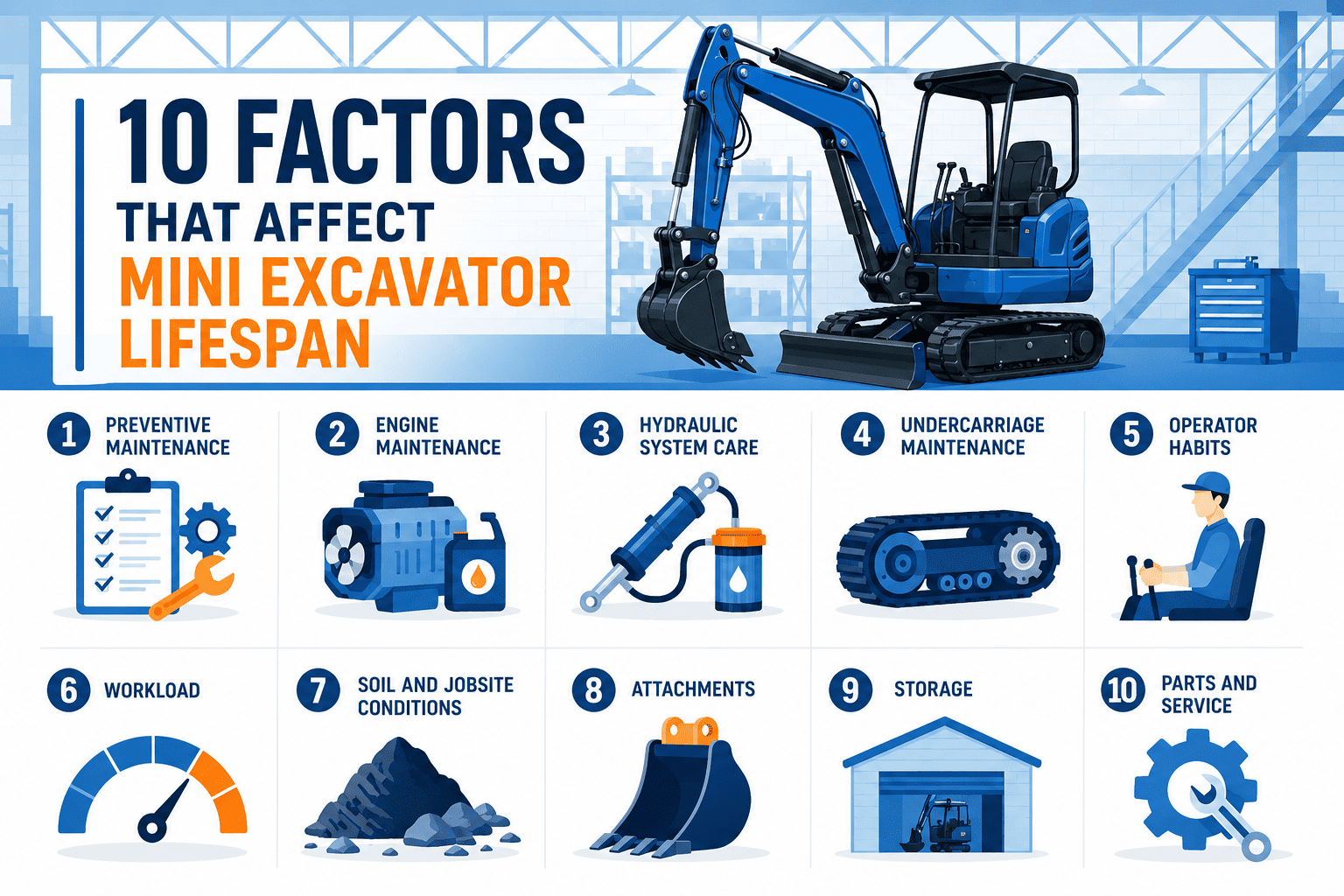
1. Preventive Maintenance
Scheduled servicing catches the small stuff before it turns into the expensive stuff. Machines that stay on a consistent maintenance rhythm reliably outlast the ones that only get attention once something’s already broken.
2. Engine Maintenance
Clean oil, fresh filters, and a cooling system that’s actually doing its job protect the engine from the kind of wear that shortens its life fastest. Skip these and you’re borrowing trouble.
3. Hydraulic System Care
The hydraulic system takes a real beating on a working excavator—oil, filters, hoses, cylinders, seals, all of it under constant pressure. Let the fluid get contaminated or a seal start to fail, and you’re potentially looking at a pump or cylinder replacement that isn’t cheap.
4. Undercarriage Maintenance
Tracks, rollers, sprockets, idlers, and proper track tension—these wear down steadily no matter what, but neglect speeds it up considerably. Undercarriage parts are some of the priciest components on a mini excavator, so keeping them maintained is really about protecting a big chunk of the machine’s value.
5. Operator Habits
An operator who’s rough on the controls—unnecessary shock loading, careless attachment use—will chew through the boom, arm, and hydraulic system a lot faster than normal digging ever would. Two identical machines can age completely differently depending purely on who’s in the seat.
6. Workload
A machine doing light landscaping accumulates wear slowly. One running continuous heavy excavation wears out faster, even clocking the exact same hours. Hours alone don’t tell the whole story—what the machine was actually doing during those hours matters just as much.
7. Soil and Jobsite Conditions
Mud, rocks, abrasive soil, and general jobsite debris—all of it accelerates wear on tracks, seals, and cutting edges compared to clean, consistent ground. A machine that’s spent its life in rocky, wet conditions has typically aged faster than one that’s stuck to flat, dry sites.
8. Attachments
Hydraulic breakers, augers, thumbs—they all put extra demand on the hydraulic system. Used within the machine’s rated capacity, that’s fine. Push past it regularly, and you’re setting yourself up for premature hydraulic wear.
9. Storage
Leave a machine out in the weather year-round, especially through freeze-thaw cycles and long stretches of moisture, and corrosion and seal degradation move in faster than you’d expect. Covered or indoor storage buys real, measurable extra life.
10. Parts and Service
When something breaks, how fast can you actually get it fixed? Access to parts and reliable technical support determines whether a minor issue costs you a day or two weeks. A machine sitting idle waiting on a part is losing money even if the mechanical fix itself is small.
How to Make a Mini Excavator Last Longer
Most of what actually extends a mini excavator’s life isn’t glamorous—it’s just consistency. The habits that matter most:
- A quick walk-around inspection before starting work each day
- Checking engine oil level and condition regularly, not just when it’s due
- Checking hydraulic fluid level and watching for signs of contamination
- Greasing pivot points and pins on schedule every time
- Inspecting tracks for wear, tension, and any visible damage
- Checking hoses for cracking, leaks, or abrasion before they become a problem on the job
- Keeping the cooling system clear of debris and buildup
- Replacing filters at the recommended intervals, not “whenever”
- Keeping the battery and electrical connections clean and secure
- Checking bolts and structural connections for looseness
- Inspecting attachments and coupler pins for wear
- Storing the machine properly when it’s not being used
Stick to the specific service intervals in your machine’s manufacturer manual rather than a generic timeline you saw somewhere online — engine type, hydraulic setup, and workload all shift what the right schedule actually looks like for your machine.
Signs Your Mini Excavator May Be Reaching the End of Its Useful Life
No single symptom below means it’s time to call it quits. When several of these symptoms appear together, especially with increasing repair bills, it’s important to pay real attention to:
- Excessive hydraulic leakage
- A noticeable drop in hydraulic power or performance
- Engine smoke or sounds that weren’t there before
- Trouble starting, especially when it becomes routine
- Excessive track wear
- Damaged rollers or sprockets
- Cylinder leakage
- More play in the boom or arm than there should be
- Electrical gremlins that keep coming back
- Repeated overheating
- Downtime that’s becoming unpredictable and frequent
- Repair costs that keep creeping upward
A leaking hose here and there or a hard start on a cold morning isn’t a warning sign—that’s just equipment. A machine showing several of these at once, with the bills to match, is telling you something different.
Is a High-Hour Used Mini Excavator Worth Buying?
Sometimes, yes—and condition and maintenance history usually matter more than whatever number is sitting on the hour meter. Before putting money down on a used mini excavator, it’s worth checking:
- Engine hours, and how those hours were actually accumulated
- Maintenance records and how consistent the service history looks
- Hydraulic system condition, including any signs of leaks
- Engine condition—smoke, noise, how it starts and runs
- Undercarriage wear across tracks, rollers, and sprockets
- Boom and arm condition, checking for play or bending
- Swing bearing condition
- Cylinder condition and seal integrity
- Track tension and wear pattern
- Any included attachments and their condition
- Whether the electrical system functions the way it should
- Overall operating condition during an actual test run, not just a walk-around
A high-hour machine backed by real documentation and visible care can be a genuinely smart purchase. A low-hour machine with no service records and obvious neglect can turn into a money pit fast. Don’t let the hour count make the decision for you.
How TYPHON Mini Excavators Fit Into the Ownership Equation
Long-term value isn’t only about which machine you buy—it’s about whether that machine actually fits the work you’re going to ask it to do. TYPHON Machinery’s mini excavator lineup spans several size classes, which makes it a decent reference point for thinking through how machine selection affects wear and ownership economics over time.
The TYPHON Tyrant X is a 1-ton mini excavator built around a 13.5 HP Briggs & Stratton engine, with a hydraulic oil cooler and thumb clip included. Picking a compact machine like this for genuinely light-duty work—garden beds, small trenches, tight residential access—sidesteps the unnecessary wear that comes from either running a bigger machine well under its capacity or overworking something too small for the job.
The TYPHON TERROR XVII PRO is a 3,800–4,000 lb mini excavator with a Kubota D902 diesel engine, hydraulic thumb, boom swing, and pilot controls, available in open-canopy or enclosed cab configurations. This class fits contractors whose day-to-day workload genuinely justifies a diesel platform with stronger hydraulics—not just ones who’d like more power “just in case.”
The TYPHON TERROR XIX Prestige is a 4,200 lb cabin machine built on that same Kubota D902 platform, rated at 20.4 HP, with boom swing and retractable tracks. Matching a machine this size to work it can actually handle comfortably—rather than under-buying or over-buying—is one of those unglamorous decisions that quietly protects component life over the years.
The TYPHON TERROR XXV steps up into a larger 2.5–2.7 ton class, giving buyers additional digging and lifting capability when the job regularly demands more than a compact machine can deliver.
The KUVUO 4.0 and NAGA 4.0 sit in TYPHON’s 4-ton class, built around Kubota and Yanmar diesel engines, respectively, aimed at heavier excavation and utility work where a full cab and stronger hydraulics genuinely earn their keep.
TYPHON Model Comparison
| TYPHON Model | Machine Class | Key Feature | Typical Application |
|---|---|---|---|
| Tyrant X | 1 Ton | Briggs & Stratton engine, hydraulic oil cooler | Residential, light-duty work |
| TERROR XVII PRO | 3,800–4,000 lb | Kubota D902, boom swing, pilot controls | Contractor-grade excavation |
| TERROR XIX Prestige | 4,200 lb | Kubota D902 (20.4HP), retractable tracks | Heavier trenching, cabin comfort |
| TERROR XXV | 2.5–2.7 Ton | Additional digging/lifting capacity | Mid-size contracting jobs |
| KUVUO 4.0 | 4 Ton | Kubota D1703, boom swing | Heavier excavation, commercial work |
| NAGA 4.0 | 4 Ton | Yanmar (24.4HP), AC/heater cabin | Utility and heavier site work |
Specifications reflect what’s published on TYPHON’s mini excavator category page at the time of writing — worth double-checking on the individual product pages before you buy, since configurations can shift.
Which Components Usually Need the Most Attention?
Across mini excavators in general, a handful of systems soak up most of the long-term maintenance attention: the engine, the hydraulic pump, the cylinders and hoses, the swing system and final drives, and the undercarriage—tracks, rollers, and sprockets. Electrical components tend to cause more nuisance issues than outright failures, though corrosion and loose connections can still eat up real downtime if ignored. When you’re looking over a used machine, these are precisely the areas worth the closest inspection, since they carry both the highest wear and the highest repair cost.
Does a Longer Lifespan Always Mean Lower Cost?
Not necessarily, and this trips people up more than you’d think. Lifespan and total cost of ownership are related, but they’re not the same thing. Total cost of ownership is everything added together over the years you actually own the machine: purchase price, maintenance, repairs, fuel, attachments, transportation, and downtime.
A machine with a low sticker price can end up costing more in the long run if it needs constant repairs or spends too much time out of service waiting on parts. In contrast, a properly maintained machine with a higher upfront cost can be the better deal simply because it stays productive year after year. When you’re weighing options, it’s more useful to think in terms of cost per productive hour than to fixate on the purchase price alone.
Can Financing Help With Buying a New Mini Excavator?
For buyers who’d rather not tie up working capital in equipment, TYPHON Machinery offers financing through Paramount Financial. Financing lets qualified buyers spread the cost of a new machine out over time instead of paying the full amount up front—which can make it easier to get a reliable, properly sized machine on the job sooner, rather than settling for something older or higher-hour just because of budget.
Approval decisions, rates, and payment terms come from Paramount Financial based on your specific application, and none of that is guaranteed in advance. Review the current financing terms directly before you commit to anything.
How Workload Affects Mini Excavator Lifespan
Landscaping work is generally lighter duty, though it often involves a lot of travel between sites and frequent attachment changes. Residential construction involves repeated digging and trenching, which leads to steady, moderate wear. Utility work tends to put the hydraulic and digging systems into near-constant use. Agriculture often means long stretches of operation in mud, dirt, and unpredictable conditions. Heavy construction tends to wear on hydraulic systems and undercarriage components the fastest, simply because the demand is sustained and heavy.
Across every category, though, actual wear has less to do with what kind of work it is and more to do with how the machine is operated and maintained within that work.
When Is It Time to Replace a Mini Excavator?
Replacement starts making sense once repairs turn frequent, downtime begins cutting into your ability to take on jobs, major components need rebuilding over and over, parts get harder to find, productivity noticeably slips, or repair costs start creeping up toward the machine’s remaining value. Occasionally a newer machine offers enough of a productivity jump to justify replacing the old one even though it still technically runs fine. There’s no specific hour count that flips a switch here—it comes down to whether the numbers still make sense for your business.
Frequently Asked Questions
What’s the average lifespan of a mini excavator? Lifespan depends far more on maintenance, workload, and operating conditions than on age by itself. A well-maintained machine can stay productive for many years and thousands of hours, while a neglected one can start causing costly problems much sooner.
How many hours does a mini excavator usually last? There’s no fixed number that applies across the board. Operating hours matter, but a documented maintenance history usually predicts how much life is left in a machine better than the hour meter alone.
Is 5,000 hours a lot for a mini excavator? It really depends on maintenance and how those hours were racked up. A well-cared-for machine at 5,000 hours can still have plenty of useful life ahead, while a neglected one might already be showing serious wear.
How can I make my mini excavator last longer? Stick to the manufacturer’s maintenance schedule, do daily inspections, keep hydraulic and engine fluids clean, stay on top of the undercarriage, and store the machine properly when it’s not in use.
What parts wear out first on a mini excavator? Undercarriage components — tracks, rollers, sprockets — along with hydraulic hoses and cylinder seals, tend to show wear earliest, especially in heavy or abrasive working conditions.
Is a high-hour mini excavator worth buying? It can be, if the machine has documented maintenance and shows solid overall condition on inspection. Condition and history usually count for more than the hour number by itself.
When should I replace my mini excavator? Think about replacement when repairs start piling up, downtime begins costing you work, or repair costs get close to what the machine is still worth — not at some predetermined hour count.
Does maintenance really increase mini excavator lifespan? Yes, and it’s not close. Consistent preventive maintenance is one of the biggest factors separating machines that stay productive for years from ones that start racking up expensive problems early.