Skip to content
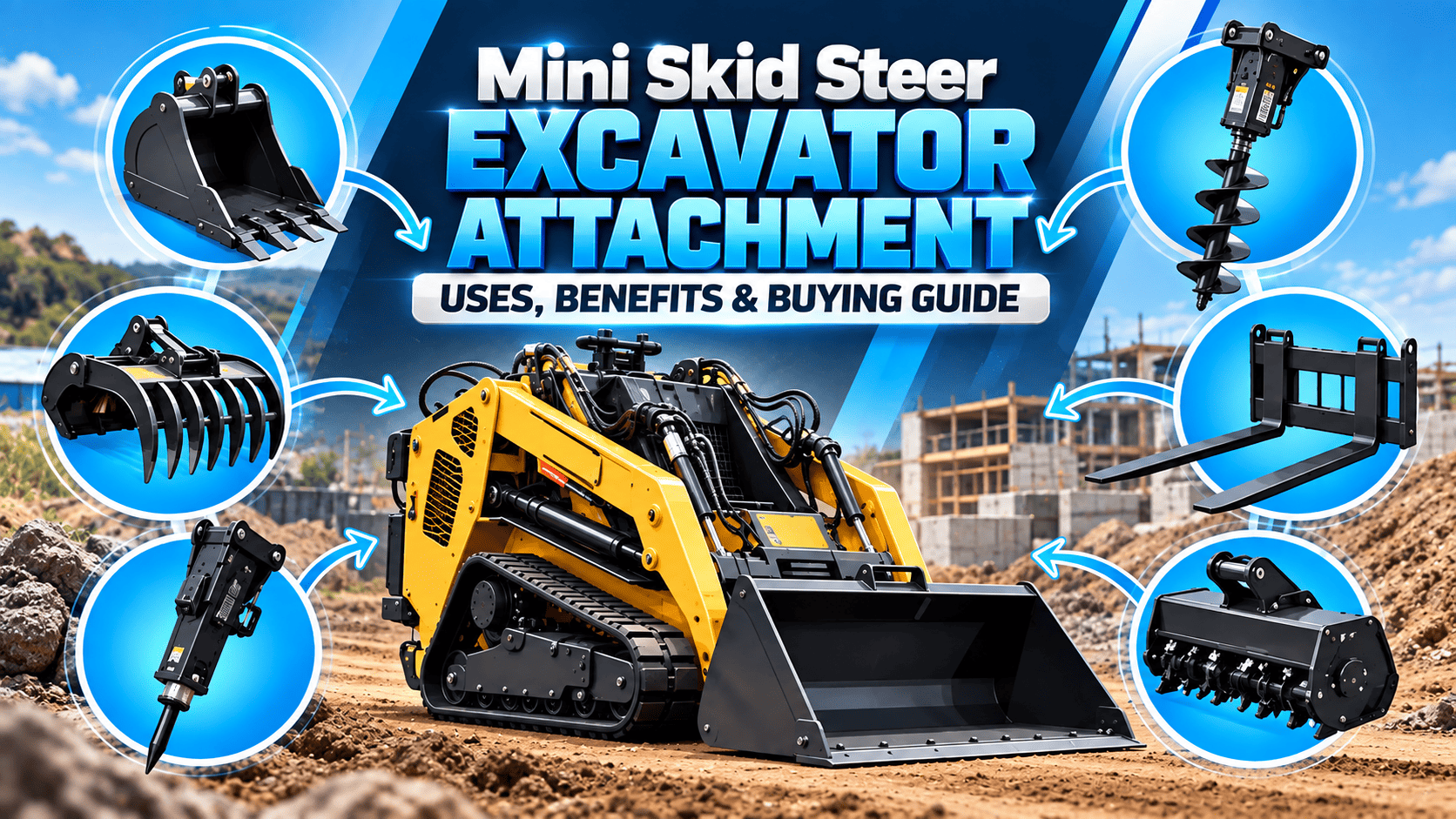
Mini Skid Steer Excavator Attachment: Uses, Benefits & Buying Guide
If you already own a mini skid steer, you don’t necessarily need a second machine to start digging. A mini skid steer excavator attachment bolts onto the same quick-attach plate you’re already using for buckets and forks and turns your loader into a machine that can trench, dig footings, and clear ground without a trip to the rental yard. For a one- or two-person crew, that’s often the difference between taking on a job and passing on it.
The catch is that “excavator attachment” isn’t one single product. It can mean a fronthoe-style digging arm, a chain trencher, a hydraulic auger, or a breaker—and each one connects, draws hydraulic power, and performs differently. This guide walks through what these attachments actually do, how to match one to your mini skid steer, and what to check before you buy.
What Is a Mini Skid Steer Excavator Attachment?
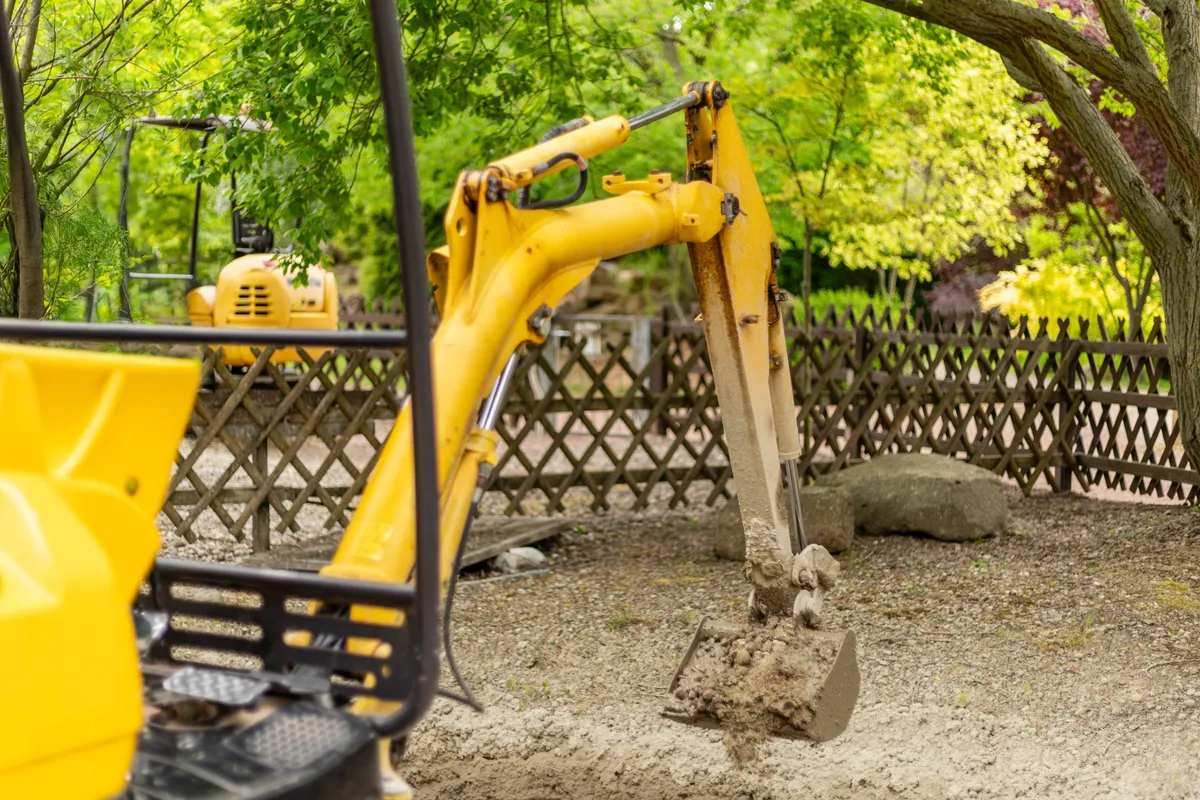
A mini skid steer excavator attachment is a digging tool—most often a fronthoe/backhoe-style boom, a bucket, a trencher, or an auger—that mounts to a mini skid steer’s front plate and uses the machine’s auxiliary hydraulics to move. Instead of a swinging house and a dedicated boom like a mini excavator, the attachment relies on the skid steer’s chassis and hydraulic system to do the digging work.
Some units are simple bolt-on buckets with no moving parts of their own; others, like a hydraulic fronthoe, have their own cylinder and boom arm that reach down and back toward the operator, similar in motion to a small backhoe. Because “excavator attachment” covers such a wide range of designs, it’s worth confirming the exact configuration — arm length, digging depth, and bucket width—before assuming it will handle a specific job.
What Can a Mini Skid Steer Excavator Attachment Do?
In practical terms, these attachments show up on:
- Light excavation and soil removal
- Trenching for irrigation and drainage lines
- Utility and cable line installation
- Garden bed and landscaping prep
- Post and fence installation
- Small footing and foundation prep
- General site cleanup and grading
Where a mini skid steer with an attachment tends to fall short is deep excavation, continuous heavy digging, or jobs that need a full 360-degree swinging boom. On those, a dedicated mini excavator — like the compact diggers in TYPHON’s mini excavator lineup — is usually the better tool. The advantage of the attachment route is versatility: one machine, several jobs, without paying to store or transport a second piece of equipment.
Best Mini Skid Steer Attachments for Excavation
Digging Bucket. The simplest option—good for scooping, backfilling, and general material movement once a trench or hole is already open.
Trencher. A chain-driven trencher cuts a narrow channel for irrigation lines, drainage pipe, or buried cable, without opening up a wide trench the way a bucket would. TYPHON’s 800mm hydraulic chain trencher attachment is built for this kind of work on compatible STOMP mini skid steers.
Auger. Purpose-built for post holes, fence lines, and foundation prep. TYPHON’s 200mm hydraulic auger attachment drills a clean, consistent hole far faster than doing it by hand.
Hydraulic Breaker. Suited to breaking up concrete, old footings, and hard rock before it’s removed. TYPHON offers a hydraulic rock and concrete breaker hammer sized for its mini skid steers.
Grapple. Less about digging and more about handling — picking up brush, wood, and debris after excavation work, such as the hydraulic wood grabber attachment.
Grading/Leveling Attachment. Fine grading and surface leveling once the rough digging is done — TYPHON’s hydraulic angle dozer blade covers this along with light snow work.
Each of these does a different job, and buying the wrong one for the task at hand is one of the most common regrets among first-time attachment buyers.
Mini Skid Steer Excavator Attachment vs Mini Excavator
| Feature | Mini Skid Steer + Attachment | Mini Excavator |
|---|---|---|
| Machine Size | Compact | Varies by model |
| Attachment Versatility | High, depending on system | High |
| Digging Capability | Depends on the attachment | Purpose-built for excavation |
| Maneuverability | Excellent in confined areas | Excellent, depending on model |
| Transport | Often easier | Depends on machine size |
| Multi-Function Use | Strong | Strong |
| Dedicated Excavation | Attachment-dependent | Purpose-built |
A mini skid steer with the right attachments can cover a lot of ground for a small crew, but a dedicated mini excavator, with its swinging boom and dig-cycle-focused design, is usually the more efficient choice on deeper or higher-volume excavation. Neither one universally beats the other—it comes down to the mix of jobs you actually run.
Hydraulic Flow and Pressure Requirements
This is the section buyers skip and then regret. Hydraulic flow, measured in GPM (gallons per minute), determines how fast an attachment’s motor or cylinder can move—an auger that spins too slowly or a trencher chain that bogs down is often a flow mismatch, not a weak attachment. Hydraulic pressure, measured in PSI, determines how much force the attachment can apply before it stalls.
Standard-flow attachments are built for typical mini skid steer auxiliary circuits; high-flow attachments need more GPM than many mini skid steers can supply and are usually reserved for larger machines. Before buying anything with a motor or cylinder—trencher, auger, breaker—compare the attachment’s stated flow and pressure requirements against your mini skid steer’s actual auxiliary hydraulic specification, not just its horsepower rating. Specifications vary by attachment and machine configuration, so don’t assume a figure that worked on one brand’s mini skid steer applies to another.
Attachment Compatibility
A mounting plate that physically fits your machine doesn’t guarantee the attachment will run correctly. Before buying, check:
- Mounting plate and quick-attach system type
- Hydraulic coupler style and hose routing
- Attachment dimensions and clearance
- Attachment weight versus your machine’s rated operating capacity
- Manufacturer-published compatibility list
TYPHON, for example, builds its skid steer attachments specifically around the STOMP X1300 and STOMP 509 mini skid steer loaders, so cross-shopping an attachment built for a different mount style can mean it bolts on but never gets the hydraulic performance it was designed for.
Best Mini Skid Steer Excavator Attachments for Landscaping
For drainage, irrigation, planting beds, and small backyard excavation, a trencher or auger usually does more useful work than a digging bucket. Fence installation and tree or stump removal lean on the auger and grapple, while final grading and soil prep are better suited to a grading blade or a landscaping-style rock bucket, like TYPHON’s skeleton rock bucket, which sifts soil from stone on the spot.
Best Attachments for Construction and Utility Work
On construction and utility sites, the trencher and auger cover most cable, pipe, and post work, while a digging or backhoe-style attachment — such as a backhoe digger attachment — handles footing excavation. Breakers come in for demolition and old concrete, and grapples handle the cleanup that follows almost every job.
How Much Does a Mini Skid Steer Excavator Attachment Cost?
Pricing depends on the attachment type, size, hydraulic requirements, brand, build quality, and included hardware such as hoses and couplers. As a rough picture of the market, TYPHON’s skid steer digging attachments run from around $1,890 for a basic rock bucket up to roughly $4,600 for a hydraulic breaker, while third-party fronthoe and trencher attachments sold through retailers like Walmart and eBay generally land in a similar range once shipping is factored in. Pricing varies by dealer, season, and financing terms, so treat any figure as a starting point rather than a quote. The cheapest option on the page isn’t always the best value once you factor in hydraulic fit, warranty, and parts availability.
New vs Used Mini Skid Steer Attachments
New attachments come with a warranty, a known condition, and current hydraulic specifications — at a higher upfront cost.
Used attachments cost less and can be a smart buy, but bring risk: hydraulic leaks, worn cutting edges or teeth, damaged mounting points, and an unknown work history.
Before buying used, check for:
- Cracks or repairs around the mounting plate
- Hydraulic hose and fitting condition
- Cylinder rod pitting or seal leaks
- Bushing and pin wear
- Worn teeth, edges, or auger flighting
- Verified compatibility with your specific mini skid steer model
What to Check Before Buying a Mini Skid Steer Excavator Attachment
- Confirm machine compatibility
- Check required hydraulic flow
- Check required hydraulic pressure
- Confirm the mounting system matches
- Check attachment weight
- Check your machine’s rated operating capacity
- Inspect hydraulic hoses
- Inspect cylinders and motors
- Check the attachment’s structural condition
- Review manufacturer specifications directly
- Compare warranty terms
- Check replacement parts availability
How Attachments Can Increase Mini Skid Steer ROI
One mini skid steer, swapped between a trencher, auger, digging attachment, and grapple, can potentially cover digging, trenching, grading, and cleanup without renting separate machines for each. Whether that pays off depends on utilization, attachment cost, job volume, your billing rates, and ongoing maintenance and transport costs — it isn’t a guaranteed return, but it’s a real lever for a small operation trying to do more with one machine.
Common Mini Skid Steer Attachment Buying Mistakes
- Buying before checking hydraulic flow and pressure requirements
- Ignoring attachment weight relative to machine capacity
- Assuming universal mounting compatibility
- Choosing on price alone
- Buying an attachment too large for the machine
- Overlooking parts and wear-component availability
- Picking an attachment unsuited to the actual soil or material
- Skipping the manufacturer’s published specifications
Each of these is avoidable with a five-minute spec check before checkout — the manufacturer’s product page is the right place to look, not a general listing description.
How to Choose the Right Excavator Attachment
- Identify the primary job you need it for
- Determine the attachment type that fits that job
- Check your machine’s hydraulic specifications
- Confirm mounting compatibility
- Check attachment weight
- Check your machine’s rated operating capacity
- Compare attachment dimensions
- Review warranty and dealer support
- Weigh new versus used
- Calculate total cost of ownership, not just sticker price
Mini Skid Steer Excavator Attachment Comparison
| Attachment | Best For | Main Advantage | Important Specification |
|---|---|---|---|
| Digging Bucket | Excavation | Soil removal | Size/capacity |
| Trencher | Utility trenches | Narrow digging | Hydraulic flow |
| Auger | Post holes | Fast drilling | Flow/torque |
| Breaker | Concrete/rock | Breaking material | Flow/pressure |
| Grapple | Cleanup | Material handling | Rated capacity |
| Grading Attachment | Leveling | Surface finishing | Width/control |
Frequently Asked Questions
What is a mini skid steer excavator attachment?
It’s a digging tool — a fronthoe arm, bucket, trencher, or auger — that mounts to a mini skid steer and uses its auxiliary hydraulics to dig, trench, or grade. The exact capability depends entirely on the specific attachment and machine configuration.
Can a mini skid steer dig like a mini excavator?
It can handle light-to-moderate digging with the right attachment, but it lacks a mini excavator’s swinging boom and dedicated dig cycle. For deep or high-volume excavation, a mini excavator is generally the better tool.
What is the best mini skid steer attachment for digging?
A fronthoe-style digging attachment or backhoe attachment is the closest match to excavator-style digging. For narrower work, a trencher or auger is often more efficient than a digging bucket.
Can a mini skid steer use an excavator attachment?
Yes, provided the mounting plate, hydraulic couplers, and flow/pressure requirements match your specific mini skid steer model. Compatibility should always be confirmed against the manufacturer’s specifications, not assumed.
What hydraulic flow does a mini skid steer attachment need?
It varies by attachment and manufacturer — trenchers, augers, and breakers each have their own GPM and PSI requirements. Always compare the attachment’s stated hydraulic needs against your machine’s actual auxiliary hydraulic output before buying.
Are mini skid steer attachments universal?
No. Mounting systems and hydraulic connections differ between brands, so an attachment built for one mini skid steer line won’t necessarily bolt onto or perform correctly on another.
What is the best mini skid steer attachment for landscaping?
Trenchers and augers cover most irrigation, drainage, and fence-post work, while a grading blade or skeleton rock bucket handles final soil prep and leveling.
How much does a mini skid steer attachment cost?
Pricing depends on the attachment type and hydraulic requirements, but basic buckets often start under $2,000 while hydraulic breakers and trenchers can run $3,500–$4,700 or more. Prices vary by brand, dealer, and financing terms.
Are used mini skid steer attachments worth buying?
They can be, if you inspect the mounting plate, hydraulic hoses, cylinders, and wear components carefully first. Unknown history and hydraulic leaks are the main risks with used units.
Which mini skid steer attachment is best for contractors?
It depends on the work mix — a digging or trenching attachment covers most utility and site-prep jobs, while a grapple and breaker round out demolition and cleanup work for contractors running varied projects.