Skip to content
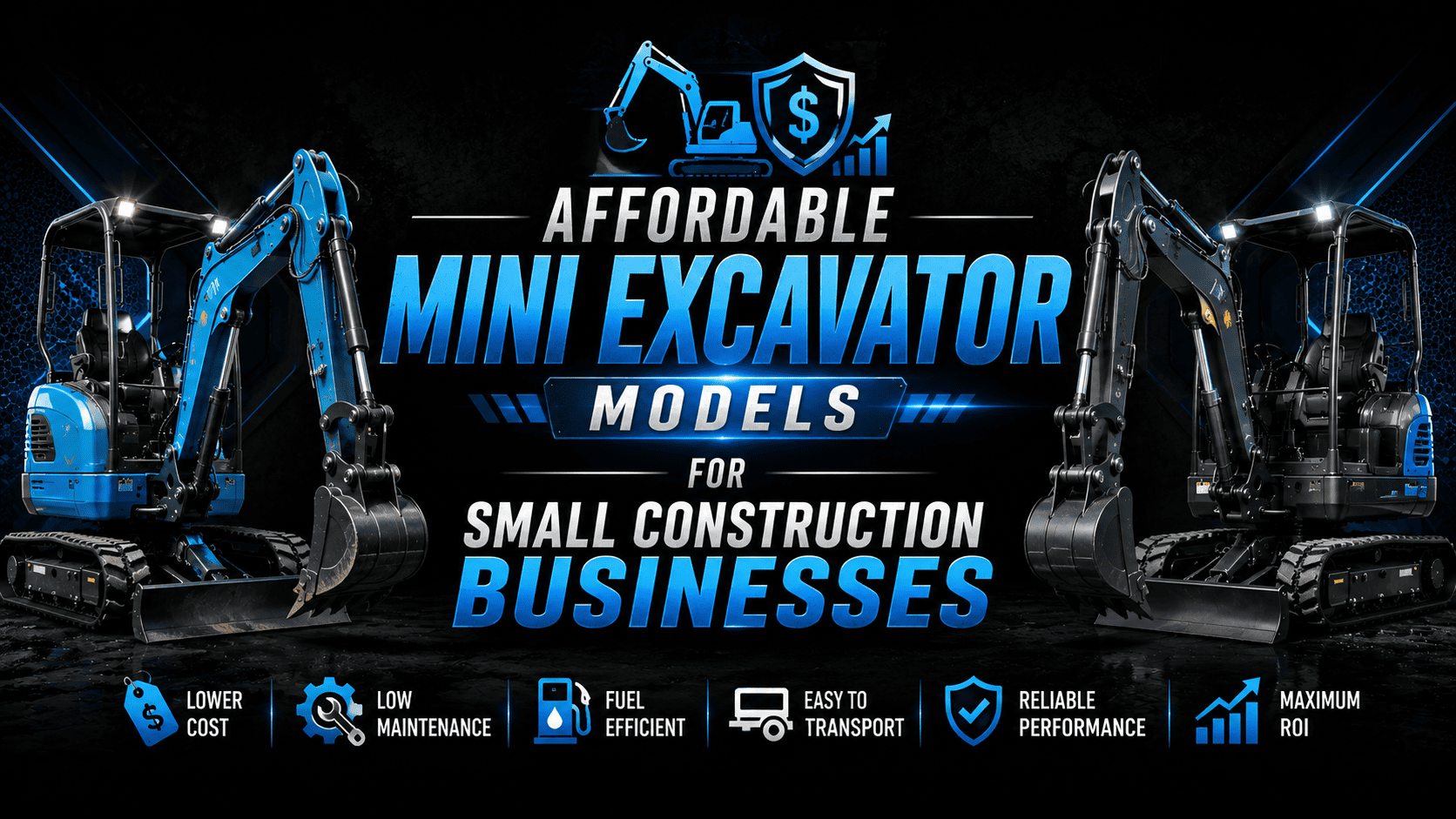
Affordable Mini Excavator Models for Small Construction Businesses
A landscaping crew running three residential jobs a week doesn’t need the same excavator as a utility contractor cutting trenches across a subdivision. That’s really the starting point for anyone shopping for affordable mini excavator models: the right machine is the one sized to your actual workload, not the biggest one you can talk yourself into financing. A properly matched mini excavator handles digging, trenching, grading, landscaping, and utility work while keeping the purchase price and the monthly running costs something a small business can actually absorb.
“Affordable” gets used loosely in this industry, so it’s worth defining up front. It doesn’t mean the cheapest machine on the lot. It means the best combination of price, capability, and manageable total ownership cost for the work you actually do. A rock-bottom machine that can’t keep up with your job schedule, breaks down constantly, or can’t run the attachments you need isn’t affordable—it’s just cheap.
What Is an Affordable Mini Excavator for a Small Business?
An affordable mini excavator checks several boxes at once: a reasonable purchase price, a size that matches your typical jobs, fuel or energy use you can plan around, maintenance costs that don’t eat your margins, easy transport between sites, attachment compatibility, dependable service and parts support, and a resale value that holds up when it’s time to trade up.
Buying the cheapest machine you can find sometimes backfires. A no-name import with no local parts support might save a few thousand dollars up front and cost you weeks of downtime the first time a hydraulic hose fails and the part has to ship from overseas. On the other side, an underpowered 1-ton machine bought purely for its price tag can slow down every job that needs real digging depth, which quietly costs you more in labor hours than the machine ever saved.
Best Affordable Mini Excavator Models for Small Construction Businesses
The shortlist below spans roughly 1-ton to 3-ton machines from manufacturers commonly available to U.S. small-business buyers, mixing established brands with value-oriented options. Specifications are drawn from manufacturer and dealer listings; always confirm current numbers with the dealer before purchasing, since trims and model years change specifications.
Kubota K008-3 — One of the smallest true compact excavators on the market, built to fit through standard doorways. Operating weight is right around 2,160 lbs, powered by roughly a 10 hp diesel engine, with a maximum digging depth near 5.6 feet and an overall width that narrows down for tight access. Its key strength is going places almost nothing else in this class can reach—narrow gates, interior demolition prep, tight side yards. The tradeoff is limited digging depth and lift capacity for anything beyond light residential work.
TYPHON TERROR ONE STORM (1-Ton Class) — A gas-powered 1-ton mini excavator running a 13.5 hp Briggs & Stratton engine, with a documented excavation depth around 1,700 mm (roughly 5.6 feet) and 11.5 kN of bucket force. It ships with a canopy, hydraulic oil cooler, wide bucket, and hydraulic thumb clip. It’s positioned as an entry-level machine for gardens, farms, parks, and light digging, and its value comes from a lower purchase price than most diesel competitors in the same size class—worth weighing against the different fuel type and service network of a gas engine versus diesel.
Bobcat E10 — A well-known name in this segment, with an operating weight around 2,593 lbs, roughly 10 hp of diesel power, and a maximum digging depth close to 6 feet. Its retractable undercarriage narrows to fit through 28-inch openings, and its zero tail-swing design lets it work close to walls and structures without the rear end swinging into anything. The Bobcat dealer network is broad, which matters for parts and service, but that brand recognition also tends to carry a higher purchase price than lesser-known alternatives in the same weight class.
Yanmar SV08-1D—Around 2,348 lbs operating weight, roughly 10.3 hp, and a digging depth near 5 feet 4 inches. Yanmar markets this one specifically for ultra-tight spaces, with adjustable-width tracks and a folding blade for narrow gaps. It runs a Tier 4 diesel powertrain with notably low noise, which makes it a reasonable fit for residential neighborhoods and indoor-adjacent work.
TYPHON TERROR XIII PRO STORM (1.3-Ton Class) — Steps up slightly in size with a 22.1 hp Honda gas engine, canopy, and hydraulic thumb clip. It’s built as a trench digger for the step between a true entry-level 1-ton unit and a full 2-ton diesel machine—more digging authority without jumping all the way to diesel pricing. Confirm current digging depth and hydraulic flow specifications with the dealer before comparing it against diesel competitors, since gas and diesel engines in this range aren’t always rated the same way.
CASE CX17B — A heavier machine in this lineup at roughly 3,638 lbs, with about 15 hp and a digging depth in the range of 7 feet depending on configuration. Its hydraulic retractable tracks narrow to pass through a 39-inch opening, and it delivers meaningfully more bucket and arm force than the true 1-ton class. That extra capability comes with a higher purchase price and a heavier machine to transport, so it suits contractors whose jobs regularly need more than a 1-ton machine can deliver.
TYPHON TERROR XVIII Prestige (2-Ton Class) — A 4,000 lb class diesel mini excavator built around a Kubota D902 engine (offered in the roughly 16 hp trim within TYPHON’s lineup), with a hydraulic oil cooler and compact 380 mm bucket for tight-space maneuvering. This size class is where many small contractors land, since it offers real digging and lifting capability while still being transportable on a standard trailer.
TYPHON TERROR XXV (2.7-Ton Class) — Moves up to a 25.1 hp Kubota D1105 diesel engine with retractable tracks and an AC cabin option. This is a larger step up in both capability and price, aimed at small businesses that regularly handle utility installation, larger trenching jobs, or general construction work rather than strictly residential landscaping.
John Deere 26G — A roughly 6,110 lb, 20 hp diesel machine with a digging depth near 8.5 feet, sitting at the upper end of what most people call a “mini” excavator. It’s built for urban construction, utility installation, and general light-to-medium excavation, backed by John Deere’s dealer and financing network. It’s a heavier investment than the models above it on this list, but it closes the gap toward genuinely productive digging depth for businesses outgrowing the 1- and 2-ton class.
| Model | Weight | Horsepower | Digging Depth | Key Advantage | Best For |
|---|---|---|---|---|---|
| Kubota K008-3 | ~2,160 lb | ~10 hp diesel | ~5.6 ft | Fits through standard doorways | Interior/tight-access work |
| TYPHON TERROR ONE STORM | ~1 ton | 13.5 hp gas | ~5.6 ft | Lower entry cost | Light landscaping, farms |
| Bobcat E10 | ~2,593 lb | ~10 hp diesel | ~6.0 ft | Zero tail swing, wide dealer network | Residential, tight spaces |
| Yanmar SV08-1D | ~2,348 lb | ~10.3 hp diesel | ~5.3 ft | Adjustable tracks, low noise | Narrow-access, quiet jobsites |
| TYPHON TERROR XIII PRO STORM | ~1.3 ton | 22.1 hp gas | Verify with dealer | More power at moderate cost | Step-up from 1-ton work |
| CASE CX17B | ~3,638 lb | ~15 hp diesel | ~7 ft | Higher bucket/arm force | Small contractors needing more depth |
| TYPHON TERROR XVIII Prestige | ~4,000 lb | Kubota D902 diesel | Verify with dealer | Balanced size/capability | General small-business use |
| TYPHON TERROR XXV | ~2.7 ton | 25.1 hp diesel | Verify with dealer | Retractable tracks, AC cabin option | Utility work, larger trenching |
| John Deere 26G | ~6,110 lb | ~20 hp diesel | ~8.5 ft | Deep digging, established dealer network | Businesses outgrowing 1–2 ton class |
Best Mini Excavator Sizes for Small Contractors
1-Ton Mini Excavators
Best suited for residential landscaping, narrow gate and yard access, light trenching, and small property projects. The tradeoff is digging depth and lift capacity—a 1-ton machine will struggle on jobs that need real depth or heavier material handling, and pushing one past its comfort zone just slows the crew down.
2-Ton Mini Excavators
This is the size class where the balance between transport convenience, digging capability, stability, and operating cost tends to work out best for a general small-business fleet. Still light enough for a standard trailer, but with meaningfully more digging depth and hydraulic force than a 1-ton unit.
3-Ton Mini Excavators
Offers greater digging capability suited to larger projects, utility work, and general construction. It comes at a higher purchase price and heavier transport requirements, and size categories vary somewhat by manufacturer, so always check operating weight against your trailer’s rated capacity before assuming a “3-ton” excavator from one brand matches another.
What Should a Small Construction Business Spend on a Mini Excavator?
Build a realistic budget around the full picture, not just the sticker price on the base machine. That means factoring in the purchase price, down payment, financing terms, monthly payment, attachments you’ll actually need, delivery, taxes, insurance, ongoing maintenance, fuel, storage, and transportation to and from jobsites. A machine advertised at one price can end up costing considerably more once attachments, freight, and financing fees are added—calculate the complete purchase cost before comparing models against each other.
New vs Used Mini Excavator for Small Businesses
| Factor | New | Used |
|---|---|---|
| Purchase Cost | Higher | Lower |
| Warranty | Usually available | Varies |
| Condition | Predictable | Requires inspection |
| Financing | Often available | Depends |
| Depreciation | Higher initially | Often lower |
| Maintenance Risk | Generally more predictable | Depends on history |
When new makes sense: you need warranty protection, predictable maintenance costs, and financing terms built around a new asset — especially if the machine will be your primary income-producing tool and downtime is expensive.
When used makes sense: your budget is tighter, you can inspect and verify the machine’s history, and you’re comfortable taking on some maintenance risk in exchange for a lower purchase price and often gentler depreciation.
Used-machine inspection checklist:
- Engine hours and maintenance records
- Undercarriage and track wear
- Hydraulic cylinder seals for leaks
- Bucket and attachment pin wear
- Evidence of structural repairs or welds
- Available service history from the seller
- Test run under load, not just idle
What Specifications Matter Most for Small Contractors?
Operating weight affects both transport logistics and digging stability—heavier machines need a rated trailer and tow vehicle but also plant themselves more firmly during digging.
Horsepower alone doesn’t determine performance. Hydraulic flow, pump design, and how the engine’s power actually reaches the bucket matter more than the horsepower number by itself.
Digging depth needs to match your actual project requirements—don’t pay for depth you’ll never use, and don’t buy short of what your typical utility or foundation work demands.
Hydraulic flow determines which attachments the machine can run effectively, from a simple thumb to a hydraulic breaker or auger.
Machine width decides whether the excavator can actually get through the gates, yards, and narrow construction areas you work in regularly.
Tail swing matters most in confined spaces—a zero or reduced tail-swing design lets you work close to walls, fences, and structures without constantly repositioning.
Lift capacity affects material handling—setting pipe, placing landscaping stone, or loading material onto a truck.
Best Affordable Mini Excavator for Landscaping
For landscaping work, prioritize compact width, low ground disturbance, maneuverability, hydraulic attachment compatibility, easy transportability, and enough digging depth for drainage and irrigation work. Common applications include drainage lines, irrigation trenching, planting beds, retaining wall footings, backyard excavation, grading, and stump removal. The 1-ton and light 2-ton classes above generally fit this work well, especially models with narrow or retractable tracks.
Best Affordable Mini Excavator for Utility Work
Utility contractors—trenching, pipe installation, cable work, drainage, site prep—should weigh digging depth and hydraulic performance more heavily than pure compactness. Stability under load, narrow-access capability for backyard utility runs, and attachment versatility (trenchers, augers, hydraulic breakers) matter more here than they do for straightforward landscaping. The 2-ton to 3-ton class tends to serve utility work better than the smallest 1-ton machines.
Mini Excavator Attachments That Improve Small-Business ROI
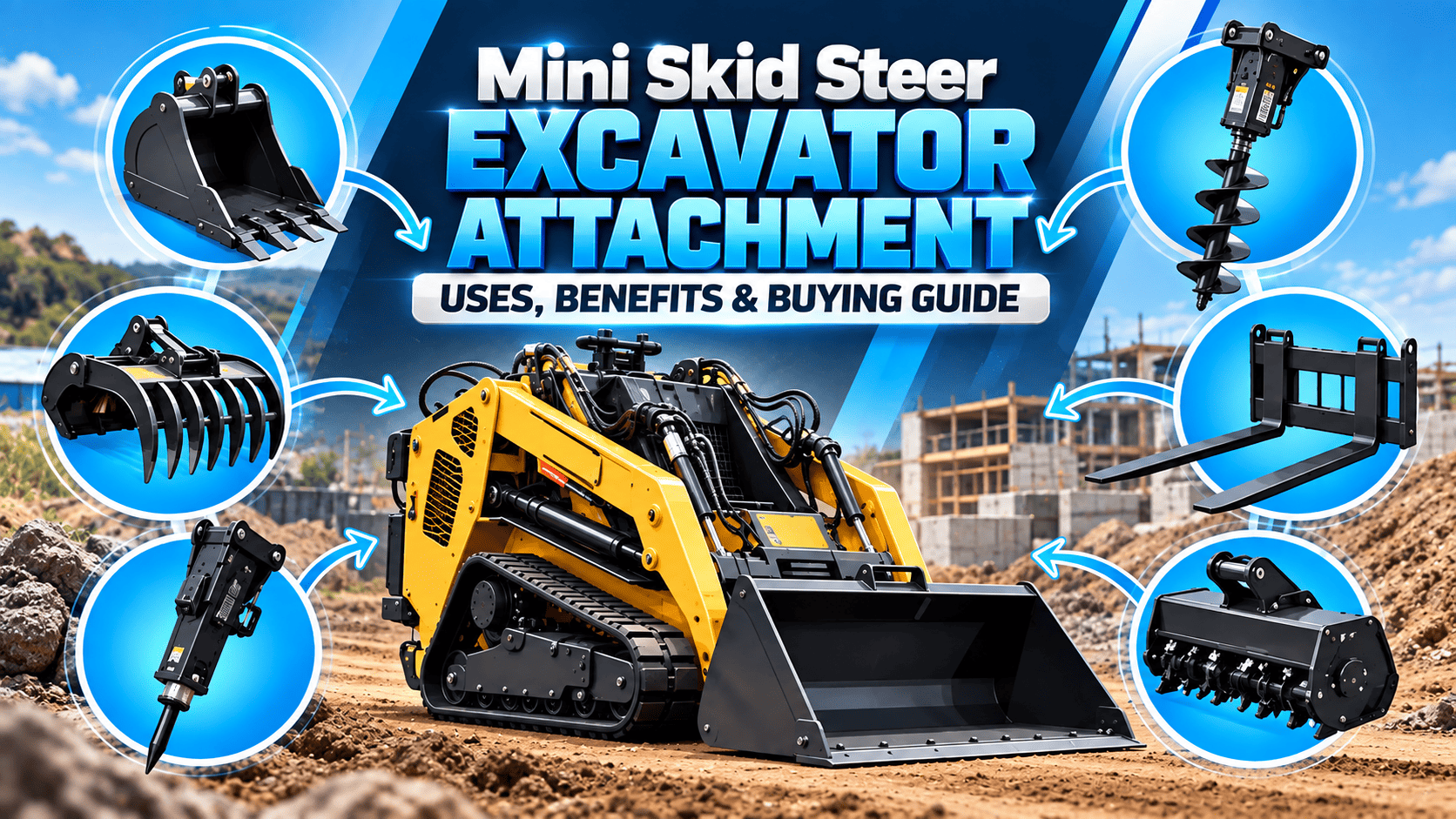
One machine with the right attachment lineup can cover far more job types than the base excavator alone. Commonly useful attachments include digging buckets, grading buckets, hydraulic thumbs, augers, trenchers, hydraulic breakers, grapples, brush cutters, compactors, and post drivers. For a small contractor working on a tight budget, the right mini excavator attachments can sometimes deliver more return than jumping up to a larger, more expensive machine—a hydraulic breaker on a 2-ton excavator often gets more jobs done per dollar than upgrading to a 3-ton unit that mostly sits underutilized.
How Much Does It Cost to Own a Mini Excavator?
Total ownership cost adds up the purchase price, financing, fuel, routine maintenance, repairs, track replacement over time, attachments, insurance, transportation, storage, and depreciation. A simple way to think about it conceptually:
Purchase + Operating + Maintenance + Ownership Costs − Resale Value
This isn’t a formal accounting formula—it’s a framework for making sure you’re not just comparing sticker prices when you evaluate two different machines.
Financing an Affordable Mini Excavator
Common paths include manufacturer financing, dealer financing, equipment loans through banks, dedicated equipment finance companies, and leasing. Actual terms depend on your credit profile, business history, the specific equipment, down payment size, loan term, the lender, and any current promotions—there’s no universal rate or guaranteed approval, so get quotes from more than one source before committing. TYPHON, for example, offers financing options through its dealer network that are worth comparing against a bank or independent equipment lender.
Can a Mini Excavator Pay for Itself?
It can, but profitability depends on utilization, your hourly billing rate, project volume, operating costs, maintenance, transportation, financing payments, and downtime. A simple illustrative structure—using made-up numbers purely to show the framework, not actual market rates:
Monthly equipment revenue − Monthly operating costs − Financing/payment = Contribution toward equipment ownership
If a machine sits idle most weeks, even a low monthly payment can feel expensive. If it’s booked steadily, even a larger machine can pay for itself faster than expected. Run your own numbers based on your actual job pipeline rather than assuming a rule of thumb applies to your business.
How to Choose the Best Affordable Mini Excavator
Step 1: Identify your most common jobs.
Step 2: Determine required digging depth.
Step 3: Determine required machine width.
Step 4: Calculate realistic workload and utilization.
Step 5: Choose machine size based on steps 1–4.
Step 6: Match hydraulic specifications to the attachments you’ll actually run.
Step 7: Compare new and used options.
Step 8: Calculate total ownership cost, not just purchase price.
Step 9: Compare financing offers from more than one source.
Step 10: Evaluate dealer and parts support in your area.
Step 11: Consider resale value before you buy, not after.
Common Buying Mistakes Small Contractors Make
- Buying based only on price—leads to machines that can’t handle real job demands.
- Buying too large a machine—higher purchase cost, harder transport, and more fuel use than the work requires.
- Buying too small a machine — slows down every job that needs more depth or force than it can deliver.
- Ignoring transport — a machine that doesn’t fit your trailer or tow vehicle creates ongoing logistics headaches.
- Ignoring attachments — buying the excavator without planning which attachments you’ll need limits its usefulness from day one.
- Ignoring hydraulic specifications—mismatched hydraulic flow means certain attachments simply won’t run properly.
- Ignoring service support — a great price means little if parts and service aren’t available nearby.
- Ignoring maintenance costs—some models are meaningfully cheaper to keep running than others.
- Underestimating downtime—no backup plan for repairs can stall an entire crew.
- Forgetting financing costs—the monthly payment matters as much as the sticker price.
- Ignoring resale value—some brands and models hold value better than others, which affects your real cost of ownership.
Affordable Mini Excavator Comparison
| Category | Recommended Type/Model | Why |
|---|---|---|
| Best Overall Value | 2-ton diesel class (e.g., TYPHON TERROR XVIII Prestige) | Balanced capability and cost for general small-business use |
| Best Budget Option | 1-ton gas class (e.g., TYPHON TERROR ONE STORM) | Lower entry cost for light landscaping work |
| Best for Landscaping | Kubota K008-3 or Yanmar SV08-1D | Compact width, tight-access maneuverability |
| Best for Utility Work | CASE CX17B or TYPHON TERROR XXV | Greater digging depth and hydraulic force |
| Best for Small Contractors | 2-ton to 2.7-ton diesel class | Versatility across job types |
| Best Used Option | Any well-documented used machine in your target size class | Lower cost with acceptable maintenance risk if history checks out |
| Best for Attachments | 2-ton and larger diesel models | Higher hydraulic flow supports more attachment types |
Frequently Asked Questions
What is the most affordable mini excavator? The most affordable models tend to be in the 1-ton class, such as compact diesel units like the Kubota K008-3 or gas-powered options like the TYPHON TERROR ONE STORM. “Most affordable” should account for total ownership cost, not just the sticker price, since a very cheap machine can cost more in downtime or limited capability.
What is the best mini excavator for a small construction business? There’s no single best model — it depends on your typical job size, required digging depth, transport setup, and budget. Most general small-business operations land well in the 2-ton diesel class, which balances capability, transport convenience, and operating cost.
How much does an affordable mini excavator cost? Pricing varies significantly by size, brand, engine type, and included attachments, and current pricing should always be confirmed directly with the dealer. Smaller 1-ton class machines generally sit at the lower end of the mini excavator price range, while 2-ton to 3-ton diesel machines cost more but offer greater capability.
Is a 1-ton mini excavator enough for a small contractor? It can be if your work is mostly light landscaping, narrow-access residential jobs, or small property projects. It’s usually not enough for utility work, deeper trenching, or general construction that requires more digging depth and hydraulic force.
Is it better to buy a new or used mini excavator? New machines offer warranty coverage and more predictable maintenance costs but cost more upfront. Used machines cost less and often depreciate more slowly but require careful inspection of hours, undercarriage wear, and hydraulic condition before purchase.
What mini excavator size is best for small construction projects? Most small construction and utility work is well served by the 2-ton to 3-ton class, which offers meaningfully more digging depth and force than 1-ton machines while still being manageable to transport. Purely residential landscaping work can often get by with a 1-ton machine.
Can a mini excavator make money for a small business? Yes, if utilization, billing rates, and operating costs are managed well relative to the financing payment. Profitability depends heavily on how consistently the machine is booked for work, so it’s worth running your own numbers based on realistic job volume before buying.
What attachments should a small contractor buy first? A hydraulic thumb and a second bucket size (narrow for trenching, wide for grading) are typically the highest-value first additions, since they expand the range of jobs a single machine can handle. Beyond that, the right next attachment depends on your specific work—an auger for fence and post work, a breaker for demolition-adjacent jobs.
Are affordable mini excavators reliable? Reliability depends more on the specific model, engine, and maintenance history than on price alone. A well-maintained budget-friendly machine from a manufacturer with solid parts support can be just as dependable as a pricier name-brand unit that’s been neglected.
Should a small construction business finance a mini excavator? Financing can make sense if it lets you take on work you couldn’t otherwise afford the equipment for, provided the monthly payment fits comfortably within your realistic utilization and revenue. It’s worth comparing manufacturer, dealer, and independent equipment financing options rather than accepting the first offer.